America Marks 25 Years Since 9/11 as Memory Gives Way to History
Families and communities across the United States are commemorating the 25th anniversary of the September 11 attacks. The day honors nearly 3,000 people killed in 2001 while also confronting the attacks’ continuing health, political and generational legacy.
By StoryBreak
Published September 11, 2026 at 5:15 PM
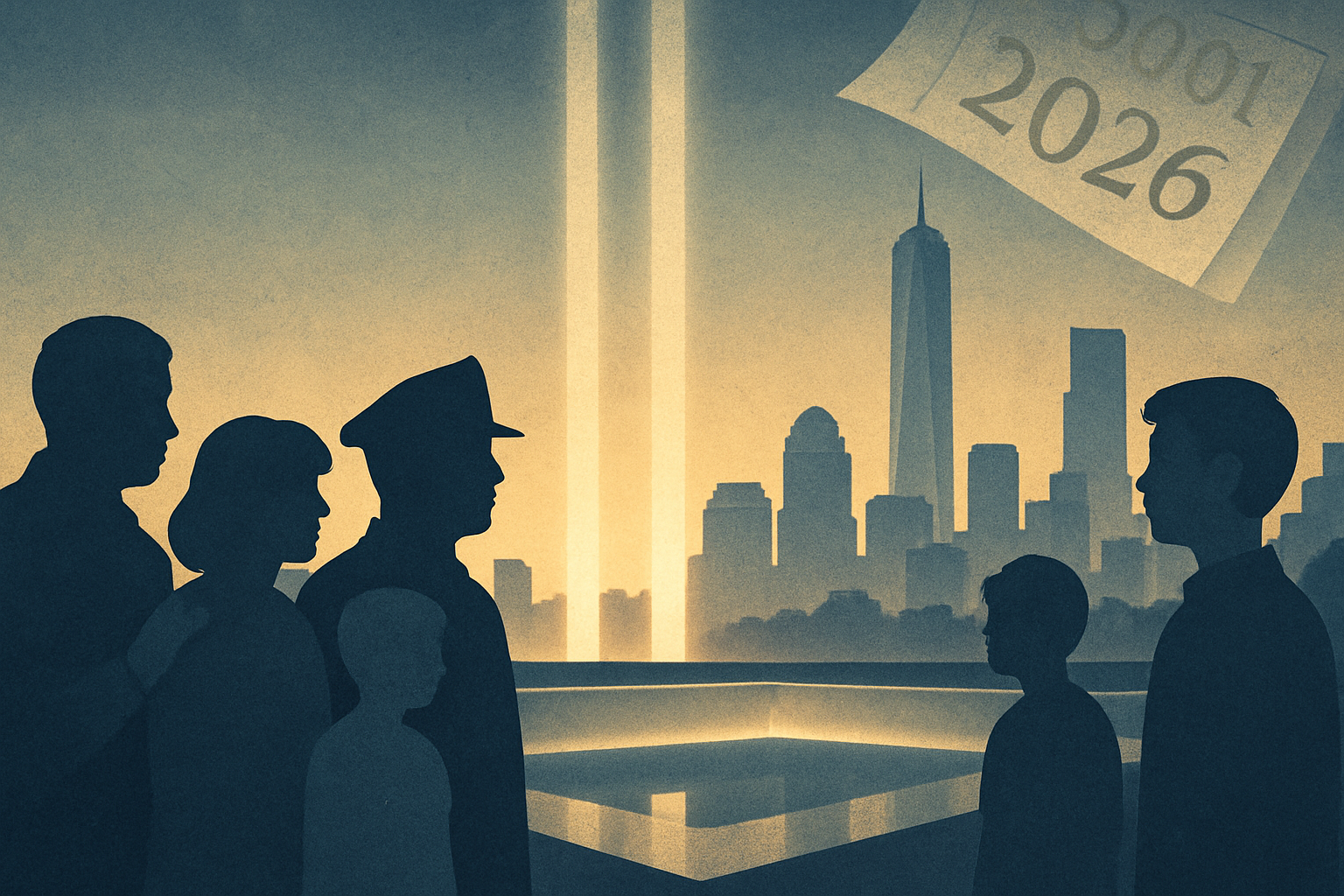
The United States is marking 25 years since the September 11, 2001 attacks with ceremonies at the World Trade Center site, the Pentagon, the field near Shanksville, Pennsylvania, and in communities across the country.
In New York, families are gathering for the annual reading of the victims’ names at the National September 11 Memorial. The observance begins with moments of silence corresponding to the morning’s central events, including the first plane’s impact at 8:46 a.m. The 2026 ceremony also includes a moment recognizing people who were exposed to the toxic dust and other hazards after the attacks and later died from cancer and other illnesses.
That addition captures what has changed about the anniversary. In the first years after the attacks, remembrance centered on the immediate dead and the extraordinary scenes witnessed in New York, Washington and Pennsylvania. A quarter-century later, the consequences are still producing new losses.
The National September 11 Memorial & Museum says more than 80,000 people are known to be suffering from 9/11-related illnesses, including respiratory disease, mental-health conditions and numerous cancers. The figure illustrates why the anniversary cannot be understood only as a historical date. For responders, survivors, recovery workers and nearby residents, September 11 is also part of an ongoing medical history.
The attacks killed nearly 3,000 people and became the defining shock of the early 21st century for the United States. They changed airport security, reorganized the federal government, shaped the country’s wars overseas and altered how Americans understood terrorism and national vulnerability. Those consequences are familiar to adults who lived through the attacks, but increasingly distant to people who did not.
That generational divide is now central to the meaning of the anniversary. Americans who were adults in 2001 remember the interruption of ordinary life: grounded flights, emergency broadcasts, missing friends and relatives, and the uncertainty that followed. Many younger Americans know the event through memorials, documentaries, classroom lessons and family recollections. They may understand its importance without possessing a personal memory of the day.
The memorial sites are therefore doing more than preserving names. They are becoming institutions of historical transmission. The New York memorial’s 25th-anniversary ceremony is centered on family members reading the names, while the National Archives is holding a public observance honoring those killed and the people who responded. Across the country, local ceremonies are performing the same work on a smaller scale: keeping a national event connected to individual lives.
The anniversary also carries an unresolved question about what it means to remember responsibly. Commemoration can preserve solidarity and honor sacrifice, but it can also flatten the years that followed into a simple story of national unity. The quarter-century since 9/11 included wars, expanded security powers, debates over civil liberties, discrimination against Muslim and Arab Americans, and a long struggle to care for people made sick by the response and recovery effort.
Remembering the attacks, then, requires more than repeating what happened that morning. It requires tracing what the country did afterward and asking who continued to bear the cost.
On September 11, 2026, Americans will again hear the victims’ names and observe the moments when the attacks unfolded. But the 25th anniversary is also a marker of distance. The people who remember 9/11 firsthand are aging, while a growing share of the country knows it as history. The responsibility of remembrance is shifting—from preserving a shared memory to explaining why that memory still shapes American life.
Sources & Further Reading
- National September 11 Memorial & MuseumPrimary source
- National September 11 Memorial & MuseumPrimary source
- National ArchivesPrimary source
- The White HousePrimary source
- The Associated Press
- The New York Times
StoryBreak
Independent digital news and reporting, updated throughout the day.
This article was researched and drafted with AI assistance and reviewed as part of StoryBreak's editorial process before publication. Read our editorial standards.