Children Exposed to 9/11 Dust Are Finally the Focus of a New Long-Term Research Effort
The World Trade Center Health Program is creating a research coordinating center for people exposed to the September 11 disaster at age 21 or younger. The initiative aims to fill a major gap in knowledge about how toxic dust and trauma may affect people across their lives.
By StoryBreak
Published September 10, 2026 at 1:53 PM
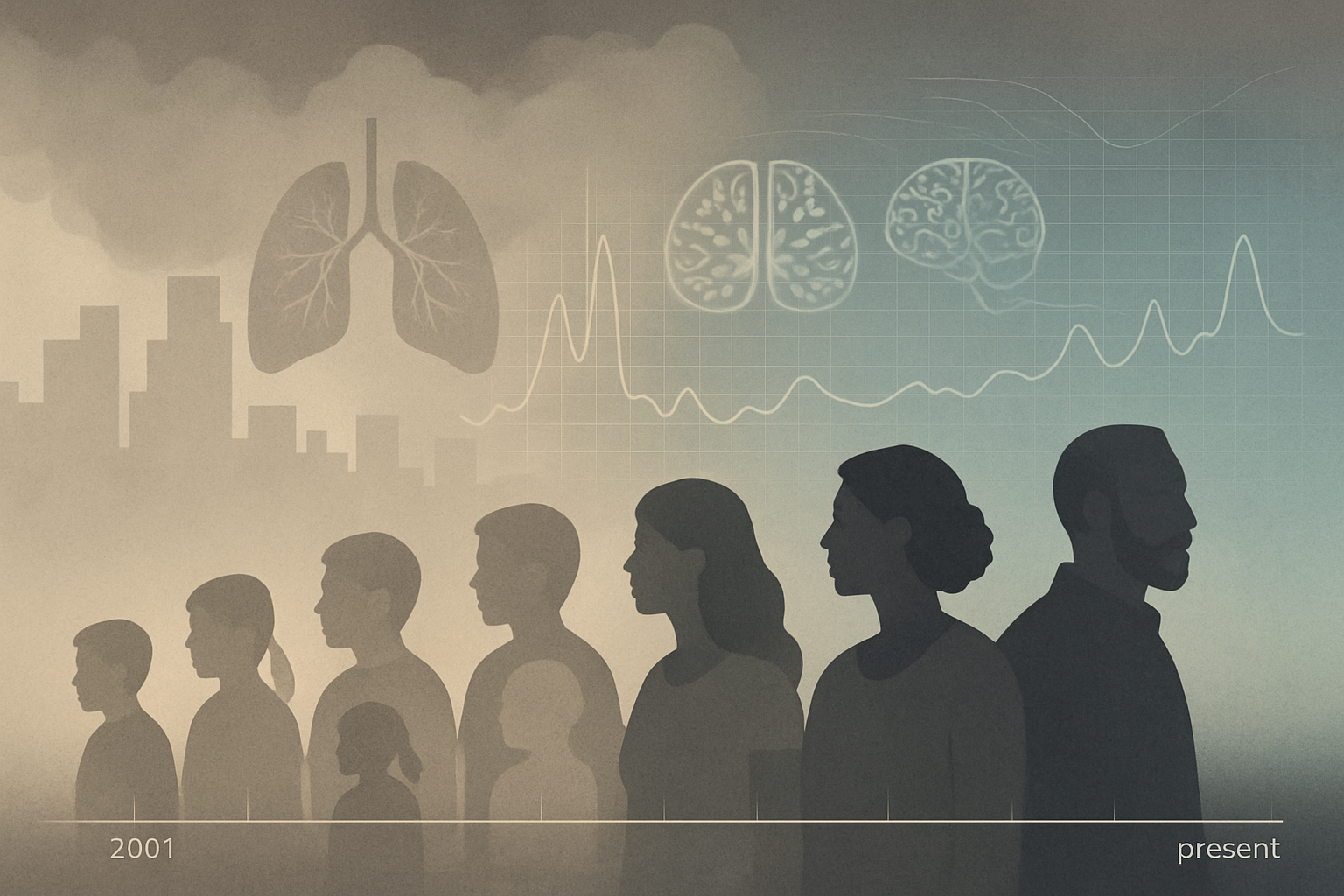
Nearly 25 years after the September 11 attacks, the federal government is beginning a major new effort to study people who were exposed to the World Trade Center disaster as children, teenagers, young adults or before birth.
The World Trade Center Health Program announced in August that it is establishing a research coordinating center for people who were 21 or younger at the time of their exposure. The center is intended to help build a research cohort and coordinate studies with survivors, clinicians, public-health agencies and researchers.
That distinction matters. The government has not yet released results from a new nationwide study, and it has not announced the final enrollment size or detailed research schedule. For now, the announcement marks the creation of the infrastructure needed to study a population that has often been treated as a footnote to the larger 9/11 health story.
Most federally supported research has focused on adults who responded to the attacks, worked at Ground Zero or lived and worked in the surrounding area. Less is known about people whose bodies and brains were still developing when they inhaled dust, encountered contaminated environments or experienced the disaster’s trauma.
The new effort is expected to examine several areas, including respiratory health and lung development, reproductive health, brain development, mental and behavioral health, metabolic disorders, cardiovascular disease, cancer and other chronic conditions.
The reason for a separate focus is biological as well as historical. Children can receive a larger exposure relative to their body size, and exposure during periods of rapid growth may affect systems differently than exposure in adulthood. That does not mean that a later illness can automatically be attributed to 9/11. It means researchers need long-term data designed to distinguish possible exposure-related effects from family history, neighborhood conditions, ordinary aging and other causes.
There is already evidence that young people exposed to the disaster experienced health consequences. A peer-reviewed study of people exposed as children found higher rates of certain physical and psychiatric problems years later compared with unexposed participants. Other studies have linked childhood exposure to respiratory symptoms and have examined hospitalizations among people who were under 18 on September 11, 2001. But those projects were limited in size, design or scope, and they do not answer the broader question of what happens to this population over an entire lifetime.
New York City’s World Trade Center Health Registry provides the foundation for that longer view. Created in November 2001, it eventually enrolled more than 71,000 people, including residents, workers, students, rescue and recovery personnel and volunteers. Repeated surveys have tracked health changes over time, and the registry now includes follow-up work on aging and late-emerging conditions.
The gap is notable because the adult 9/11 research record is already extensive. The National Institute for Occupational Safety and Health says more than 1,500 scientific publications have documented health effects among exposed populations, covering conditions involving the respiratory system, digestive tract, cancer and mental health. Only a small portion of that research has concentrated on people exposed when they were young.
The practical stakes are substantial. Better evidence could help doctors recognize patterns that otherwise appear unrelated to 9/11. It could also guide medical monitoring, inform decisions about which conditions should receive federal coverage and improve planning for children exposed to future environmental disasters.
For survivors who were 21 or younger in 2001, the next question is not yet what the study has found. It is how—and when—they can participate. The health program says it will share information as the coordinating center develops. The milestones to watch will be the release of enrollment rules, the study design and the first baseline results.
The new initiative is therefore both significant and unfinished: a federal acknowledgment that the youngest people exposed to 9/11 may have a distinct health history, and an attempt to begin measuring that history before more time—and more memories—are lost.
Sources & Further Reading
- National Institute for Occupational Safety and Health, CDCPrimary source
- New York City Department of Health and Mental HygienePrimary source
- Centers for Disease Control and Prevention / World Trade Center Health ProgramPrimary source
- American Journal of Industrial Medicine via PubMed CentralPrimary source
- PubMed CentralPrimary source
- PubMedPrimary source
StoryBreak
Independent digital news and reporting, updated throughout the day.
This article was researched and drafted with AI assistance and reviewed as part of StoryBreak's editorial process before publication. Read our editorial standards.