AI-assisted survey builds a clearer picture of England’s woodland bats
The National Woodland Bat Survey combines acoustic sensors, automated species identification and expert review to measure bat activity across England’s woodlands.
By StoryBreak
Published October 30, 2026 at 11:02 AM EDT
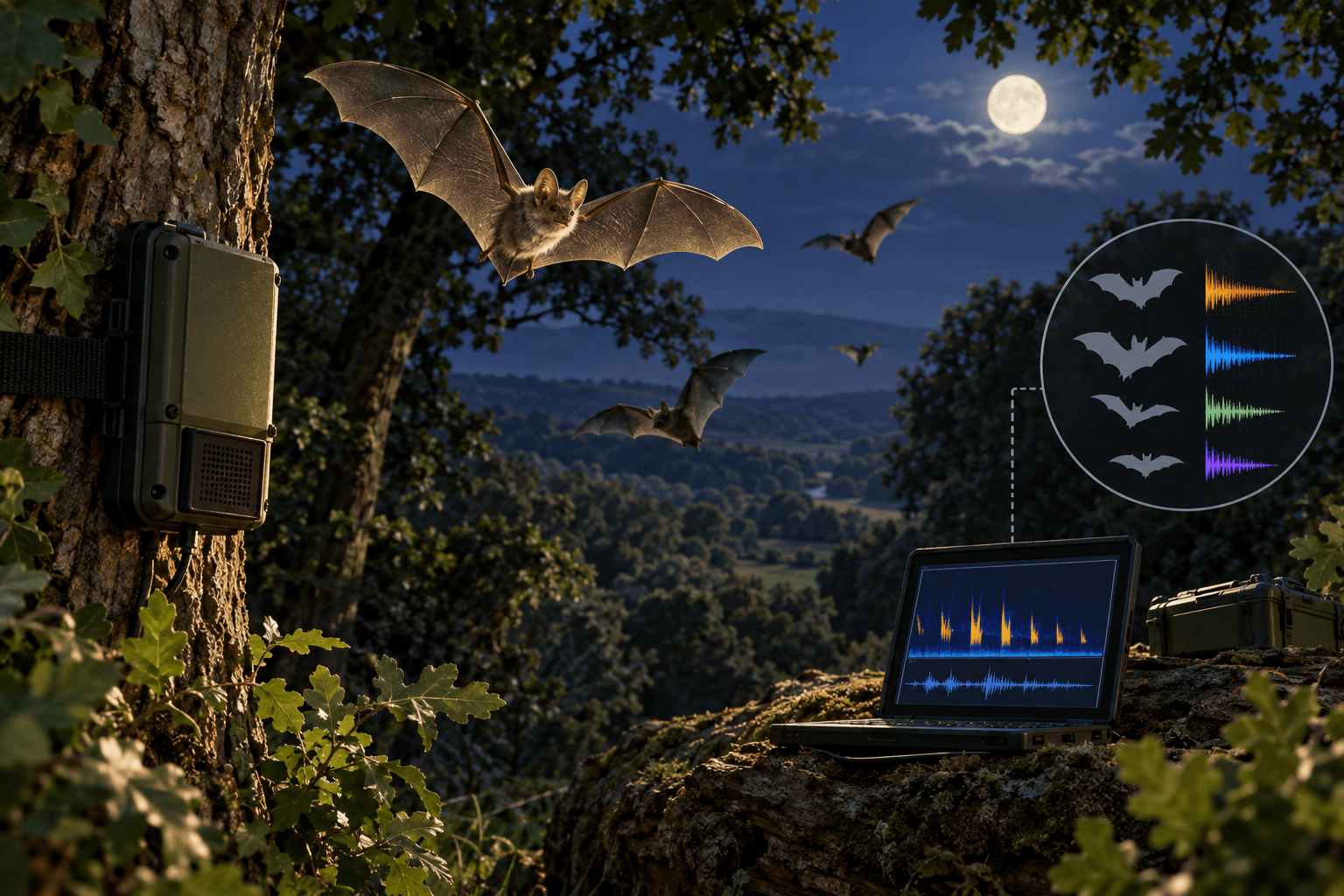
A long-running survey is using automated analysis and expert checks to study bat activity across England’s woodlands.
Forest Research and the Bat Conservation Trust have worked together on the National Woodland Bat Survey since 2021. The programme uses passive acoustic monitoring, meaning sensors listen for bat calls without requiring animals to be captured or observed directly.
Each year, equipment is placed at as many as 210 one-hectare sites selected from the National Forest Inventory. The resulting dataset records bat activity at National Forest Inventory squares, providing a consistent way to compare observations across sampled woodland areas.
The survey uses BatDetect2 to identify calls and assign them to bat species. The system was developed with researchers from University College London and the University of Edinburgh. It automatically processes the recordings before specialists examine a selected portion of the results.
That human review includes examining call sonograms, which are visual displays of sound. Experts use the checks to assess the automated classifications, while the survey’s activity indices are adjusted for classification errors found during the process.
The approach has produced findings about both common and less frequently detected species. Greater horseshoe bats were identified at every sampled National Forest Inventory plot located within their known range. The survey also expanded the known range of the rare alcathoe bat.
Those results illustrate why the survey combines software with specialist review. Automated detection supplies a method for handling recordings gathered across many woodland sites, while manual checking provides an additional assessment of the species assignments. The verified dataset preserves the activity measurements after those checks and adjustments.
The work is funded through the UK government’s Natural Capital and Ecosystem Assessment programme, with additional support from the Bat Conservation Trust. Defra identifies the National Woodland Bat Survey as a programme covering England’s woodlands through acoustic monitoring.
The survey’s value lies in creating a repeatable record of bat activity rather than relying only on isolated sightings. Its results include verified measurements, documented checks and adjustments for observed classification errors. Together, those elements provide a structured basis for studying where different bat species are detected in England’s woodland monitoring network.
Sources & Further Reading
- BBC News Science
- Forest ResearchPrimary source
- Department for Environment, Food and Rural AffairsPrimary source
- Forestry Commission and Bat Conservation TrustPrimary source
StoryBreak
Independent digital news and reporting, updated throughout the day.
This article was researched and drafted with AI assistance and reviewed as part of StoryBreak's editorial process before publication. Read our editorial standards.