
Amazon Cargo Jet Overruns Miami Runway, Killing at Least Five
A Boeing 767 operated by 21 Air for Amazon Air overran a runway at Miami International Airport after arriving from San Juan, struck vehicles and caught fire. Authorities reported at least five deaths and five injuries as the FAA opened an investigation.
By StoryBreak
Published September 7, 2026 at 12:52 AM
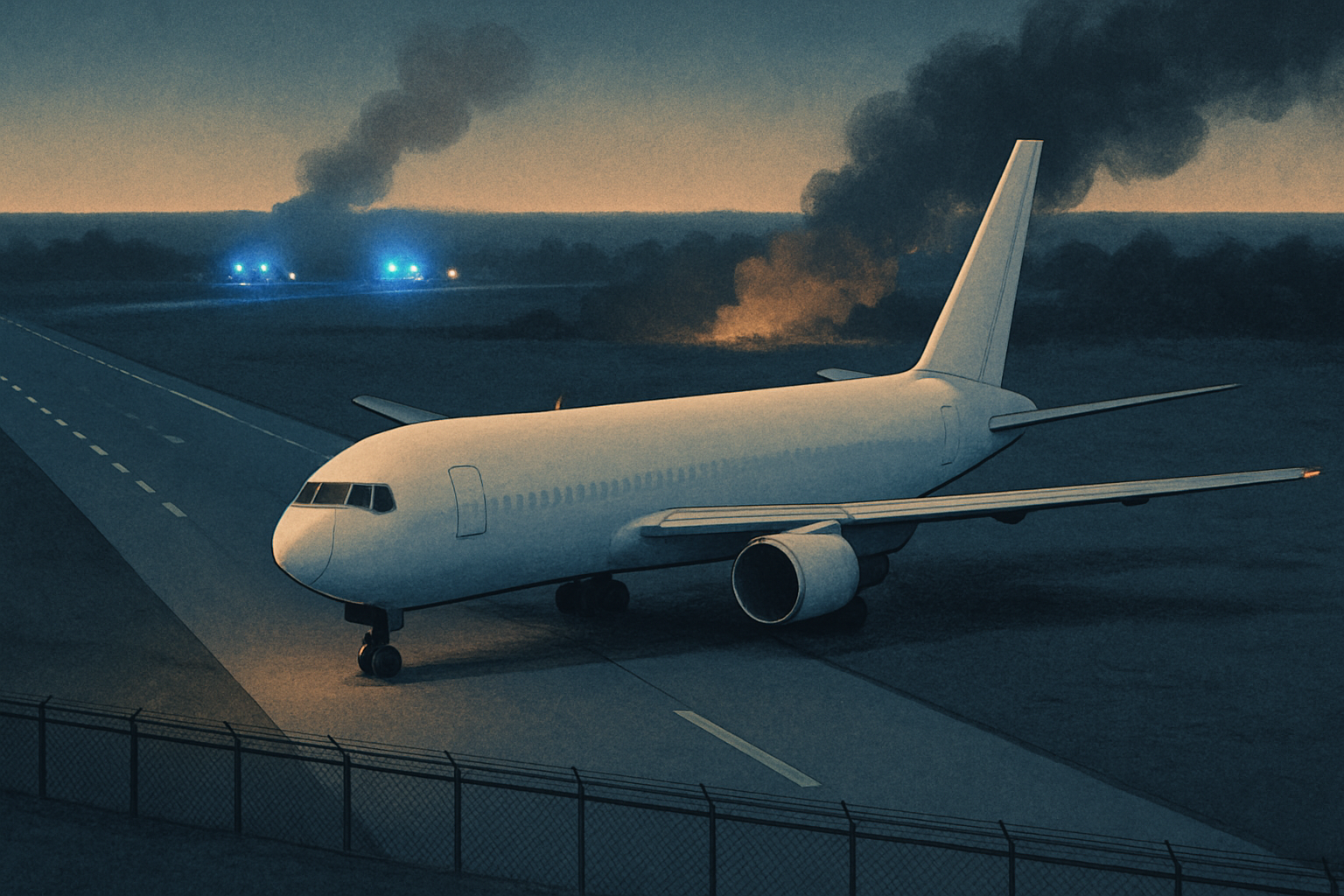
At least five people were killed and five others injured Sunday after an Amazon Air cargo flight overran a runway at Miami International Airport, struck several vehicles and caught fire, according to Miami-Dade authorities and multiple established news organizations.
The Federal Aviation Administration said 21 Air Flight 7598 overran the runway at approximately 2 p.m. local time on September 6, 2026. The Boeing 767-300 had departed Luis Muñoz Marín International Airport in San Juan, Puerto Rico. The FAA said it would investigate.
The aircraft came to rest near the northwest end of the airport after leaving the runway. Emergency crews responded to the burning aircraft, and airport operations were disrupted as authorities secured the scene and began treating the injured.
Three of the five injured people were reported to be in critical condition, while the other two were described as stable in early accounts. The reported death toll remained preliminary as investigators and emergency officials worked to identify the victims and document the full extent of the damage.
The flight was not operated by an Amazon-owned airline. It was flown by North Carolina-based 21 Air on behalf of Amazon Air, Amazon’s air-cargo network. That distinction matters in the investigation: regulators will examine the actions and systems of the operating carrier, while Amazon’s role concerns the contracted cargo operation and logistics network.
What caused the overrun is not yet known. Initial reports do not establish whether the runway was affected by weather, whether the aircraft experienced a mechanical or braking problem, or whether the approach and landing involved an operational error. Those questions will require flight-data records, cockpit-voice information, aircraft inspections, runway evidence and interviews with the crew and witnesses.
The crash also highlights the unusual risk profile of cargo aviation. A freighter typically carries few people aboard compared with a passenger jet, but a runway excursion can still threaten airport employees, motorists and other people on the ground. At Miami, where passenger and cargo activity operate alongside one another, an accident beyond the runway can quickly become a broader public-safety and transportation event.
The immediate priority is to account for the dead and injured and complete the emergency response. The investigative priority will be determining why Flight 7598 did not stop within the runway area and whether any equipment, procedures or airport conditions contributed. Until that work is complete, the casualty count and the cause should be treated as preliminary—not as a final explanation of what happened.
Sources & Further Reading
StoryBreak
Independent digital news and reporting, updated throughout the day.
This article was researched and drafted with AI assistance and reviewed as part of StoryBreak's editorial process before publication. Read our editorial standards.