
AT&T, T-Mobile and Verizon Form Satellite Venture to Target U.S. Cellphone Dead Zones
The three largest U.S. wireless carriers have formalized a joint venture aimed at expanding direct-to-device satellite connectivity, but customers should not expect dead zones to disappear overnight. The companies have not yet announced launch dates, prices or compatible devices.
By StoryBreak
Published October 2, 2026 at 6:12 PM
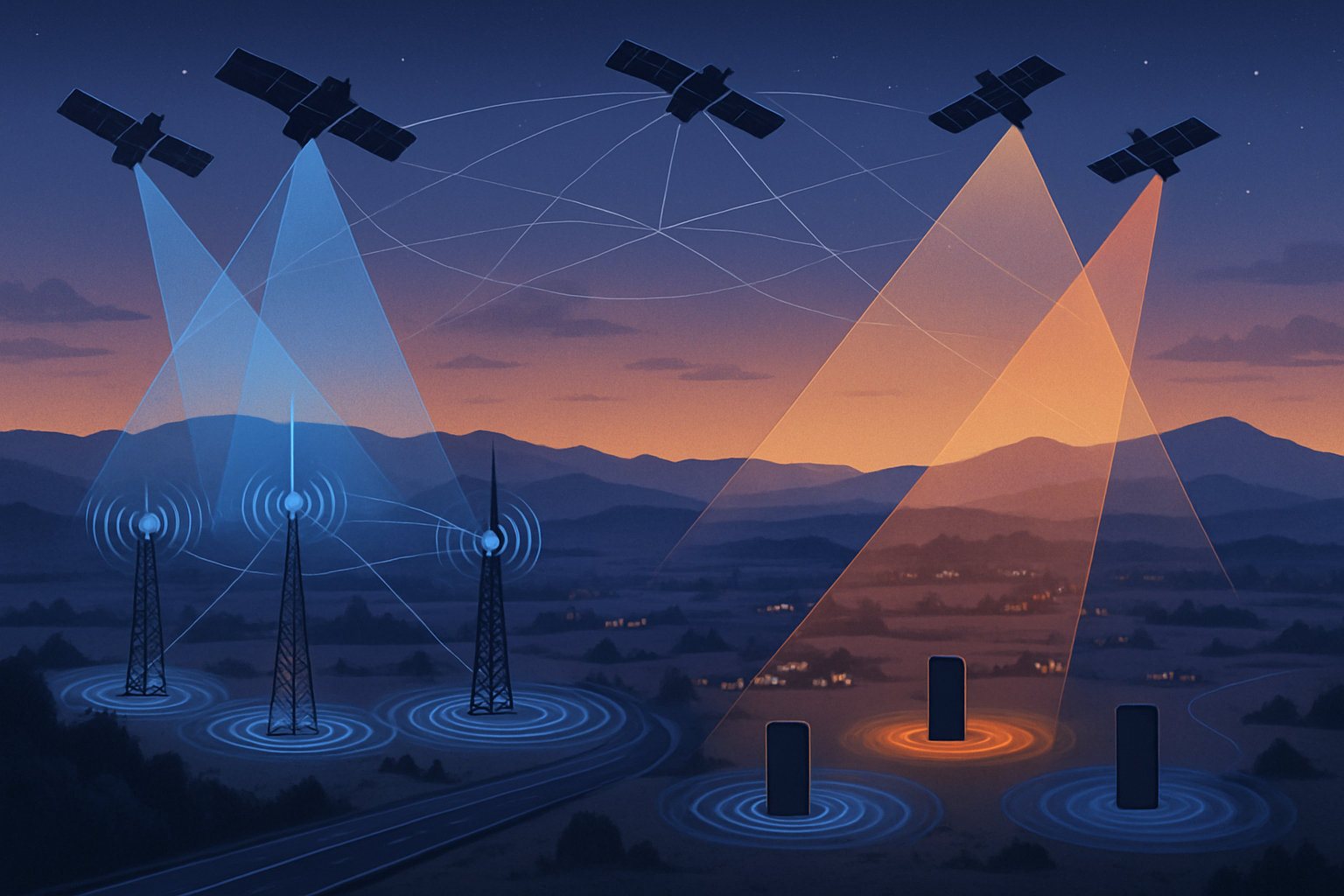
AT&T, T-Mobile and Verizon have moved from a plan to a formal partnership aimed at shrinking cellphone dead zones across the United States.
The carriers said Thursday, October 1, that they had entered into a joint-venture agreement focused on satellite-enabled connectivity in places where conventional wireless networks cannot reliably reach. They appointed wireless-industry veteran Paul Roth as interim chief executive while they search for a permanent leader.
The announcement is a significant escalation of cooperation among companies that normally compete for the same customers. The venture will pool some spectrum resources and develop a more unified way for satellite providers to connect with mobile users. The stated targets include rural and remote communities, emergency situations and areas where building additional cell towers is difficult or uneconomical.
But the headline promise—fewer dead zones—should not be confused with an immediate new service. The carriers have not disclosed a consumer launch date, pricing, compatible-phone list or the amount of money each company will invest. They also have not named one satellite operator as the exclusive provider for the venture.
That uncertainty is important because satellite-to-phone connectivity is not simply a cell tower moved into orbit. Direct-to-device systems must coordinate satellite radio links, carrier spectrum, network authentication, phone hardware and software. The experience can also depend on a user's view of the sky, satellite position, available capacity and the type of service being used.
The first improvements are likely to focus on keeping people connected when terrestrial coverage is unavailable, rather than replacing a normal 5G connection. Messaging and limited data can be useful on a remote highway or in a national park, while a nearby cell site will generally remain the better option for high-speed, high-volume traffic.
The venture's emergency role may prove just as important as its rural-coverage ambitions. A satellite connection could provide a backup path when storms, wildfires or other disasters damage towers, fiber routes or commercial power. Verizon has separately described satellite-based assets as part of its disaster-response infrastructure, while the joint venture is intended to make satellite access more consistent across providers.
The companies also say the effort will be open to multiple satellite providers and could establish common technical specifications. In theory, that could give satellite companies a larger addressable market and make it easier for device makers and app developers to support satellite features without tailoring every product to one carrier arrangement.
However, the partnership does not erase the carriers' existing satellite deals. Each company can continue pursuing its own arrangements independently, meaning customers may still encounter differences in supported phones, available features and plan requirements. The joint venture is better understood as a shared integration and standards effort than as a single nationwide satellite network.
The next test will be execution. The carriers must decide how customers will authenticate across networks, which satellite systems will be supported, what phones can connect and whether access will be included in existing plans or sold separately. Until those questions are answered, the announcement is a blueprint—not proof that every familiar dead zone is about to vanish.
For consumers, the practical takeaway is promising but limited: the U.S. wireless industry is trying to make satellite connectivity less fragmented. The real breakthrough will come only when a customer can enter an uncovered area, use an ordinary phone and connect without having to understand which carrier, satellite partner or plan is handling the signal.
Sources & Further Reading
- AT&T official announcementPrimary source
- Verizon official announcementPrimary source
- T-Mobile SEC filingPrimary source
- Federal Communications Commission, FCC 24-28Primary source
- Mobile World Live
StoryBreak
Independent digital news and reporting, updated throughout the day.
This article was researched and drafted with AI assistance and reviewed as part of StoryBreak's editorial process before publication. Read our editorial standards.