Why Bad Bunny’s Super Bowl Halftime Show Swept All Seven Emmy Nominations
Bad Bunny’s Super Bowl LX halftime show won seven Emmys, including the live variety special prize. The sweep reflects a rare alignment of performance, stage design, choreography and broadcast engineering.
By StoryBreak
Published September 7, 2026 at 1:18 AM
Bad Bunny’s Super Bowl LX halftime show did not merely win an Emmy. It won across the machinery that makes a live television spectacle work.
The Apple Music Super Bowl LX Halftime Show Starring Bad Bunny took all seven awards for which it was nominated at the first night of the 2026 Emmy ceremonies, held September 5 in Los Angeles. The haul included Outstanding Variety Special (Live), giving Bad Bunny his first Emmy, as well as honors for choreography, production design, music direction, sound mixing, lighting, technical direction and camerawork, and directing.
That list explains why the result matters. This was not one award repeated in different forms. It was recognition from separate branches of the television craft system, each evaluating a different part of the same 12-to-15-minute event.
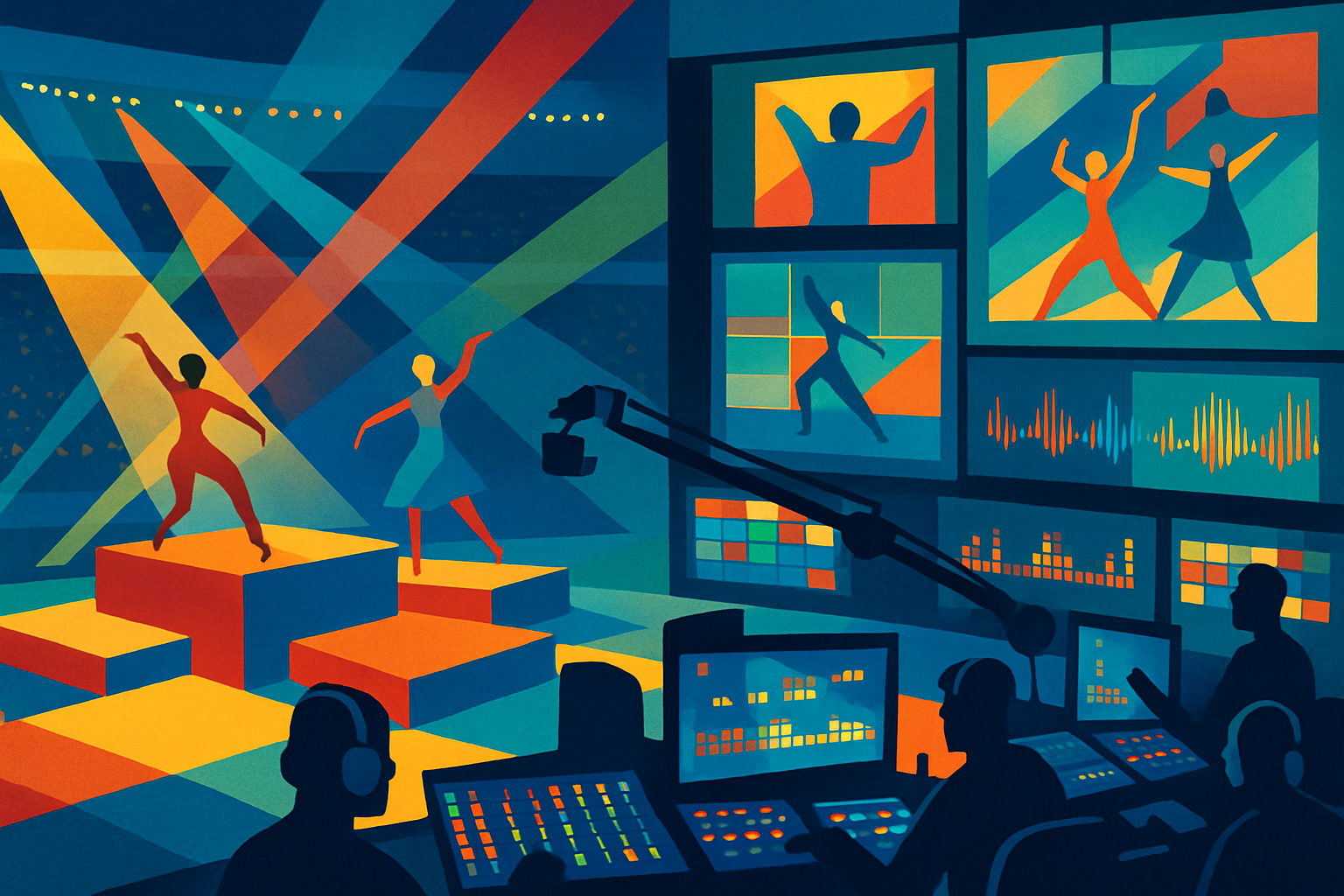
The overall live-special award says the broadcast worked as a unified piece. The directing award recognizes how that piece was shaped in real time. Technical direction and camerawork address the difficult task of turning a fast-moving stadium performance into a coherent television image. Lighting and production design concern the physical and visual world built for the performance. Music direction and sound mixing deal with the show’s musical architecture and the challenge of making it translate beyond the stadium. Choreography connects the performers, dancers, cameras and stage movement into a single visual rhythm.
In other words, the sweep suggests that the production’s strength was integration. A halftime show can have impressive individual elements and still feel disjointed on screen. A camera move can obscure a dance formation; a lighting cue can overwhelm a performer; a large stage can look flat when compressed into a television frame. The Emmy results indicate that Bad Bunny’s team solved those problems simultaneously enough for voters in multiple craft categories to recognize the work.
The production also had a clear cultural point of view. Coverage of the performance emphasized its Puerto Rican identity and its broader celebration of Latino culture. That dimension was not separate from the technical achievement. It gave the designers, choreographers, musicians and camera team a coherent artistic brief: the show had to feel rooted in Bad Bunny’s world while remaining legible to the enormous Super Bowl audience.
That is part of what distinguishes a major live broadcast from a concert captured by cameras. A concert audience can choose where to look. A television audience sees what the director selects, when the director selects it. The success of a halftime show therefore depends on controlling attention across a constantly changing environment—performers moving across the field, scenery shifting, lighting transforming the space and music driving the edit.
The seven awards amount to an institutional judgment that the show’s concept survived that translation. The cultural message reached the screen, but so did the mechanics behind it.
For Bad Bunny, the result is a career milestone. For the production industry, it is a reminder that the most visible performer is only one part of a live special’s authorship. The Emmy sweep belongs to the singer, but also to the designers, choreographers, musicians, mixers, lighting crew, camera operators, technical directors and producers who made the performance function as television.
The main 78th Emmy telecast is scheduled for September 14. By then, the halftime show will already have made its central argument: spectacle is not simply what happens onstage. It is the seamless coordination of everything the audience is meant to notice—and everything it is not.
Sources & Further Reading
- Television AcademyPrimary source
- Television AcademyPrimary source
- Associated Press
- Variety
- Pitchfork
- TIME
- Axios
StoryBreak
Independent digital news and reporting, updated throughout the day.
This article was researched and drafted with AI assistance and reviewed as part of StoryBreak's editorial process before publication. Read our editorial standards.