The Research-Backed Ways to Tame Cravings When Starting a New Diet
Cravings often feel strongest at the beginning of a diet, but research suggests they do not necessarily grow over time. Structured calorie reduction, higher-protein meals, adequate sleep and mindfulness strategies may all help make tempting foods easier to manage.
By StoryBreak
Published September 2, 2026 at 3:56 PM
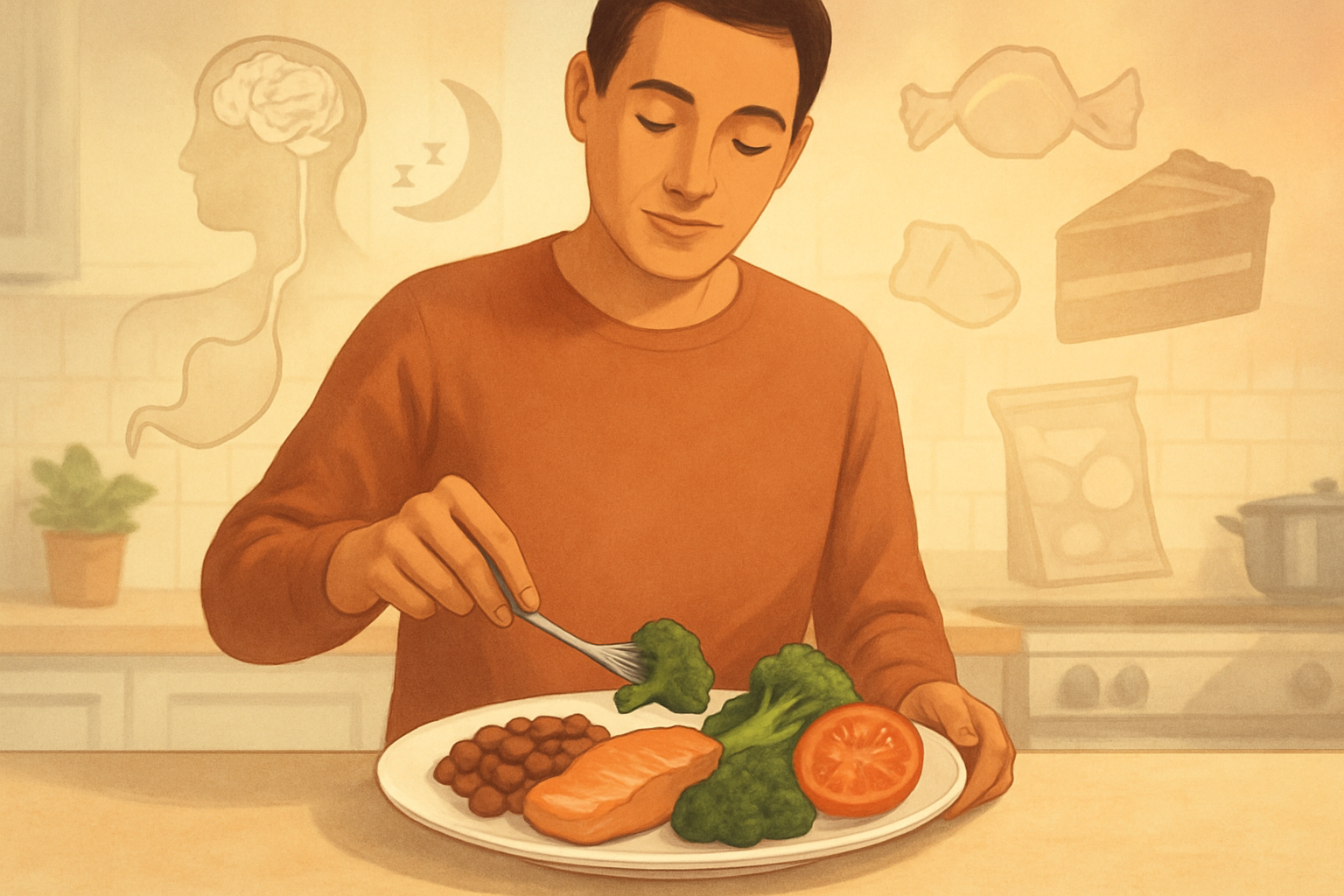
Starting a new diet can make cravings feel louder, especially when familiar foods suddenly become “off limits.” But the research offers a more encouraging message: cravings are not always a permanent consequence of eating less, and they may decline as a new eating pattern becomes familiar.
A 2017 systematic review and meta-analysis examined eight studies of adults with obesity who followed calorie-restricted diets for at least 12 weeks. Overall food cravings fell modestly, as did cravings for sweet, high-fat, starchy and fast foods. The researchers said the findings were consistent with a “de-conditioning” idea: repeated exposure to a different eating pattern may gradually weaken the learned link between certain foods and reward.
That does not mean cravings disappear immediately—or that every diet works the same way. The studies varied in their diets, participants and methods, and the review found substantial differences between them. Still, the results challenge the assumption that eating fewer calories inevitably produces increasingly intense cravings.
Build meals around fullness
One practical strategy supported by several lines of research is to avoid making meals so small or unbalanced that hunger compounds the craving. Protein appears particularly useful for some people.
In a randomized crossover study of 27 women, a breakfast containing more protein reduced reported food cravings compared with an equally calorie-dense, higher-carbohydrate breakfast. The study was small and measured short-term responses, so it cannot establish that a high-protein breakfast will control cravings for everyone. But it supports a simple approach: include a protein-rich food—such as eggs, yogurt, beans, tofu, fish or poultry—in meals rather than relying mainly on refined carbohydrates.
Fiber- and water-rich foods can also make a diet easier to sustain. The Centers for Disease Control and Prevention says fruits and vegetables can increase fullness while adding relatively few calories, particularly when they replace more calorie-dense ingredients. Whole fruit is generally more filling than juice because it retains its fiber.
The key word is “substitute,” not simply “add.” Adding vegetables to an existing meal may not lower calorie intake unless they replace some higher-calorie food. A bowl with beans and vegetables, for example, may be more satisfying than a smaller portion of a low-fiber snack that leaves hunger unresolved.
Do not ignore sleep
Sleep is easy to overlook when the focus is on food, but insufficient sleep can make cravings harder to handle. A review of sleep-and-diet research describes randomized experiments in which even a night of modest sleep restriction increased hunger, food cravings, sensitivity to food rewards and the tendency to choose larger portions.
The breakfast study reached a similar cautionary conclusion: the higher-protein meal reduced cravings, but shortened sleep weakened its effect on fullness. In other words, changing the menu may help, but it cannot always compensate for being chronically overtired.
That is not proof that improving sleep alone causes weight loss or eliminates cravings. Researchers have noted that intervention studies isolating sleep as a craving treatment remain limited. It is better understood as one factor that can make appetite regulation easier—or harder.
Practice responding instead of suppressing
Trying never to think about a desired food can backfire for some people. A newer systematic review and meta-analysis of 24 controlled trials, including 1,920 adults, found that mindfulness-based interventions produced a small but statistically significant reduction in craving intensity. The review also found a larger reduction in “rebound intake”—eating after a restrictive period ended—although the researchers noted that the evidence was not uniformly strong for reducing total intake.
Mindfulness does not require treating a craving as a personal failure. A person might pause, identify whether the urge is driven by hunger, stress, habit or a food cue, and then decide what response fits the larger plan. That response could be eating a planned snack, choosing a satisfying alternative or having a modest portion of the desired food without turning it into an all-or-nothing event.
Choose a diet you can actually follow
Different diets may change different cravings. In a two-year randomized study comparing low-carbohydrate and low-fat diets, participants in the low-carbohydrate group reported larger declines in cravings for carbohydrates and starches, while the low-fat group reported larger declines in cravings for high-fat foods. Neither result proves that one diet is universally superior; it suggests that food preferences and the structure of a diet may influence which cravings ease.
The most realistic plan is therefore not necessarily the most restrictive one. A sustainable diet leaves room for satisfying meals, adequate protein and fiber, sleep, and flexibility. Cravings may still arise, particularly around stress, social situations or highly visible food cues. Research suggests the goal is not to win every encounter through willpower, but to design an eating pattern in which cravings become less frequent, less intense and less disruptive over time.
People with diabetes, a history of eating disorders or medical conditions affected by diet should seek individualized advice from a qualified health professional before making major changes.
StoryBreak
Independent digital news and reporting, updated throughout the day.
This article was researched and drafted with AI assistance and reviewed as part of StoryBreak's editorial process before publication. Read our editorial standards.