Even Dim Bedroom Light May Keep the Heart More Alert During Sleep, Studies Suggest
Research is raising concern that artificial light during sleep may alter heart-rate regulation, but the evidence so far shows short-term physiological changes—not proof that a night-light causes heart disease.
By StoryBreak
Published September 11, 2026 at 5:35 PM
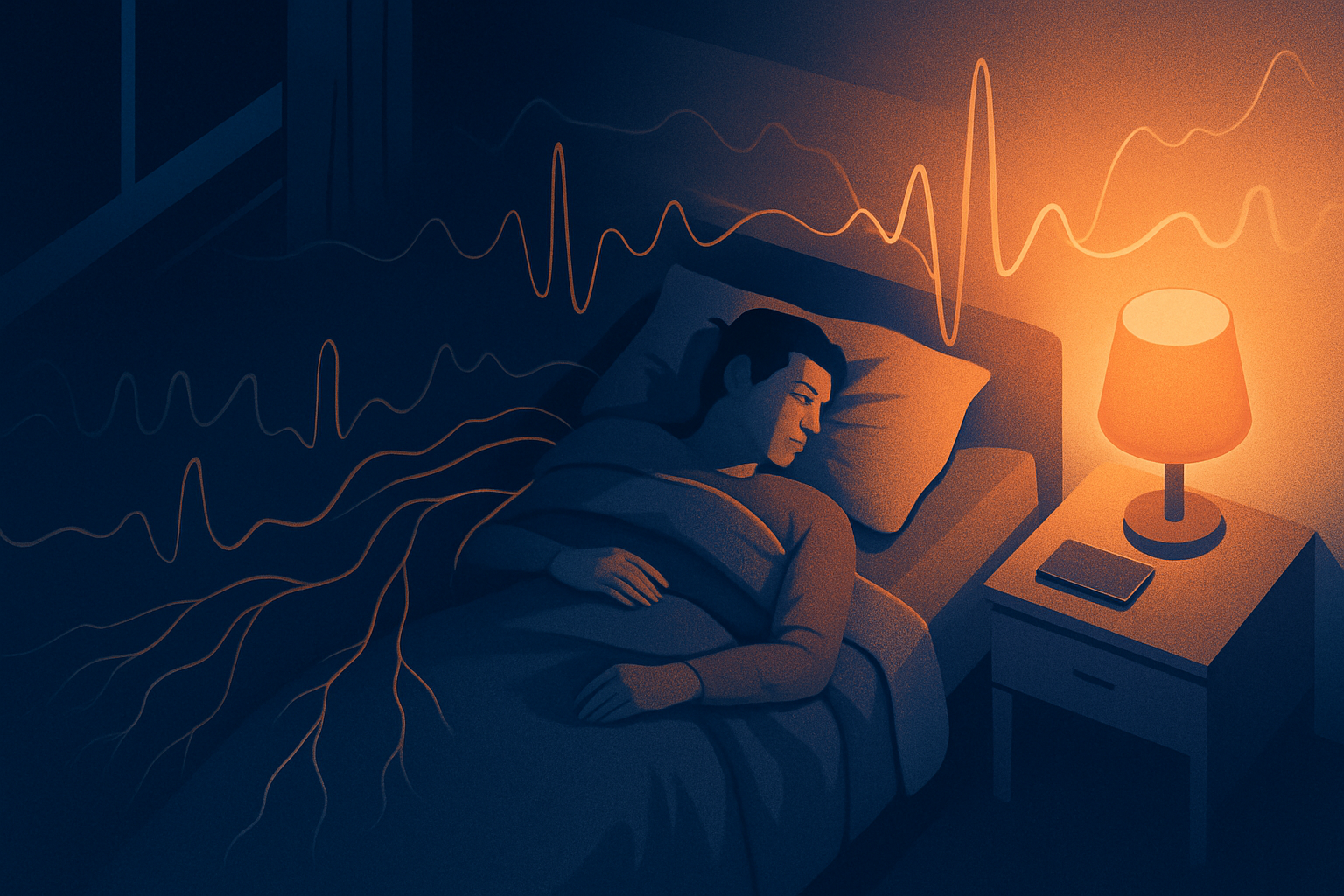
A bedroom that looks dark to the eye may not be dark enough for the body, according to a growing body of research on light exposure during sleep.
The strongest recent evidence comes from a 2024 prospective study in which researchers monitored 81 adults over 150 nights. Participants wore devices that tracked heart-rate variability, while researchers measured artificial light indoors and outdoors. Greater indoor nighttime light was associated with reduced parasympathetic activity—the part of the nervous system that helps the body settle and recover—and with a less favorable balance in cardiac autonomic function.
The study also found that lower oxygen saturation appeared to explain part of the relationship between indoor light and heart-rate variability. People who used blinds, curtains or other shading during sleep showed weaker associations than those without shading habits.
That sounds alarming, but the result needs to be read carefully. The study observed people in their ordinary environments; it did not randomly assign them to sleep under different lighting conditions. That means it can identify an association, not prove that bedroom light caused the change. Other factors, including room conditions, sleep quality or health behaviors, could also play a role.
A smaller controlled experiment provides a more direct test. Published in 2022, the study placed 20 healthy young adults in a sleep laboratory. On one night, participants slept under moderate room lighting of 100 lux. On another, they slept in light below 3 lux. Under the brighter condition, their heart rates were higher during sleep and their heart-rate variability was lower. They also showed greater insulin resistance the following morning.
The distinction between those light levels matters. The experiment did not test a tiny glow from a covered alarm clock or a distant streetlamp. It tested moderate room illumination—enough light to be clearly present. The findings therefore support a cautious conclusion: sleeping in a lit room can affect cardiovascular regulation in the short term, but the studies do not show that every dim night-light creates a meaningful long-term risk of heart attack or stroke.
Why would light affect the heart while someone is asleep? Light is one of the main signals that helps regulate the body’s circadian clock. Exposure at night can influence systems involved in alertness, hormone timing and autonomic nervous-system activity. In the laboratory study, the heart-rate changes occurred even though the participants were still asleep, suggesting that sleep does not necessarily prevent the body from responding to its surroundings.
Earlier controlled research has also found that ambient light can alter daily patterns of blood pressure and heart rate. Together, the studies point to a plausible biological pathway, but they do not yet provide a dose that can be labeled dangerous for everyone.
For now, the practical response is straightforward rather than dramatic: turn off unnecessary lamps and televisions, block light coming through windows, and position unavoidable night-lights away from the face and use the lowest brightness that allows safe movement. People who need light for falls prevention should not sacrifice safety; a dim, targeted light is more sensible than leaving a whole room illuminated.
The bigger unanswered question is whether these short-term changes accumulate over months or years. Researchers still need larger studies that measure bedroom light directly and follow people long enough to determine whether nighttime exposure contributes to high blood pressure, diabetes or cardiovascular disease.
The evidence does not justify fearing every glow in the bedroom. It does suggest that darkness is not merely a comfort preference: for the sleeping body, it may be part of the recovery environment.
Sources & Further Reading
- PubMed Central / Proceedings of the National Academy of SciencesPrimary source
- PubMedPrimary source
- PubMedPrimary source
StoryBreak
Independent digital news and reporting, updated throughout the day.
This article was researched and drafted with AI assistance and reviewed as part of StoryBreak's editorial process before publication. Read our editorial standards.