ChatGPT, Claude and Grok Hit by Simultaneous Outages as AI Services Falter Worldwide
ChatGPT, Claude and Grok experienced service disruptions on Thursday, September 3, with outage reports surging across multiple platforms at roughly the same time. The cause remains unclear, although Microsoft Azure was also reporting problems. Most services began recovering later in the day.
By StoryBreak
Published September 3, 2026 at 10:16 PM
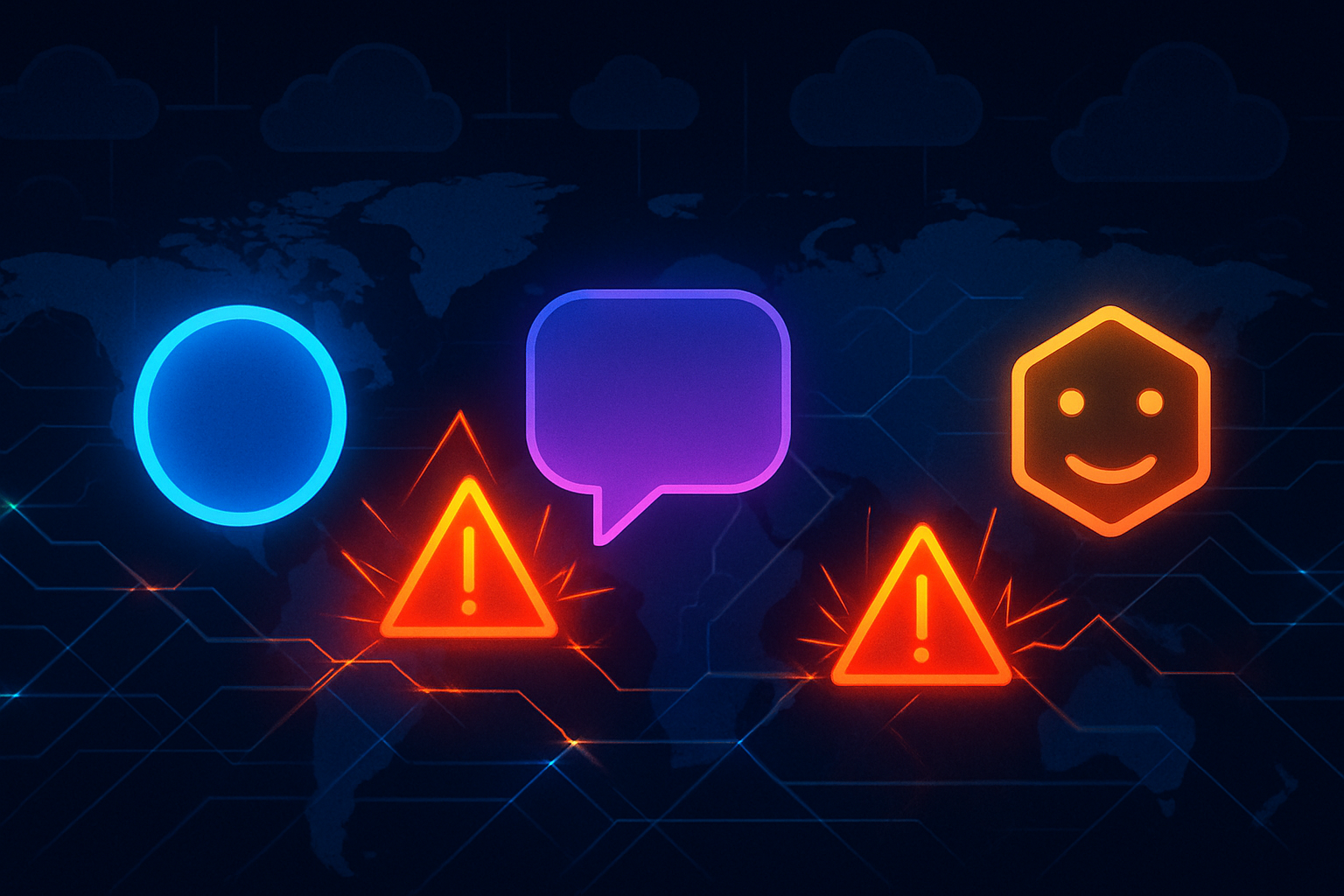
ChatGPT, Claude and Grok suffered overlapping service disruptions on Thursday, September 3, temporarily cutting users off from three of the world’s most widely used AI assistants.
The incidents were confirmed on the companies’ status pages as outage reports surged. OpenAI said it was investigating elevated errors affecting ChatGPT and Codex, while Anthropic reported elevated errors across several Claude models. xAI separately acknowledged an outage affecting Grok.
The disruptions were not necessarily identical. OpenAI described a broad incident involving 15 ChatGPT components and four Codex components. Anthropic’s incident was concentrated on a group of models, including Claude Opus 4.8, Opus 5 and other model variants, with the company saying some services had returned to baseline error levels before the incident was fully resolved. xAI reported a models outage affecting Grok and later said traffic had returned to healthy levels.
The timing, however, was striking. Downdetector recorded a sharp rise in user complaints involving OpenAI, Anthropic and xAI during the same morning in the United States. Reports involving OpenAI reached more than 37,000 at their peak, according to Forbes. Claude and Grok also saw significant increases in complaints, although their reported totals were much lower.
The disruptions extended beyond the three services named in the original reports. Users also reported problems with Google’s Gemini and other AI products, though Google had not issued a corresponding confirmed outage notice at the time of reporting. Cloudflare also saw a rise in user reports during the same period.
Microsoft Azure was experiencing service issues as well, raising questions about whether shared infrastructure played a role. Azure provides cloud services used by major technology companies, including AI providers. But there was no official confirmation that an Azure incident caused the failures, and the companies’ public status updates did not identify a common root cause.
That distinction matters. Similar timing does not by itself prove that the platforms failed because of one shared outage. Large AI services rely on a complicated mix of cloud infrastructure, content-delivery networks, authentication systems, model-serving clusters and third-party tools. A problem in one layer can affect several products, while independent incidents can also appear connected when millions of users report trouble at the same time.
OpenAI said it had applied a mitigation and was monitoring recovery. Anthropic deployed a fix and reported that the impact had ended at 9:16 a.m. Pacific time, or 16:16 UTC. xAI reported that its Grok traffic was healthy again after an outage lasting several hours on some platforms.
By early afternoon in the Eastern time zone, outage reports for ChatGPT, Claude, Grok and Gemini had fallen substantially, according to Forbes. OpenAI’s status page later listed its affected services as recovered, while Anthropic and xAI also reported restoration.
The episode offered a reminder of how quickly AI outages can become visible across the internet. As businesses and individuals increasingly use chatbots for research, coding, customer service and daily work, a short interruption at one provider can prompt users to switch to a competitor. Thursday’s simultaneous disruptions showed the limits of that backup strategy: when several leading services falter together, there may be no immediate substitute.
The cause of the coordinated-looking disruption remained unresolved as services returned. The companies are expected to provide more detailed post-incident explanations if their investigations identify a shared dependency or other common factor.
Sources & Further Reading
StoryBreak
Independent digital news and reporting, updated throughout the day.
This article was researched and drafted with AI assistance and reviewed as part of StoryBreak's editorial process before publication. Read our editorial standards.