
Congo Ebola Outbreak Passes 8,000 Confirmed Cases as Response Struggles to Contain Spread
The Democratic Republic of the Congo has recorded 8,067 confirmed Bundibugyo virus Ebola cases and 3,901 deaths through September 26, with transmission continuing across 63 health zones in seven provinces. WHO says delayed detection, community deaths, insecurity and limited access to care are undermining efforts to control the country’s largest Ebola outbreak on record.
By StoryBreak
Published September 28, 2026 at 11:25 PM
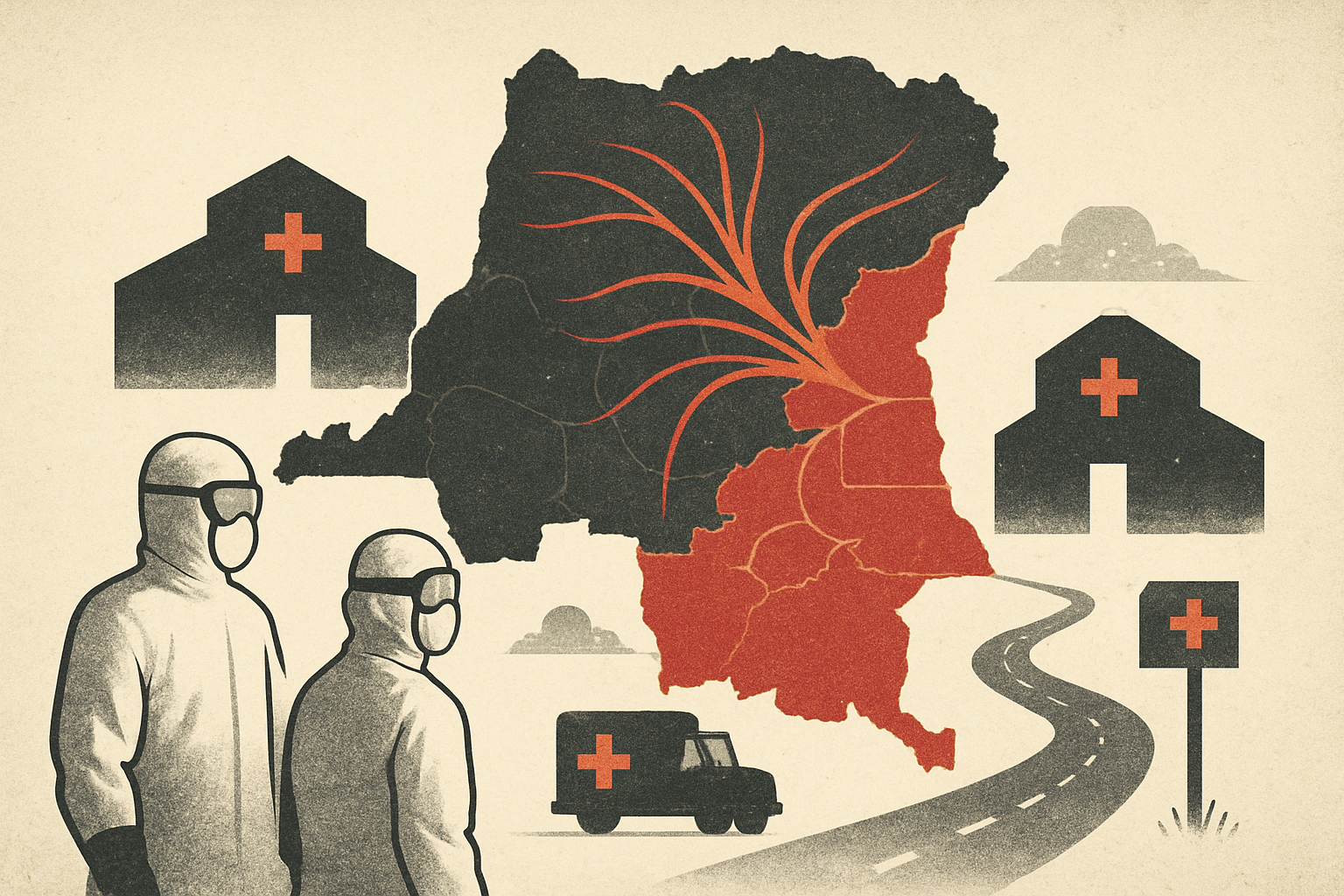
The Democratic Republic of the Congo’s Ebola outbreak has passed 8,000 confirmed cases, with health authorities reporting 8,067 infections and 3,901 related deaths through September 26, according to the latest figures compiled by the European Centre for Disease Prevention and Control.
The outbreak, caused by the rare Bundibugyo species of Ebola virus, is now affecting 63 health zones across seven of the country’s 26 provinces. The latest update added 78 confirmed cases and 49 deaths. Ituri remains the epicenter, followed by North Kivu, but cases have also been reported in Haut-Uélé, Tshopo, Bas-Uélé, South Kivu and Sud Ubangi.
The numbers make this the largest Ebola outbreak ever recorded in the DRC. It has already far surpassed the country’s previous record outbreak, which produced 3,317 confirmed cases between 2018 and 2020.
But the most important measure of the crisis is not simply how many cases have been counted. It is how difficult it remains to find patients early enough to treat them and to identify people who may have been exposed.
The World Health Organization says the outbreak’s crude fatality ratio remains about 48%, based on confirmed cases and reported deaths. WHO has also highlighted the continuing number of deaths occurring in communities rather than treatment facilities, a sign that some patients are dying before they can receive specialized care. Delays in recognizing illness and reaching treatment can increase the risk of transmission within households, communities and health facilities.
The response is unfolding in an unusually difficult environment. Conflict and insecurity restrict movement, while displacement, poor access to basic services and long distances complicate surveillance and contact tracing. WHO says those conditions are hampering case finding, infection prevention and timely care.
The medical challenge is also unusually severe. Bundibugyo virus is a different Ebola species from the Zaire ebolavirus responsible for several earlier epidemics. WHO says there is currently no approved vaccine or specific treatment for Bundibugyo virus, although research and emergency guidance on possible countermeasures are continuing. That leaves the response heavily dependent on rapid diagnosis, isolation, supportive care, safe burials, infection-control procedures and community cooperation.
The latest ECDC update said 2,070 infected patients had recovered and 773 people were hospitalized in isolation. Yet only 74.7% of identified contacts were under follow-up in the affected provinces. In practical terms, that means a significant share of people known to have been exposed were not being successfully monitored at the time of the update—a gap that can allow new chains of transmission to go undetected.
The outbreak’s national trend is not uniform. WHO reported that incidence had begun to decline in Ituri from its mid-August peak, while North Kivu experienced a substantial increase into mid-September. Haut-Uélé continued to record sustained transmission, and Tshopo showed renewed activity after a period of lower incidence. Those differences matter because a national slowdown could conceal fresh acceleration in individual provinces or health zones.
The situation also needs to be separated from developments in neighboring Uganda. Uganda recorded 20 cases between May and June, but WHO declared that outbreak over on August 25 after 42 days without a new confirmed case. Transmission in the DRC, however, remains active and geographically extensive.
The next test for the response will be whether daily cases fall consistently across the affected provinces—or whether new health zones continue to appear. Improvements in contact monitoring, earlier care-seeking and protection for health workers will be critical. Until those measures catch up with the virus, the 8,000-case milestone is less a conclusion than a measure of how far the containment effort still has to go.
Sources & Further Reading
- World Health OrganizationPrimary source
- European Centre for Disease Prevention and ControlPrimary source
- World Health OrganizationPrimary source
- Associated Press
StoryBreak
Independent digital news and reporting, updated throughout the day.
This article was researched and drafted with AI assistance and reviewed as part of StoryBreak's editorial process before publication. Read our editorial standards.