The Largest U.S. Cyclospora Outbreak Is Over. The Food-Safety Questions Aren’t.
Federal officials say the lettuce-linked outbreak that sickened 12,883 people is over and the recalled product is off the market. But the broader 2026 Cyclospora surge is much larger, and investigators still do not know how the food became contaminated.
By StoryBreak
Published September 12, 2026 at 10:11 PM
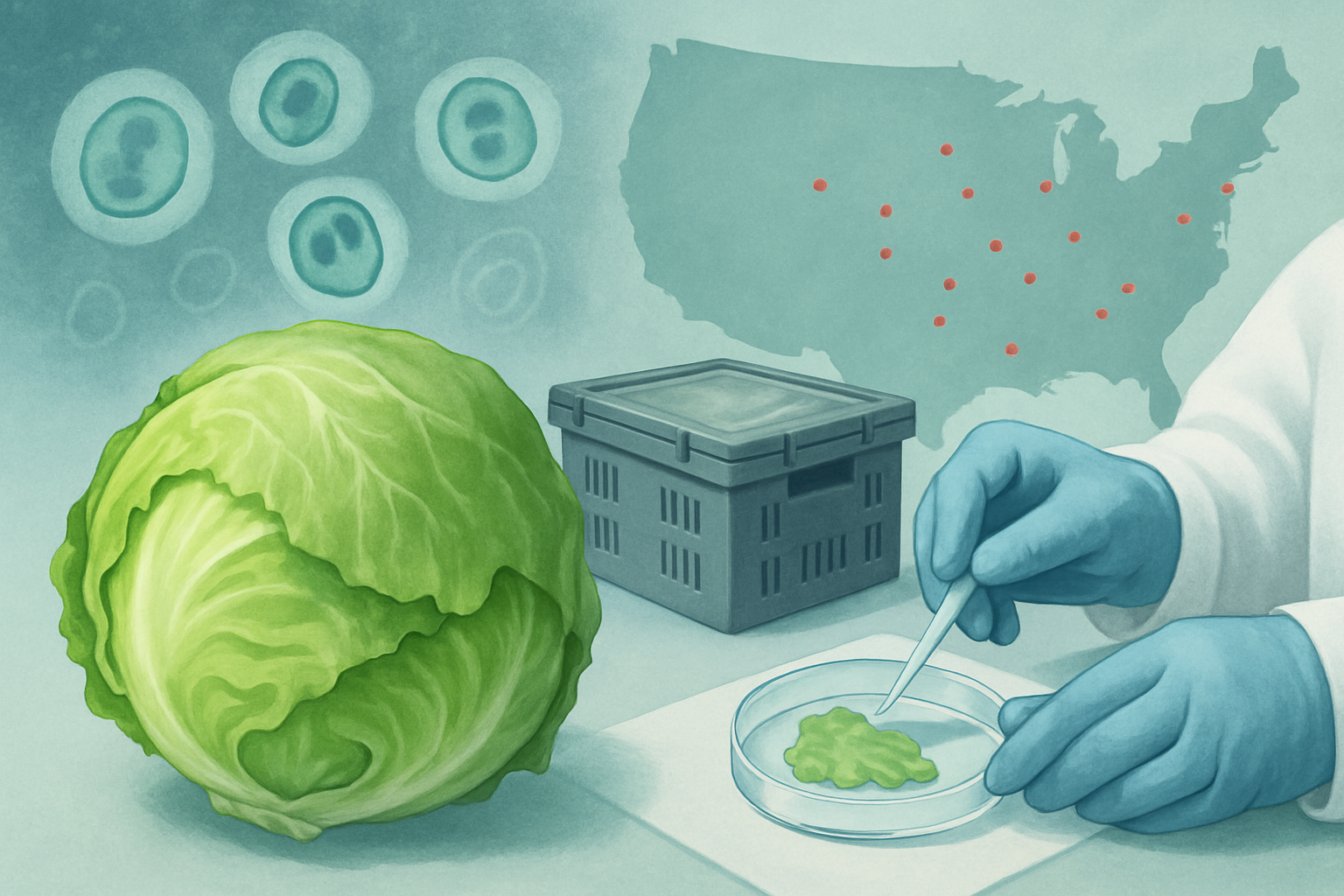
The largest known Cyclospora outbreak in U.S. history is over, federal officials said Friday—but the end of the outbreak is not the same as the end of the investigation, or the end of an unusually severe year for the parasite.
The Centers for Disease Control and Prevention said infections linked to processed iceberg lettuce from Taylor Farms de Mexico have declined sharply and that the recalled product is no longer available in stores or restaurants. The multistate outbreak ultimately included 12,883 reported illnesses across 21 states, 570 hospitalizations and two deaths.
Most illnesses began before the lettuce was recalled on July 17. At the outbreak’s peak, more than 1,000 infections were reported in a single day, according to the CDC. During August, the agency recorded fewer than two linked infections per day on average.
That decline is why officials can say the outbreak is over. It does not mean every person exposed to the parasite became sick immediately, nor does it mean every possible case has already appeared in the data. Cyclospora infections can take time to diagnose and report; the CDC says it may take about six weeks for case information to reach investigators.
The number that matters beyond 12,883
The lettuce-linked outbreak accounts for most—but not all—of the nation’s 2026 Cyclospora surge. Through September 8, the CDC had received reports of 19,595 laboratory-confirmed cases acquired in the United States, along with 1,043 hospitalizations and two deaths. By comparison, 1,180 domestic cases were reported during the comparable period in 2025.
In other words, the national case count is not a measure of how many people ate the recalled lettuce. It includes illnesses connected to other outbreaks, infections that have not been tied to a particular source, and cases still being sorted by public-health investigators.
The distinction is important for consumers: the specific lettuce outbreak is considered over, but Cyclospora itself has not disappeared. The CDC says cases can occur through contaminated food or water, and some sick people never receive testing because they recover without medical care.
What consumers should watch for
Cyclosporiasis is caused by the microscopic parasite Cyclospora cayetanensis. Common symptoms include watery diarrhea, loss of appetite, weight loss, stomach cramps, bloating, gas, nausea and fatigue. Symptoms often begin about a week after exposure, although the timing can range from two days to two weeks or longer.
Anyone with persistent or severe diarrhea should contact a health-care professional, particularly if symptoms are accompanied by dehydration, significant weight loss or an inability to keep fluids down. A clinician can determine whether testing or treatment is appropriate; consumers should not assume that every case of diarrhea is Cyclospora or try to diagnose themselves based on outbreak headlines.
For produce generally, the CDC advises washing hands and fresh fruits and vegetables under running water before eating, cutting or cooking. Washing cannot guarantee removal of Cyclospora, and cooking produce to at least 158 degrees Fahrenheit can kill the parasite when cooking is appropriate for the food.
What remains unanswered
The FDA has linked the outbreak to iceberg lettuce sourced from central Mexico and has completed on-site inspections and sample collection at growers and a processing facility there. But the agency is still investigating how the lettuce became contaminated. Samples collected during the inspections were still pending analysis in the agency’s latest update.
That unresolved question is the larger lesson of the outbreak. Removing contaminated food can stop new illnesses, but it does not by itself reveal whether contamination occurred through water, soil, handling or another point in the supply chain. The outbreak is over for consumers—but the work of explaining how it happened is not.
Sources & Further Reading
- Centers for Disease Control and PreventionPrimary source
- U.S. Food and Drug AdministrationPrimary source
- Centers for Disease Control and PreventionPrimary source
- U.S. Food and Drug AdministrationPrimary source
- The Associated Press
StoryBreak
Independent digital news and reporting, updated throughout the day.
This article was researched and drafted with AI assistance and reviewed as part of StoryBreak's editorial process before publication. Read our editorial standards.