
‘Eating Jet Lag’ Could Be Disrupting Your Health, New Study Finds
A large French cohort study found that men whose meal times shifted between workdays and weekends faced higher risks of cardiovascular and coronary heart disease. Researchers say the findings add to growing evidence that meal timing—not just what people eat—may influence long-term health, though the observational results do not prove cause and effect.
By StoryBreak
Published September 3, 2026 at 3:05 AM
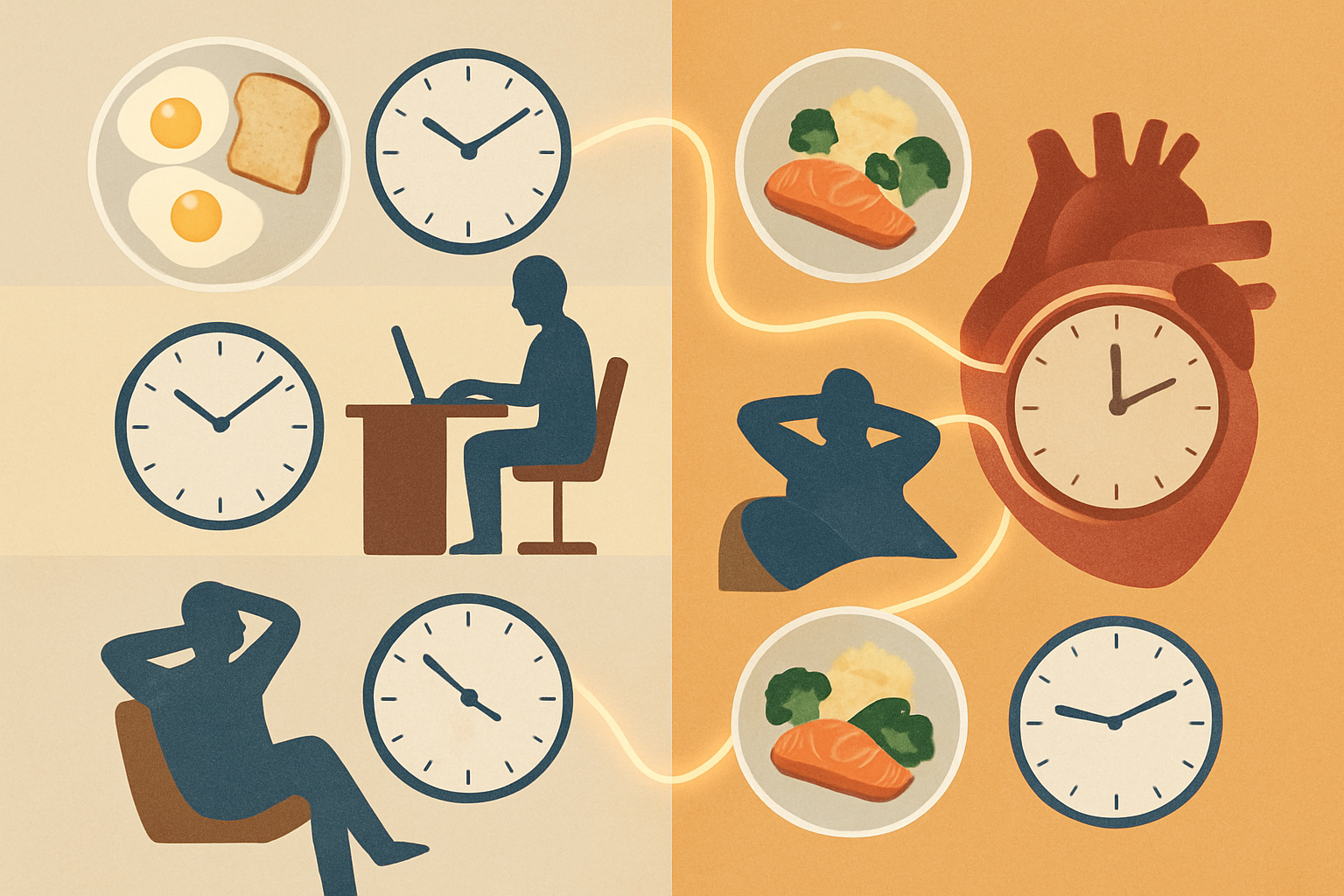
Your body may not be the only thing thrown off by an irregular schedule. A new study suggests that shifting meal times between workdays and weekends—a pattern researchers call “eating jet lag”—may be associated with a higher risk of cardiovascular disease, particularly among men.
The study, published September 1, 2026, in Communications Medicine, analyzed dietary and health data from 104,806 adults enrolled in France’s NutriNet-Santé cohort. Participants recorded the times of their first and last calorie intake on workdays and weekends. Researchers then calculated the difference between those schedules and followed participants for a median of 8.1 years.
Among men, each additional hour of eating jet lag was associated with a 14% higher risk of cardiovascular disease and a 21% higher risk of coronary heart disease. The analysis found no statistically significant association among women.
The direction of the schedule change appeared to matter less than the inconsistency itself. Men who ate earlier on weekends than during the workweek had higher cardiovascular and coronary heart disease risks than those whose meal windows stayed largely consistent. Men who delayed their meals on weekends also showed a higher risk of coronary heart disease.
The researchers adjusted their analysis for a range of factors that can affect cardiovascular health, including age, smoking, alcohol intake, physical activity, diet quality, sleep duration, bedtime and social jet lag. The association remained among men after those adjustments, suggesting that meal-time regularity may have an effect separate from sleep and overall dietary habits.
Still, the findings do not show that irregular meal timing directly causes heart disease. The study was observational, meaning researchers tracked existing behaviors rather than assigning participants to different eating schedules. Meal times were also based on dietary records, and unmeasured differences between people with regular and irregular routines could have influenced the results.
The concept of eating jet lag builds on the better-known idea of social jet lag—the mismatch between a person’s sleep schedule on workdays and days off. Food is another signal that helps regulate the body’s circadian system, the network of biological rhythms that influences sleep, hormone release and metabolism. When meal timing repeatedly shifts, the clocks in organs involved in digestion and energy regulation may receive conflicting signals.
Earlier research has linked eating jet lag with higher body mass index, waist circumference, blood pressure and poorer glucose regulation. A 2021 study of women in the United States found that greater differences in meal timing between weekdays and weekends were associated with less favorable cardiometabolic profiles. Other research has reported associations between meal-timing variability and body composition, mental health or blood-sugar measures in specific groups.
The new French study is notable for its size and follow-up period. It is also the first prospective investigation, according to its authors, to examine eating jet lag in relation to cardiovascular disease events over time. However, the sex-specific result requires confirmation in other populations before it can be used to make different dietary recommendations for men and women.
For now, the findings support a practical, if modest, lifestyle takeaway: keeping meals on a relatively stable schedule across the week may be worth considering, alongside established heart-health measures such as regular physical activity, not smoking, managing blood pressure and following an overall nutritious diet. The study does not establish a perfect breakfast, lunch or dinner time, nor does it suggest that occasional late meals are dangerous.
Instead, researchers are drawing attention to a pattern familiar to many people: eating at one rhythm during the workweek and shifting substantially later—or earlier—on days off. Whether narrowing that gap can reduce cardiovascular risk remains an open question that future clinical trials will need to test.
StoryBreak
Independent digital news and reporting, updated throughout the day.
This article was researched and drafted with AI assistance and reviewed as part of StoryBreak's editorial process before publication. Read our editorial standards.