Eight Common Food Preservatives Were Linked to Higher Blood Pressure Risk in a Large Study
A French cohort study of 112,395 adults found associations between eight widely used food preservatives and higher hypertension incidence. The results are not proof that the additives cause disease, but they add to questions about the long-term cardiovascular effects of heavily processed diets.
By StoryBreak
Published September 21, 2026 at 1:03 AM
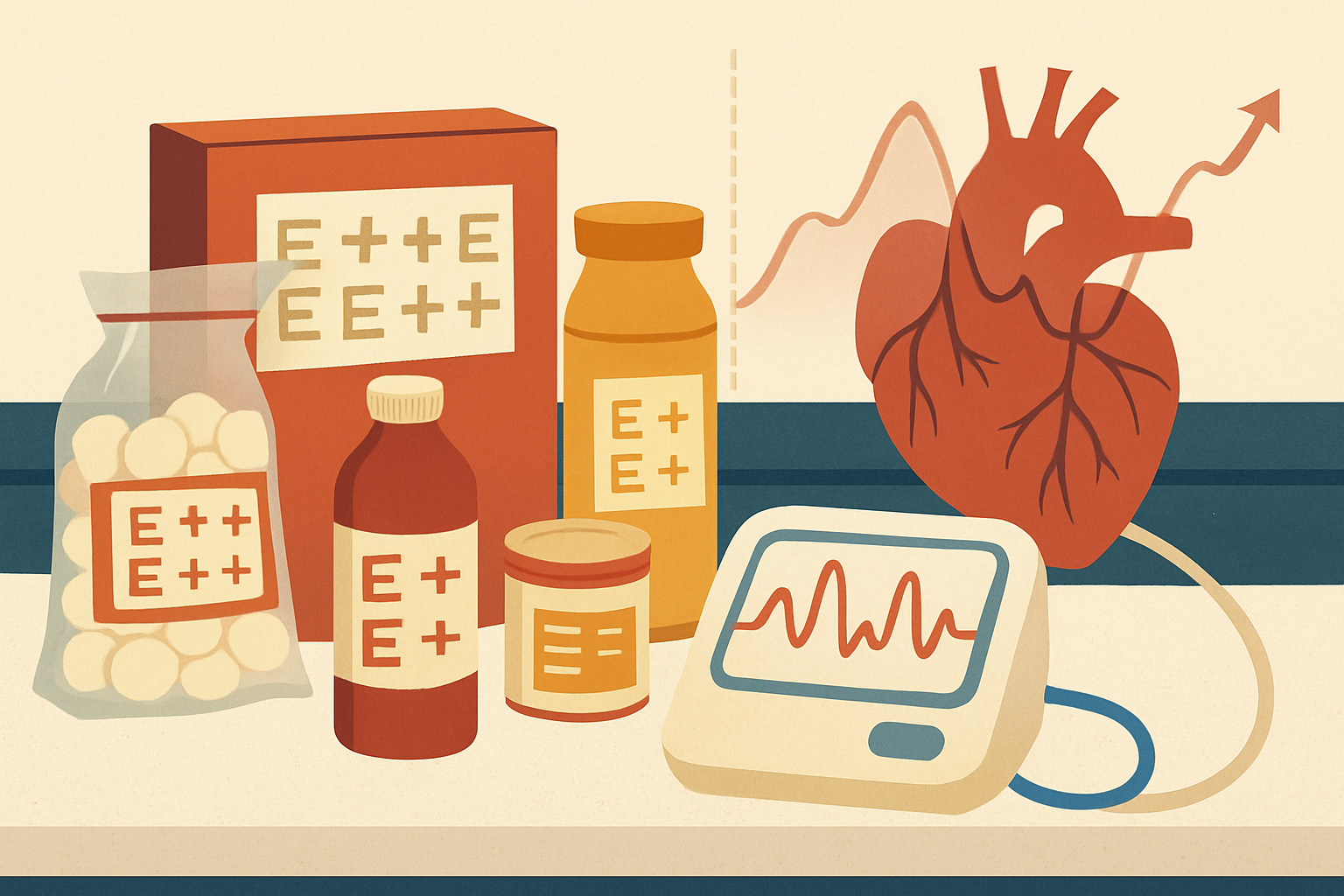
A large study of adults in France has identified eight widely used food-preservative additives associated with a higher incidence of high blood pressure—and, in one case, cardiovascular disease.
The findings come from the NutriNet-Santé cohort, which followed 112,395 participants for a median of about 7.9 years. Researchers combined repeated dietary records with information about commercial brands, food-composition databases and laboratory testing to estimate participants’ exposure to preservatives.
The eight additives associated with higher hypertension incidence were:
- Potassium sorbate, also known as E202
- Potassium metabisulphite, or E224
- Sodium nitrite, or E250
- Ascorbic acid, or E300
- Sodium ascorbate, or E301
- Sodium erythorbate, or E316
- Citric acid, or E330
- Extracts of rosemary, or E392
The study, published in the European Heart Journal, found that higher intake of ascorbic acid used as a food additive was also associated with a higher incidence of cardiovascular disease. That does not mean vitamin C itself was shown to damage the heart; the analysis concerned ascorbic acid as an additive in foods, and the researchers did not establish that the ingredient caused the outcome.
The broader pattern was more striking than any single ingredient. Participants with higher exposure to total non-antioxidant preservatives had a 29% higher incidence of hypertension and a 16% higher incidence of cardiovascular disease compared with those in the lower-exposure group. Those figures are relative associations, not a prediction that an individual person’s risk will rise by exactly that amount.
The study also illustrates why the findings should be interpreted cautiously. It was an observational cohort study: researchers recorded what people ate and tracked later diagnoses, rather than assigning participants to consume specific additives. Even with adjustments for potential confounding factors, people who eat more packaged foods may differ in many ways from people who eat less of them—including in sodium intake, overall diet quality, physical activity and other health behaviors.
The researchers reported 5,544 new cases of hypertension and 2,450 cardiovascular-disease cases during follow-up. Nearly all participants—99.5%—had consumed at least one preservative during the first two years of the study, underscoring how difficult it is to study these substances as isolated exposures in modern diets.
That ubiquity also complicates the practical takeaway. The study does not show that a person should eliminate every food containing citric acid or avoid vitamin C supplements. Nor does it establish that any one additive is more important than the overall nutritional profile of the foods in which it appears.
For now, the clearest consumer-level implication is broader: reducing reliance on heavily industrially formulated foods may lower exposure to mixtures of additives while also making it easier to control sodium, added sugars and saturated fat. That is a dietary strategy, not a medical treatment—and people with high blood pressure should not stop prescribed medication or change treatment based on this study.
The authors say the associations need to be replicated in other populations and tested in experimental research. Until then, the findings are best understood as a signal for further investigation: preservatives may be part of a larger relationship between industrial food exposure and cardiovascular health, but this study does not yet establish cause and effect.
Sources & Further Reading
- European Heart Journal / Oxford AcademicPrimary source
- PubMed CentralPrimary source
- PubMedPrimary source
- American College of Cardiology
StoryBreak
Independent digital news and reporting, updated throughout the day.
This article was researched and drafted with AI assistance and reviewed as part of StoryBreak's editorial process before publication. Read our editorial standards.