
England’s water crisis deepens as drought exposes pressure on supplies and infrastructure
With reservoir levels falling, 10 water companies imposing hosepipe bans and 71% of England classified as being in drought, regulators are relying on short-term restrictions while longer-term plans focus on leakage cuts, demand reduction, reservoirs, recycling and desalination.
By StoryBreak
Published August 29, 2026 at 8:07 PM
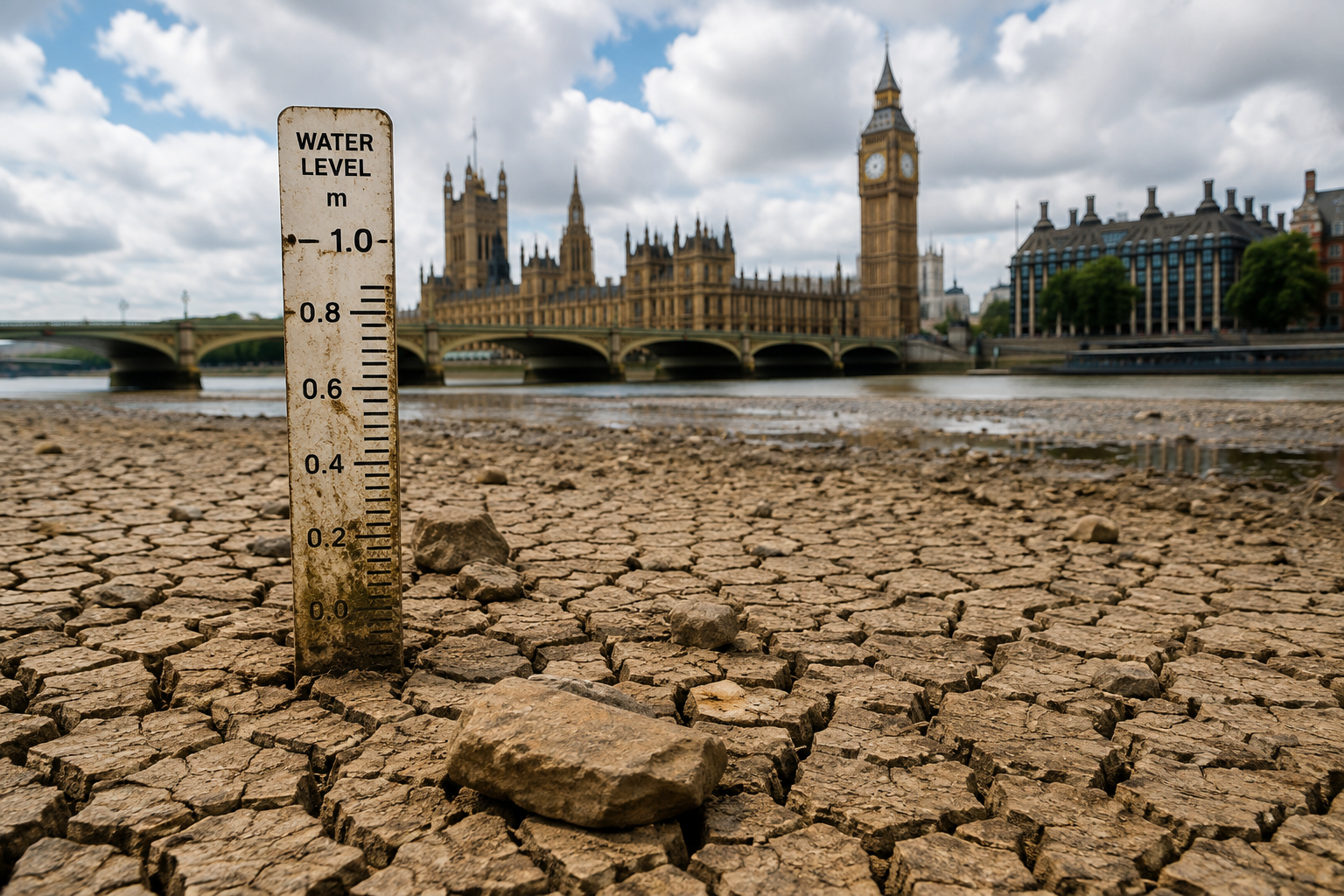
England’s water system is under acute pressure after an exceptionally dry summer pushed reservoir storage well below seasonal levels and left millions of people facing restrictions on how they use water.
The Environment Agency said 71% of England was in drought during the week of August 21–27, 2026. Ten water companies had temporary use bans in place across all or parts of their supply areas, affecting customers in regions including London, East Anglia, the South East and the South West.
Reservoir storage across England stood at 59.8% of capacity on August 25—2.7 percentage points lower than a week earlier and 18.2 points below the average for that time of year. Nine reservoirs were classed as exceptionally low, including Grafham Water and Rutland Water in the Anglian region, Hanningfield Reservoir in Essex and Ardingly Reservoir in West Sussex.
The immediate concern is not that England is about to run out of drinking water nationwide. The risk is more uneven: particular water-resource zones can come under severe strain when rainfall, river flows and groundwater recharge fall at the same time that demand rises.
That pressure is already affecting farmers and the environment. The Environment Agency has imposed more than 1,500 abstraction restrictions, including formal limits on spray irrigation in parts of East Anglia. Low river flows have contributed to ecological problems such as fish deaths, algal blooms and deteriorating water quality. Canal and navigation restrictions have also been introduced in response to falling water levels.
Water companies are using drought plans to manage the shortage. Hosepipe bans reduce discretionary use such as garden watering and car washing, while companies can seek drought permits or orders to alter how they abstract water. More severe emergency drought orders could allow restrictions on a much wider range of uses, but the government says measures of that kind have not been used since 1976.
The crisis has also revived scrutiny of leakage. The government’s National Framework for Water Resources says leakage accounts for about 19% of water entering supply nationally—roughly 2.6 billion litres a day in recent figures. That does not mean all of the lost water could immediately be delivered to customers: leaks occur across different networks and locations, and finding, repairing and upgrading buried infrastructure takes time. But reducing leakage is one of the few measures that can improve supply without extracting more water from rivers and aquifers.
Long-term planning is based on a two-part approach: reduce demand while developing additional sources. England’s water-resource plans aim to save about 2 billion litres a day through more efficient use, cut leakage by 1 billion litres a day and provide just under 2 billion litres a day from new sources such as reservoirs, water recycling and desalination.
Those plans are designed to address a projected shortfall of nearly 5 billion litres a day by 2055 between sustainable supplies and expected demand. The gap reflects population growth, climate change, the need to leave more water in vulnerable rivers and aquifers, and the requirement to prepare systems for more severe droughts.
The infrastructure options are expensive and slow to deliver. The current programme includes nine proposed new reservoirs, alongside transfers between regions, recycling schemes and desalination projects. Thames Water has also been preparing its Beckton desalination facility in east London for possible use by the end of 2026, although the plant has been used only rarely and requires operational work before it can contribute at scale.
The drought therefore presents a test of both emergency management and long-term delivery. Restrictions can reduce demand quickly, but they do not create new capacity. Whether England avoids repeated shortages will depend on how rapidly companies repair networks, expand metering and efficiency programmes, protect water sources and complete major supply projects.
For households, the practical position remains local rather than national: restrictions differ by company and postcode, and customers should check their supplier’s rules before using hoses, sprinklers or other outdoor equipment. The wider warning is that a country traditionally regarded as wet is not guaranteed a secure supply when rainfall becomes less reliable and demand continues to grow.
Sources & Further Reading
- Environment Agency, Dry weather and drought in England: 21 to 27 August 2026
- Environment Agency, Drought: how it is managed in England
- UK Government, National Framework for Water Resources 2025: Taking action on public water supplies
- Environment Agency, Water Resources Management Plans engagement page
- Ofwat, Water resource planning
- Thames Water, updates on drought response, reservoir levels and leakage action
StoryBreak
Independent digital news and reporting, updated throughout the day.
This article was researched and drafted with AI assistance and reviewed as part of StoryBreak's editorial process before publication. Read our editorial standards.