Two Giant Pandas Leave China for New Home at Zoo Atlanta
Ping Ping and Fu Shuang have begun a 10-year stay at Zoo Atlanta, restoring the city’s panda program after the previous four bears returned to China in 2024. Their arrival is part of a renewed conservation partnership that also carries diplomatic significance.
By StoryBreak
Published September 27, 2026 at 3:55 PM
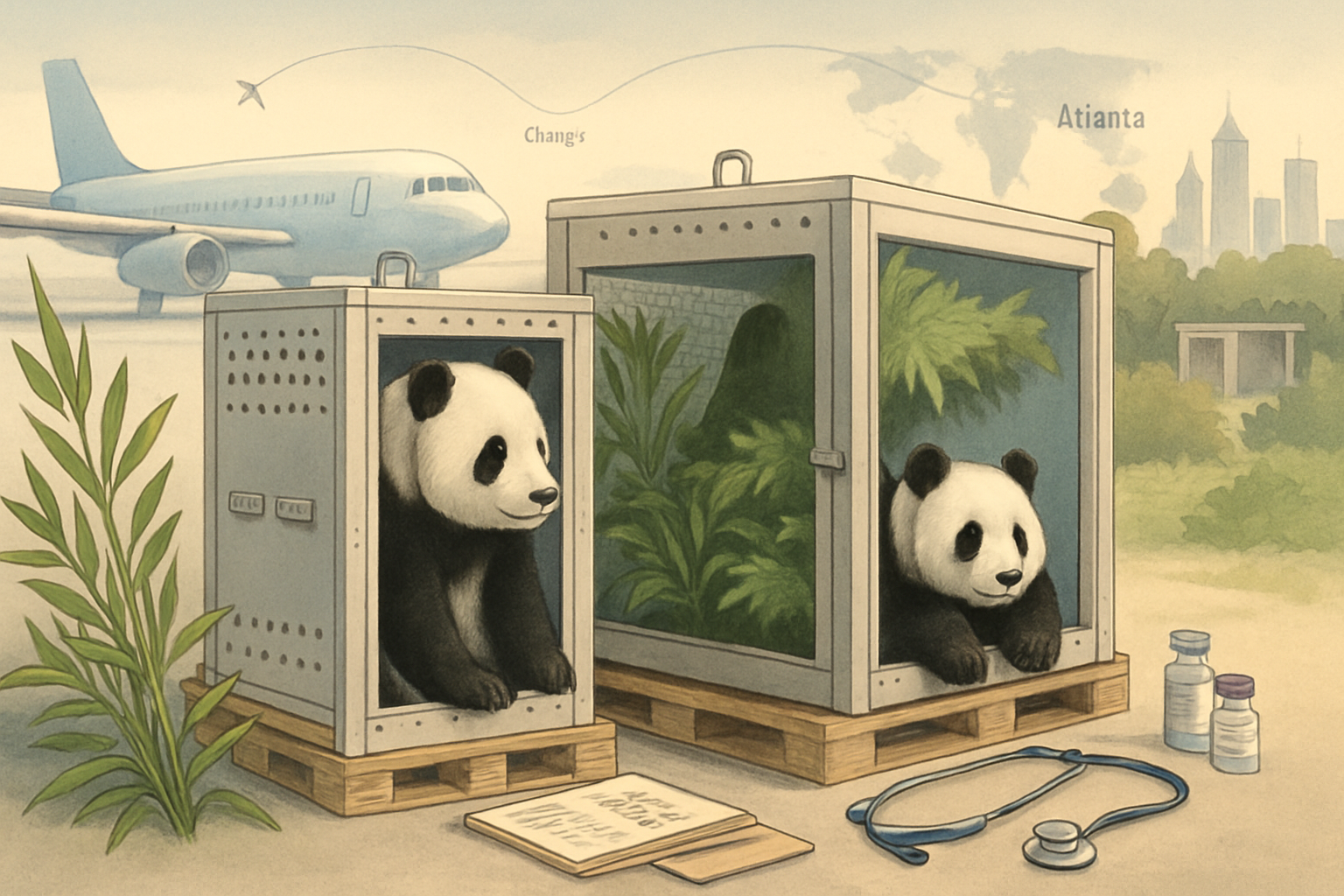
Two giant pandas have left China for a new home at Zoo Atlanta, bringing the city’s best-known animal ambassadors back less than two years after its previous pandas returned to Chengdu.
Ping Ping, a male born March 17, 2020, and Fu Shuang, a female born October 18, 2020, departed Chengdu Shuangliu International Airport at 2:55 a.m. local time Sunday, September 27, on a chartered flight. They later arrived at Atlanta International Airport and are set to spend 10 years in Georgia under a new conservation and research agreement.
The move closes a short but conspicuous gap in Atlanta’s panda program. In October 2024, Lun Lun, Yang Yang and their two youngest offspring, Ya Lun and Xi Lun, left the city after Zoo Atlanta’s previous agreement with China expired. That partnership had lasted 25 years and produced seven surviving cubs born in Atlanta.
The new arrangement is not a permanent transfer. Giant pandas sent abroad remain part of China’s international conservation system, with overseas zoos working with Chinese institutions on animal care, breeding research, veterinary medicine and public education. For Atlanta, the agreement means the return of a popular exhibit as well as the renewal of a scientific relationship with the Chengdu Research Base of Giant Panda Breeding.
The pandas’ arrival also has a diplomatic backdrop. During his September visit to the United States, Chinese President Xi Jinping announced that Ping Ping and Fu Shuang would come to Atlanta, describing giant pandas as symbols of friendship between the Chinese and American peoples. Their flight followed that announcement by only a few days, giving the transfer an unusually prominent place in the public messaging around the visit.
Months of preparation preceded the journey. Chinese specialists and Zoo Atlanta staff worked on upgrades to the panda complex, including a larger indoor activity area, new climbing and resting structures, pools and improved monitoring equipment. The zoo has also arranged access to fresh bamboo, an essential logistical requirement for animals that eat large quantities of plant matter every day.
The pandas traveled with food and medical supplies, and their transport was planned around temperature, humidity and stress reduction. After landing, they are expected to enter quarantine while Chinese keepers and veterinarians help Atlanta’s animal-care team monitor their health and ease the transition to a new environment.
That means the public’s first view of Ping Ping and Fu Shuang may not come immediately. The next milestone is not a ribbon-cutting but a careful acclimation process: confirming that both animals are healthy, eating normally and adjusting to their new surroundings before they begin regular public appearances.
For Atlanta, the significance is straightforward and symbolic at once. The city is getting its pandas back. But the larger story is a renewed partnership built around a species that has become one of China’s most recognizable instruments of international goodwill—and around a conservation program that has already shaped Zoo Atlanta’s identity for a generation.
Sources & Further Reading
- Zoo AtlantaPrimary source
- Zoo AtlantaPrimary source
- Xinhua
- Xinhua
- China.org.cn
- EFE
StoryBreak
Independent digital news and reporting, updated throughout the day.
This article was researched and drafted with AI assistance and reviewed as part of StoryBreak's editorial process before publication. Read our editorial standards.