Google’s $15 Billion AI Bet in Finland Comes With a Nuclear-Power Strategy
Google plans to invest at least €13 billion in Finnish AI and digital infrastructure over the next two years. A long-term deal with Fortum will help extend the life of Finland’s Loviisa nuclear plant, showing how the AI race is increasingly tied to power generation and grid planning.
By StoryBreak
Published September 9, 2026 at 4:13 PM
Google is committing at least €13 billion—roughly $15 billion—to AI and digital infrastructure in Finland over the next two years, making the investment its largest single commitment in Europe.
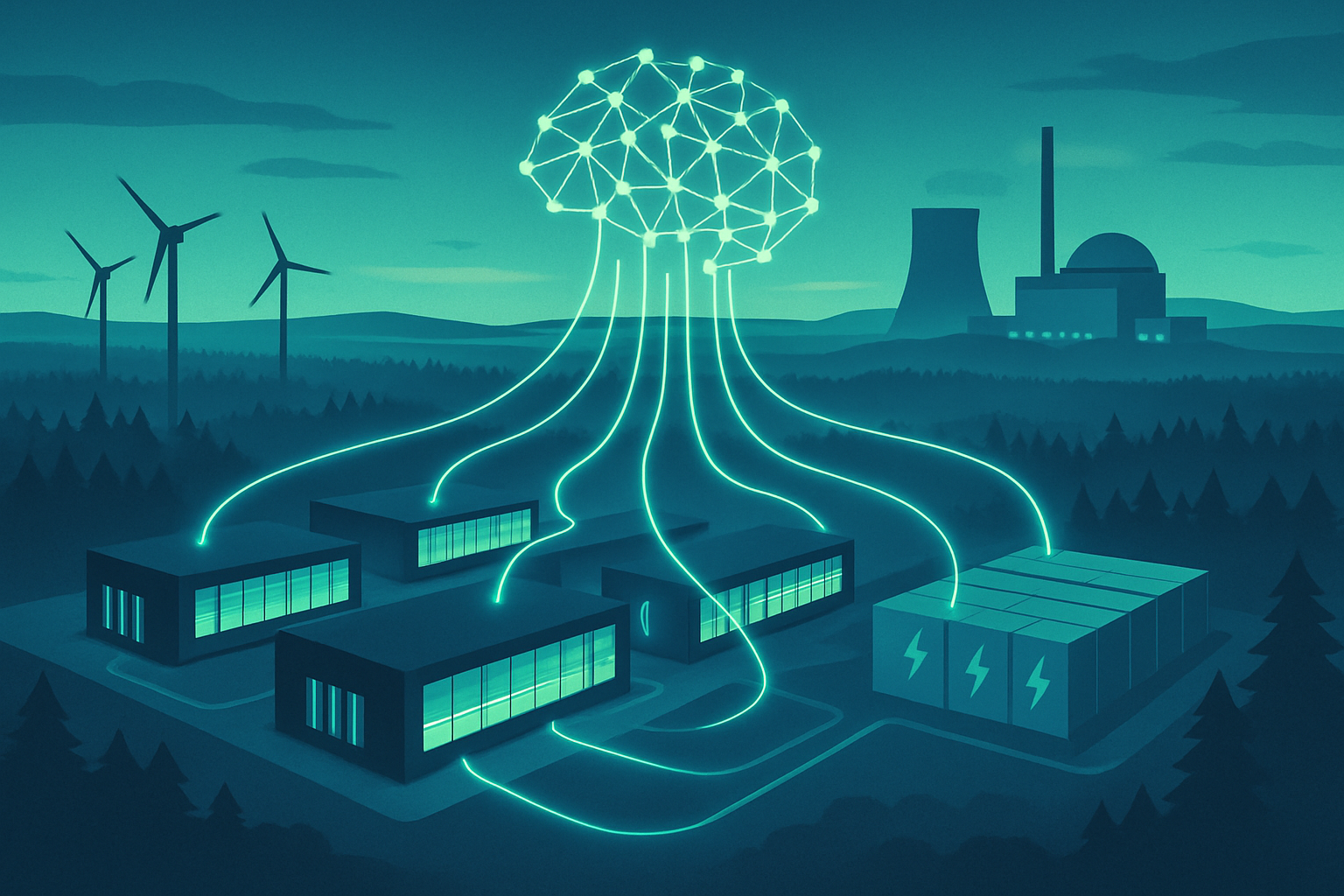
The spending will support data centers and related infrastructure in Hamina, Kajaani, Muhos and Vaala during 2027 and 2028. But the most revealing part of the announcement is what sits behind the computing expansion: Google is also arranging long-term electricity supplies, supporting new wind generation and adding battery storage.
The company’s nuclear strategy is arriving through Fortum, Finland’s state-controlled energy company. Fortum said Wednesday that it had signed a power-purchase agreement with Google connected to the lifetime extension of the Loviisa nuclear power plant. The agreement begins with a smaller amount of electricity in 2028 and is expected to cover half of Loviisa’s capacity from 2030 through 2049.
That distinction matters. Google is not announcing a newly built reactor dedicated to its Finnish data centers. Instead, its contract helps give Fortum predictable revenue as the utility decides whether to complete the remaining work needed to keep Loviisa operating through 2050.
Fortum estimates that its Loviisa extension program will cost about €1 billion. The company said roughly €700 million of required capital spending—about 80% of the remaining investment decisions—has yet to be approved. The Google agreement is intended to make those investments easier to finance. Fortum also expects the deal to support an additional 10 megawatts of generating capacity, on top of a planned 38-megawatt increase.
For Google, the appeal is not simply that nuclear power produces little carbon during operation. AI data centers need large volumes of electricity around the clock. Wind and solar can add low-carbon energy, but their output varies. Nuclear plants provide a steadier supply, while batteries can help manage shorter-term fluctuations. Google’s Finnish plans include a 94-megawatt battery facility and 629 megawatts of new onshore wind capacity, according to the company’s announcement.
The arrangement also illustrates a broader shift in the AI economy. The limiting factor for a new generation of models may not be only chips, engineers or cloud customers. It may be the ability to secure land, transmission capacity and dependable electricity without shifting excessive costs onto local grids.
Google says the Finnish investment could support an average of 37,000 jobs nationwide during construction, including about 16,000 construction positions, and roughly 7,000 jobs annually once the facilities are operating. Those figures include wider supplier and local-service effects and are company projections, not independent government estimates.
Finland is particularly attractive for this kind of expansion because it combines a relatively low-carbon electricity system with an established technology and industrial base. Google also points to its existing Hamina data center, where seawater cooling and recovered heat are used as part of the site’s environmental strategy.
The larger question is whether these projects can turn AI’s enormous power demand into a durable economic relationship rather than a race for preferential access to electricity. Google’s investment offers Finland construction work, infrastructure and a potential anchor customer for new energy projects. In return, the company is helping secure the firm power needed to keep its AI ambitions running.
The test begins in 2027, when construction is scheduled to accelerate. The more consequential milestone will come later: whether Loviisa’s extension, the wind projects and the battery system are all delivered in time to support the computing capacity Google is planning—and whether Finland’s grid can absorb that growth while keeping power reliable and affordable for everyone else.
Sources & Further Reading
StoryBreak
Independent digital news and reporting, updated throughout the day.
This article was researched and drafted with AI assistance and reviewed as part of StoryBreak's editorial process before publication. Read our editorial standards.