
Google Is Sending AI Hardware Into Space. The Real Test Is Whether It Can Stay Cool
Project Suncatcher is moving from research paper to orbital experiment, with Google preparing to test its AI chips aboard a prototype satellite. The mission could begin a new chapter in computing—but it is still much closer to a laboratory demonstration than a space-based data center.
By StoryBreak
Published September 26, 2026 at 12:23 AM
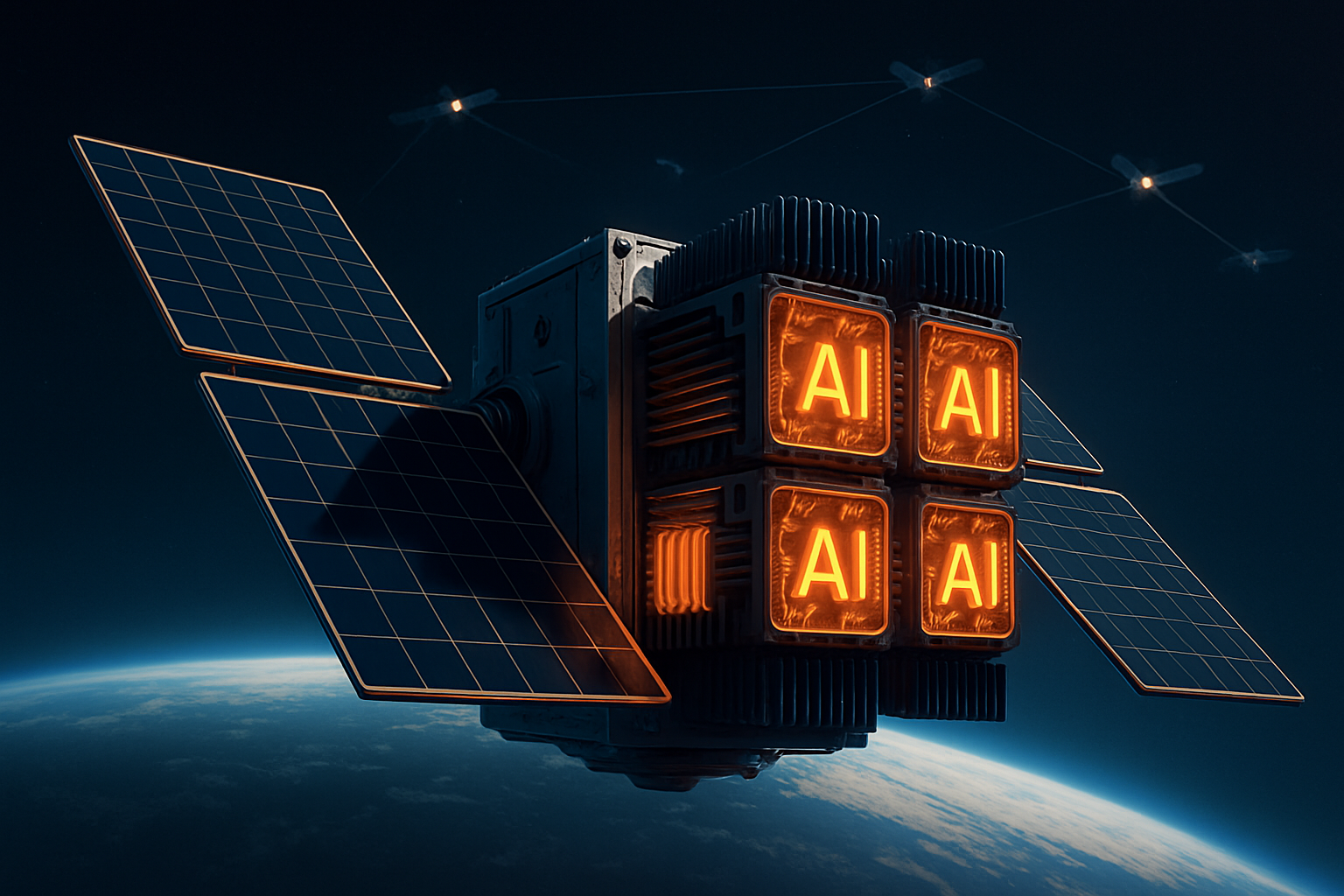
Google is putting a small piece of its AI infrastructure into orbit—not to run the internet from space, but to find out whether the basic idea survives contact with reality.
Project Suncatcher, Google's long-term effort to explore orbital computing, is preparing for its first in-space hardware test. The prototype satellite was developed with Planet and is scheduled to fly on SpaceX's Transporter-18 rideshare mission. Google says the experiment will measure how its Tensor Processing Units, or TPUs, handle the physical stresses of launch and the radiation and thermal conditions of orbit. ([blog.google](https://blog.google/innovation-and-ai/models-and-research/google-research/google-project-suncatcher-facts/))
That distinction matters. Headlines about “space data centers” suggest a new cloud platform hovering above Earth. The first mission is something more basic: a shakedown test for chips, cooling equipment and spacecraft systems.
Google's argument is straightforward. AI requires enormous amounts of electricity, and data centers on Earth increasingly compete for power, land and cooling resources. Certain low-Earth orbits can receive nearly continuous sunlight, avoiding nighttime and some atmospheric losses. Google's research estimates that solar panels in those orbits could collect as much as eight times more solar energy per year than panels at mid-latitudes on Earth. ([services.google.com](https://services.google.com/fh/files/misc/suncatcher_paper.pdf))
The company has proposed fleets of relatively small satellites carrying TPUs and communicating with one another through laser links. Rather than transmitting electricity back to Earth, the satellites would use the power where it is collected: to process machine-learning workloads in orbit.
The concept is visually irresistible—the cloud literally above the clouds—but the difficult part is not generating power. It is getting the rest of the data-center experience to work without air, roads or repair crews.
Cooling is the most immediate example. Terrestrial data centers can move heat with air or water. A spacecraft in a vacuum cannot. Heat must travel through hardware and ultimately radiate away through dedicated panels. Google says it is testing a cooling design based on heat pipes and radiators, including in a thermal-vacuum chamber that simulates the space environment. ([blog.google](https://blog.google/innovation-and-ai/models-and-research/google-research/google-project-suncatcher-facts/))
Radiation is another threat. Cosmic rays and solar particles can cause errors in electronics, including “bit flips” that alter digital information. Google reports that its Trillium TPUs survived laboratory radiation exposure equivalent to more than five years in space without permanent failures. But laboratory endurance is not the same as years of operation while a satellite faces solar storms, debris and temperature swings. The orbital test is intended to expose that difference. ([blog.google](https://blog.google/innovation-and-ai/models-and-research/google-research/google-project-suncatcher-facts/))
Then comes networking. A modern AI cluster depends on extremely fast communication among chips. Google's research paper says a future orbital system could require links on the order of 10 terabits per second. The satellites would have to fly in close formation and aim lasers at one another with extraordinary precision. Google plans to test that part of the concept with two satellites in 2027. ([blog.google](https://blog.google/innovation-and-ai/models-and-research/google-research/google-project-suncatcher-facts/))
The economics may be even less cinematic. Google's paper treats launch cost as a decisive variable and models a future in which delivery to low-Earth orbit could fall to roughly $200 per kilogram by the mid-2030s. That is a projection, not a price Google can use today. If satellites fail early, require replacement or cannot be serviced, the apparent advantage of free sunlight could disappear quickly. ([services.google.com](https://services.google.com/fh/files/misc/suncatcher_paper.pdf))
So what would success look like? Not a space-based Google Cloud region. It would mean demonstrating that the chips can survive launch, operate under radiation, shed heat and return useful data to engineers. A later mission would need to show that satellites can exchange information at data-center speeds.
That makes Suncatcher less a launch of a new product than the opening episode of a long engineering drama. Google's question is not whether space looks like the future. It is whether enough of the ordinary, difficult machinery of computing can be rebuilt there to make the future affordable.
Sources & Further Reading
- Google BlogPrimary source
- Google BlogPrimary source
- Google ResearchPrimary source
- Space.com
StoryBreak
Independent digital news and reporting, updated throughout the day.
This article was researched and drafted with AI assistance and reviewed as part of StoryBreak's editorial process before publication. Read our editorial standards.