
Houthis Seize Strategic Island Near Bab el-Mandeb, Putting Global Shipping on Edge
The reported capture of Perim Island gives Yemen’s Houthi movement a position inside one of the world’s most important maritime chokepoints. The immediate risk is not necessarily a sealed strait, but a sharper threat to ships moving between the Red Sea and the Indian Ocean.
By StoryBreak
Published September 11, 2026 at 5:20 PM
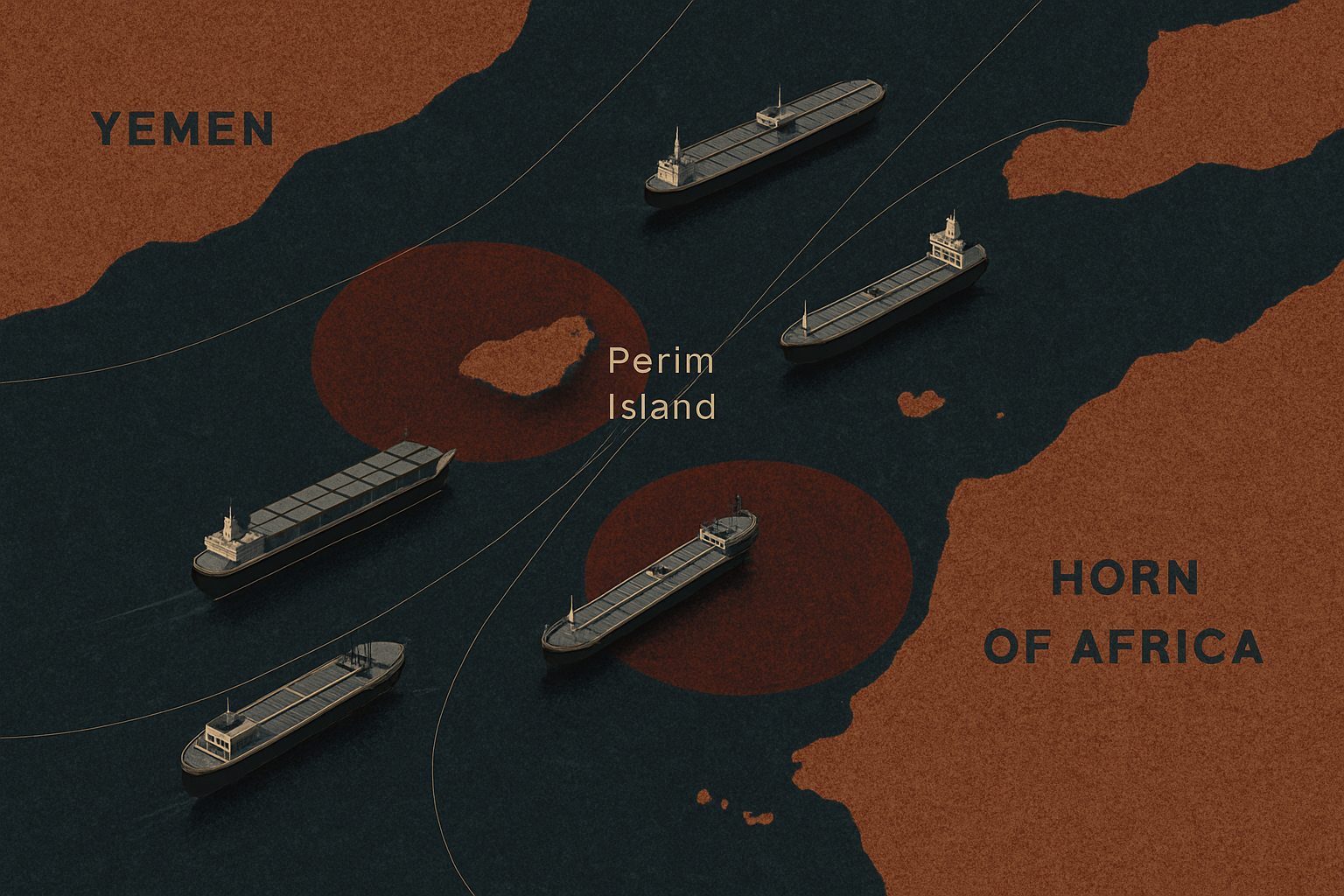
Yemen’s Houthi movement has captured a strategic island inside the Bab el-Mandeb Strait, according to reporting published Friday, September 11, 2026, adding a new military pressure point along a waterway that connects Europe-bound shipping with the Indian Ocean.
The island, identified by regional analysts as Perim — also known as Mayyun — sits in the middle of the strait and separates its two navigable channels. Associated Press reported that Houthi forces took the island after seizing the nearby Red Sea port city of Mokha. The Institute for the Study of War separately recorded regional reports of a Houthi capture of Perim, while noting that battlefield information remains fluid.
The strategic importance is geographic. Bab el-Mandeb is the southern entrance to the Red Sea. Ships using the Suez Canal route between Asia and Europe pass through the Red Sea before reaching the strait and the Gulf of Aden. If that corridor becomes too dangerous, vessels can avoid it by sailing around Africa’s Cape of Good Hope — a detour that adds distance, fuel consumption, crew time and insurance exposure.
That does not mean the Houthis have automatically “closed” the waterway. Holding an island is different from having the ability to stop every ship, sustain a blockade or defeat naval forces attempting to keep the route open. The available reports do not establish how many fighters are on Perim, what weapons are deployed there or whether the group can maintain control under pressure.
But an island inside the strait can still change the risk calculation. It may provide a location for observation, communications, small-boat operations or missile and drone support. Even the possibility of attacks can cause shipowners, insurers and naval planners to behave as though the route is less reliable. The U.S. Maritime Administration’s current advisory already warns that vessels with Israeli, U.S. or U.K. connections face a high risk of terrorism and other hostile actions in the southern Red Sea, Bab el-Mandeb and Gulf of Aden.
The island seizure also matters because it follows a broader Houthi advance down Yemen’s western coastline. Mokha is roughly 80 kilometers from the strait. Control of the port and nearby mainland positions would give the Houthis more than a symbolic foothold: it could extend their reach toward the approaches used by commercial vessels and increase pressure on forces aligned with Yemen’s internationally recognized government.
For ordinary consumers, the first effects would probably be indirect. A sustained threat could push ships onto longer routes, raise war-risk insurance and delay deliveries. Energy markets could also react if tankers carrying crude or refined products avoid the Red Sea. The size of any impact would depend on how long the Houthis hold the island, whether attacks resume or intensify, and how effectively naval forces protect commercial traffic.
The next test is therefore not simply whether the flag over Perim has changed. It is whether the Houthis can turn possession of the island into a durable system for monitoring and threatening traffic — and whether regional or international forces decide that preventing that system requires a direct military response.
For now, the clearest conclusion is narrower but significant: the Houthis have reportedly moved closer to the physical center of a global shipping chokepoint. That raises the cost and uncertainty of using the Red Sea even before a formal blockade exists.
Sources & Further Reading
StoryBreak
Independent digital news and reporting, updated throughout the day.
This article was researched and drafted with AI assistance and reviewed as part of StoryBreak's editorial process before publication. Read our editorial standards.