
India and Pakistan Trade Protests After Naval Ships Collide in Arabian Sea
A collision between Indian and Pakistani naval vessels in the northern Arabian Sea has triggered competing diplomatic protests, with each government blaming the other and disputing where the incident occurred.
By StoryBreak
Published September 17, 2026 at 1:01 AM
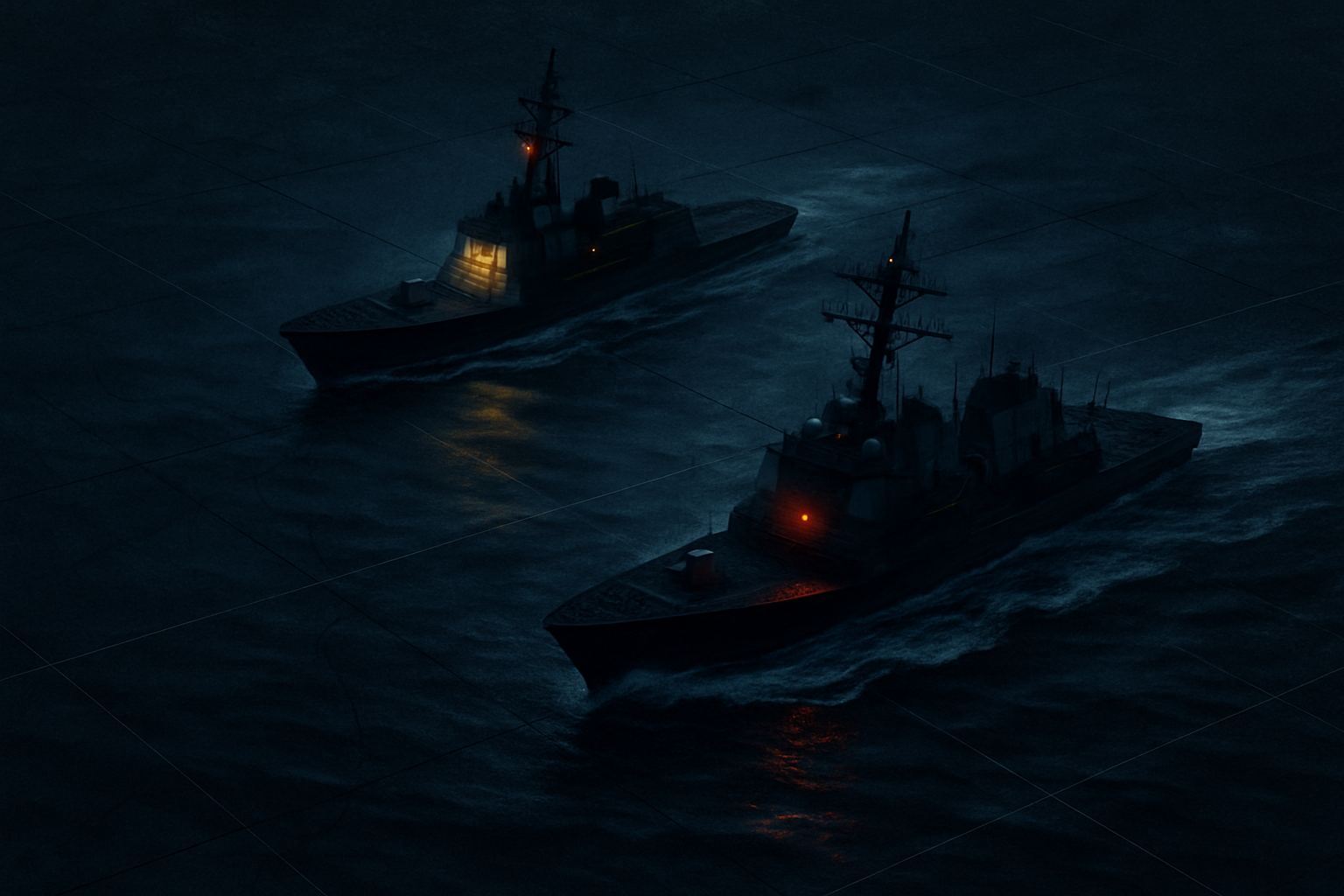
India and Pakistan have traded diplomatic protests after naval vessels from the two countries made contact in the northern Arabian Sea, opening a new and potentially dangerous point of friction between the nuclear-armed neighbors.
The incident occurred on September 15, 2026. By the following day, both governments had summoned the other side’s diplomatic representative. India described the conduct of Pakistani naval units as unacceptable and unprofessional. Pakistan issued its own protest, accusing an Indian vessel of aggressive maneuvers near a Pakistani ship during a naval exercise.
The competing accounts leave several basic facts unresolved. Neither side has publicly established the precise coordinates of the encounter, the identities of all the vessels involved, the extent of damage, or whether anyone was injured. India says the collision occurred in international waters. Pakistan says it happened inside Pakistan’s exclusive economic zone while its navy was conducting the SEASPARK-26 exercise.
That disagreement is more than a matter of geography. An exclusive economic zone gives a coastal state rights over natural resources and certain economic activities, but it is not the same as territorial waters. Military navigation in an exclusive economic zone can therefore raise serious political and operational disputes without automatically amounting to an attack on sovereign territory.
Pakistan’s Foreign Ministry said the Indian vessel approached its naval ship in an aggressive manner and that the contact violated international law and the two countries’ 1991 agreement on advance notice for military exercises, maneuvers and troop movements. Islamabad said it summoned India’s chargé d’affaires and instructed its representative in New Delhi to deliver a similar protest.
Indian officials, according to reporting by the Associated Press and Al Jazeera, said a Pakistani naval vessel collided with an Indian Navy unit in international waters. New Delhi also invoked the 1991 bilateral framework and called for military units to respect arrangements intended to prevent incidents at sea.
The immediate significance is not that a collision automatically signals preparations for war. Naval vessels operate near one another in heavily trafficked waters, and accidents can occur. The danger is that, between India and Pakistan, an accident can be interpreted as a deliberate challenge before investigators have established what happened. A collision during a military exercise or surveillance mission can trigger alerts, public accusations and additional deployments even if the original event was not planned.
The episode also comes against a broader backdrop of strained relations. The two countries have a long history of military confrontation, and their forces remain active around disputed and strategically important areas. At sea, the margin for error is particularly narrow: a maneuver that one crew views as routine can appear threatening to another, especially when radio communications, exercise notices and operating boundaries are contested.
For now, the most important question is evidentiary. Ship logs, radar records, radio traffic and the release of precise coordinates could help determine whether one vessel crossed the other’s path, whether warnings were issued, and whether the contact was accidental or avoidable. Until that information emerges, the safest conclusion is also the most limited one: a real naval incident has occurred, but responsibility remains disputed.
The next test will be whether the governments keep the dispute diplomatic. Additional warship movements, fresh accusations or the publication of selective evidence could harden public opinion and make de-escalation more difficult. Quiet military-to-military communication and a joint or parallel inquiry would offer the clearest route to preventing a maritime collision from becoming a wider crisis.
Sources & Further Reading
StoryBreak
Independent digital news and reporting, updated throughout the day.
This article was researched and drafted with AI assistance and reviewed as part of StoryBreak's editorial process before publication. Read our editorial standards.