
Indonesia Ferry Sinks in Java Sea as Rescuers Search for More Than 120 Missing
The Virgo Transport 8 capsized after losing contact in rough weather while traveling from Surabaya to Banjarmasin. At least 103 people had been evacuated, six of them dead, while rescuers continued searching for at least 129 others, according to the latest available reports.
By StoryBreak
Published September 13, 2026 at 4:40 PM
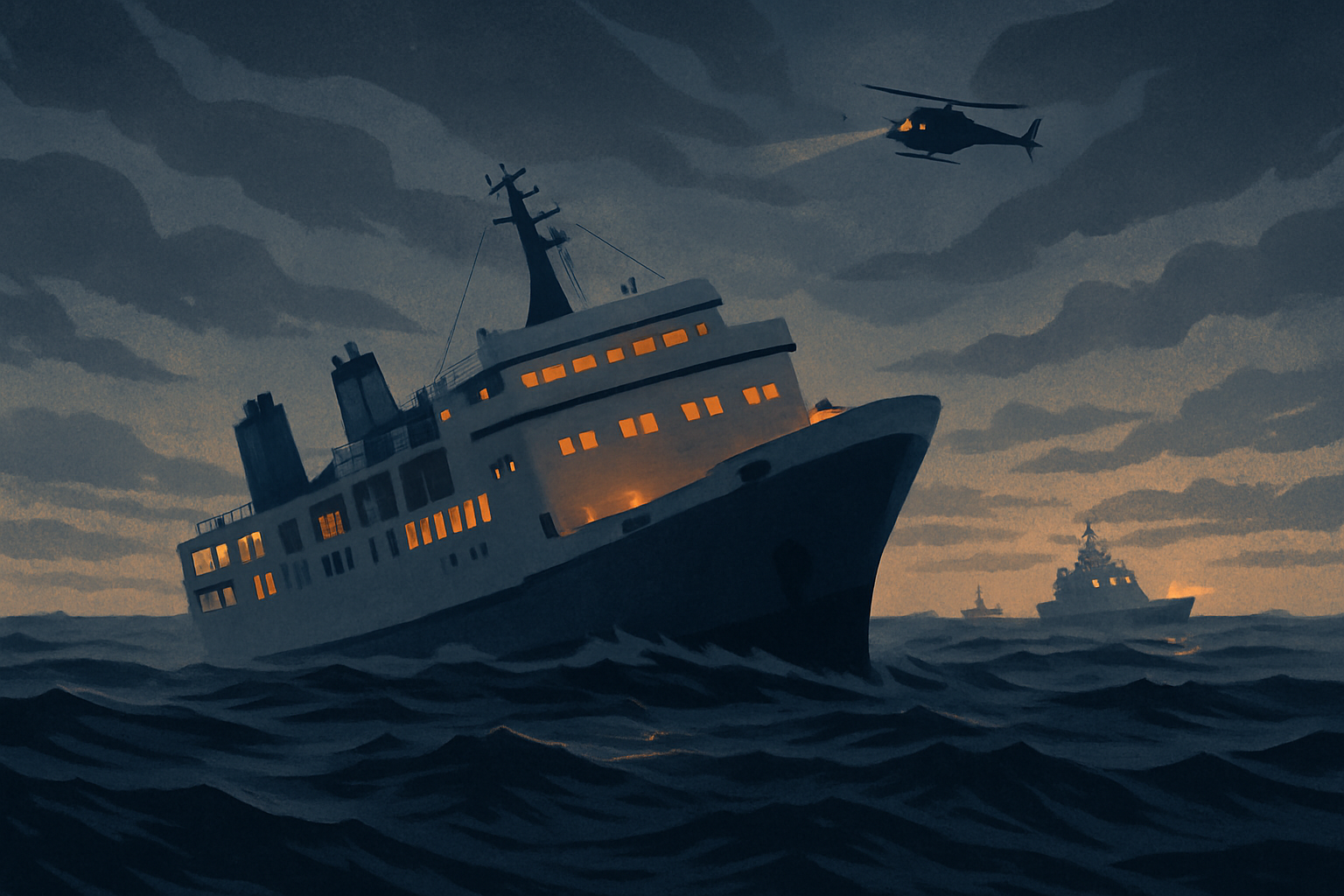
Indonesian rescuers were searching the Java Sea on Sunday after the passenger ferry Virgo Transport 8 capsized in rough weather, leaving more than 120 people unaccounted for in the latest available tally.
The vessel was carrying 243 people, according to Indonesian search-and-rescue authorities cited by Reuters. It had left Surabaya in East Java on Saturday, September 12, bound for Banjarmasin in South Kalimantan, before contact was lost early Sunday.
Rescue teams initially reported that roughly 140 people were missing after 103 people were evacuated from the stricken ship or nearby waters. A later update cited by The Associated Press put the number still missing at at least 129 and said six bodies had been recovered. Indonesian reporting based on statements from the Banjarmasin search-and-rescue office likewise said 103 people had been accounted for, including 97 survivors and six dead.
The changing figures reflect the confusion that often follows a major maritime disaster. Some passengers were reportedly picked up by commercial vessels before government rescue crews arrived, while authorities were still reconciling the ship’s manifest with the people brought ashore. In Indonesia, where ferries connect thousands of islands and are a central part of domestic travel, passenger lists can be difficult to verify during an emergency.
The ship’s last known position was in the Java Sea near the Masalembo area, according to Indonesian reports. Search vessels were sent toward the location, and aircraft were also being used to scan the surrounding waters. The operation was complicated by the same broad conditions reported before the sinking: strong winds, high waves and limited visibility.
For families waiting at ports in Surabaya and Banjarmasin, the most important question is no longer simply whether the ferry sank. It is whether people who escaped the vessel have been picked up by ships that have not yet reported their passengers, and whether anyone remains trapped in or near the wreck.
The final toll will depend on that accounting. The initial figure of 140 missing was a calculation based on the reported manifest and the first rescue count, not a final determination that all those people had died. As survivors are identified and additional vessels report their rescues, the number could fall. If no further survivors are found, investigators will then have to establish how the ferry overturned and whether weather, cargo loading, vessel stability or other safety failures contributed.
The immediate task remains search and rescue. The longer-term test will be whether Indonesia can produce a reliable passenger list and a clear account of what happened before the vessel disappeared from contact. Until then, both the casualty figures and the explanation for the sinking remain provisional.
StoryBreak
Independent digital news and reporting, updated throughout the day.
This article was researched and drafted with AI assistance and reviewed as part of StoryBreak's editorial process before publication. Read our editorial standards.