
Kauaʻi Is Recovering From Hurricane Lowell. What Travelers Should Do Now
Hawaiʻi officials are asking visitors with near-term Kauaʻi plans to reschedule or choose another island as crews restore power, clear roads and assess storm damage. The request is temporary recovery guidance—not a blanket call to abandon travel to Hawaiʻi.
By StoryBreak
Published September 11, 2026 at 5:32 PM
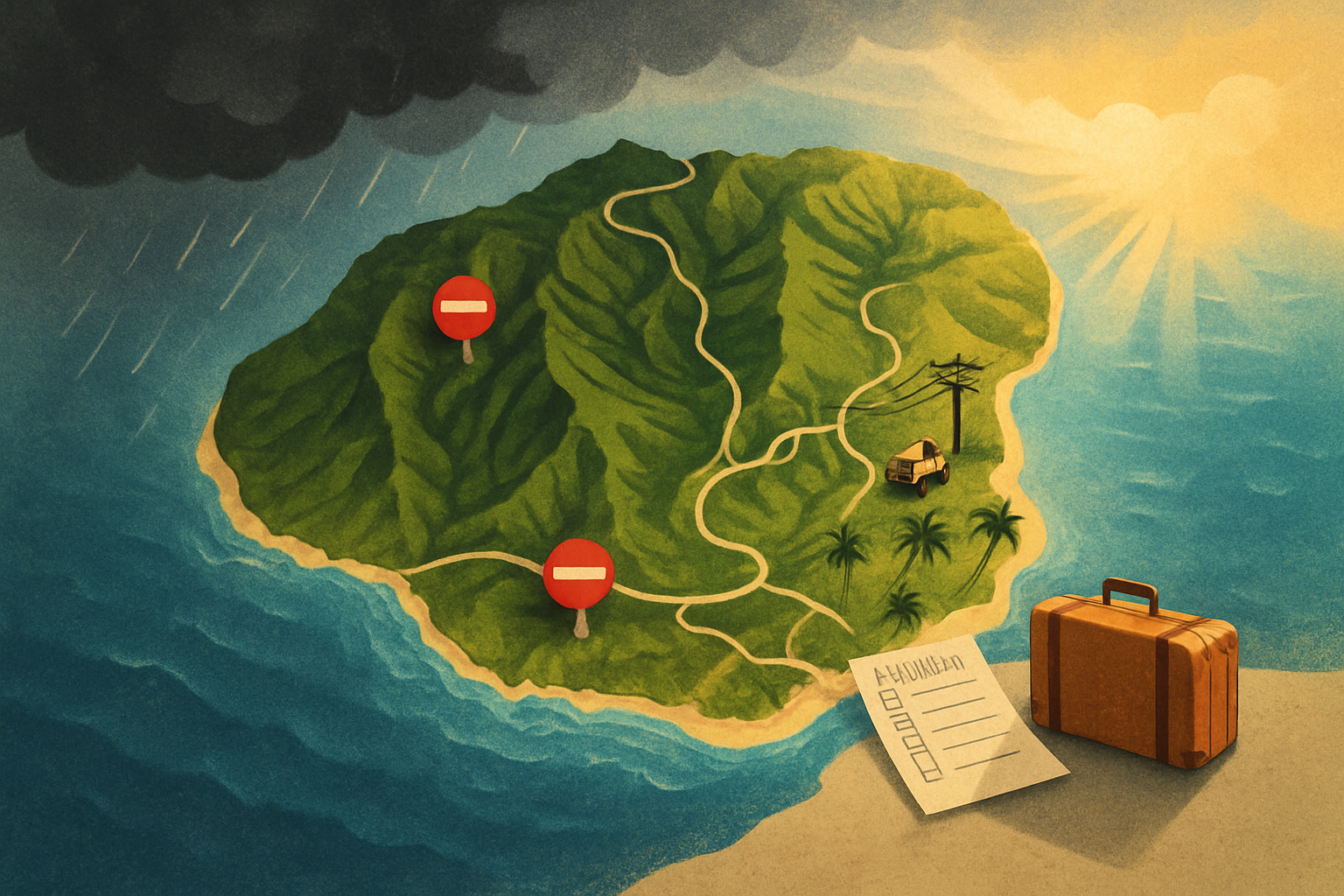
Kauaʻi is open in the narrowest sense, but officials are asking many travelers not to treat the island as a normal vacation destination yet.
After Hurricane Lowell passed west of Niʻihau on the night of September 7, the storm left damaged roads, downed utility infrastructure, hazardous shore conditions and widespread power outages across Kauaʻi. NOAA said nearly 90% of the island lost power in the storm’s aftermath. The National Weather Service recorded a 92-mph wind gust at Puu Lua, with other strong gusts reported around the island.
The Hawaiʻi Tourism Authority’s current message is aimed at people who have trips coming up: reschedule Kauaʻi or consider another Hawaiian island. That is different from telling travelers to cancel a Hawaiʻi vacation altogether. The state’s tourism agency says shifting an itinerary can allow visitors to continue supporting the broader visitor economy while Kauaʻi concentrates on recovery.
For travelers already on the island, the advice is more restrictive. Visitors are being told to follow instructions from their hotels or other accommodations and limit driving to essential trips, such as going to the airport. Travelers departing through Līhuʻe Airport should check directly with their airlines and allow extra time; the state says generator capacity is affecting security-screening equipment.
The most important thing for prospective visitors to understand is that a functioning airport does not mean the island’s visitor infrastructure has returned to normal. Hawaiʻi’s Division of State Parks says all Kauaʻi island parks remain closed until further notice. The agency cites severe infrastructure impacts, blocked roads and continuing risks from flash flooding, storm surge and other hazards. Camping on Kauaʻi is unavailable for the foreseeable future.
That includes the outdoor experiences many visitors build their trips around. A closed park is not simply an inconvenience or a change in scenery. Trails, coastal overlooks, campgrounds and access roads may require inspection before they can safely reopen, and storm damage can remain dangerous after winds subside. Ocean conditions can also lag behind the storm: the state tourism website says surf may remain elevated in places and that a brown-water advisory remains in effect for Kauaʻi, Oʻahu and West Maui. Travelers should avoid brown or murky coastal water and follow lifeguard instructions.
The practical choice for someone with an upcoming reservation is therefore to pause rather than improvise. Contact the airline, hotel, rental-car company and tour operators directly about rebooking, credits or alternative destinations. If the trip dates are flexible, postponing Kauaʻi may be the simplest option. If they are not, shifting part or all of the itinerary to Oʻahu, Maui, Lānaʻi or Hawaiʻi Island is more consistent with the state’s current guidance than arriving on Kauaʻi and expecting a conventional vacation.
There is also an important tension behind the request. Tourism is central to Kauaʻi’s economy, and businesses will eventually need visitors to return. But the immediate recovery phase is not the same as a long-term tourism boycott. For now, the most considerate way to support the island may be to give crews room to restore roads, utilities and public sites—then return when officials and local businesses say the island is ready.
No single reopening date has been announced for all of Kauaʻi’s parks or attractions. Travelers should check official county, tourism, airport, airline, lodging and state-parks updates shortly before departure. The question is not only whether a flight can land; it is whether the places and services that make the trip possible are operating safely.
Sources & Further Reading
- Hawaiʻi Tourism Authority / GoHawaiiPrimary source
- National Weather Service HonoluluPrimary source
- Hawaiʻi Department of Land and Natural Resources, Division of State ParksPrimary source
- NOAA NESDISPrimary source
- Associated Press
- Associated Press
StoryBreak
Independent digital news and reporting, updated throughout the day.
This article was researched and drafted with AI assistance and reviewed as part of StoryBreak's editorial process before publication. Read our editorial standards.