Kimchi-Derived Bacterium Helps Mice Excrete Nanoplastics, Study Finds
A strain of lactic-acid bacteria isolated from kimchi bound nanoplastics in laboratory and gut-like tests and increased their excretion in mice. The result is promising—but it is not evidence that eating kimchi detoxes the human body.
By StoryBreak
Published September 18, 2026 at 12:14 AM
A bacterium isolated from kimchi helped bind nanoplastics in laboratory tests and was linked to greater removal of the particles in mice, according to a new peer-reviewed study.
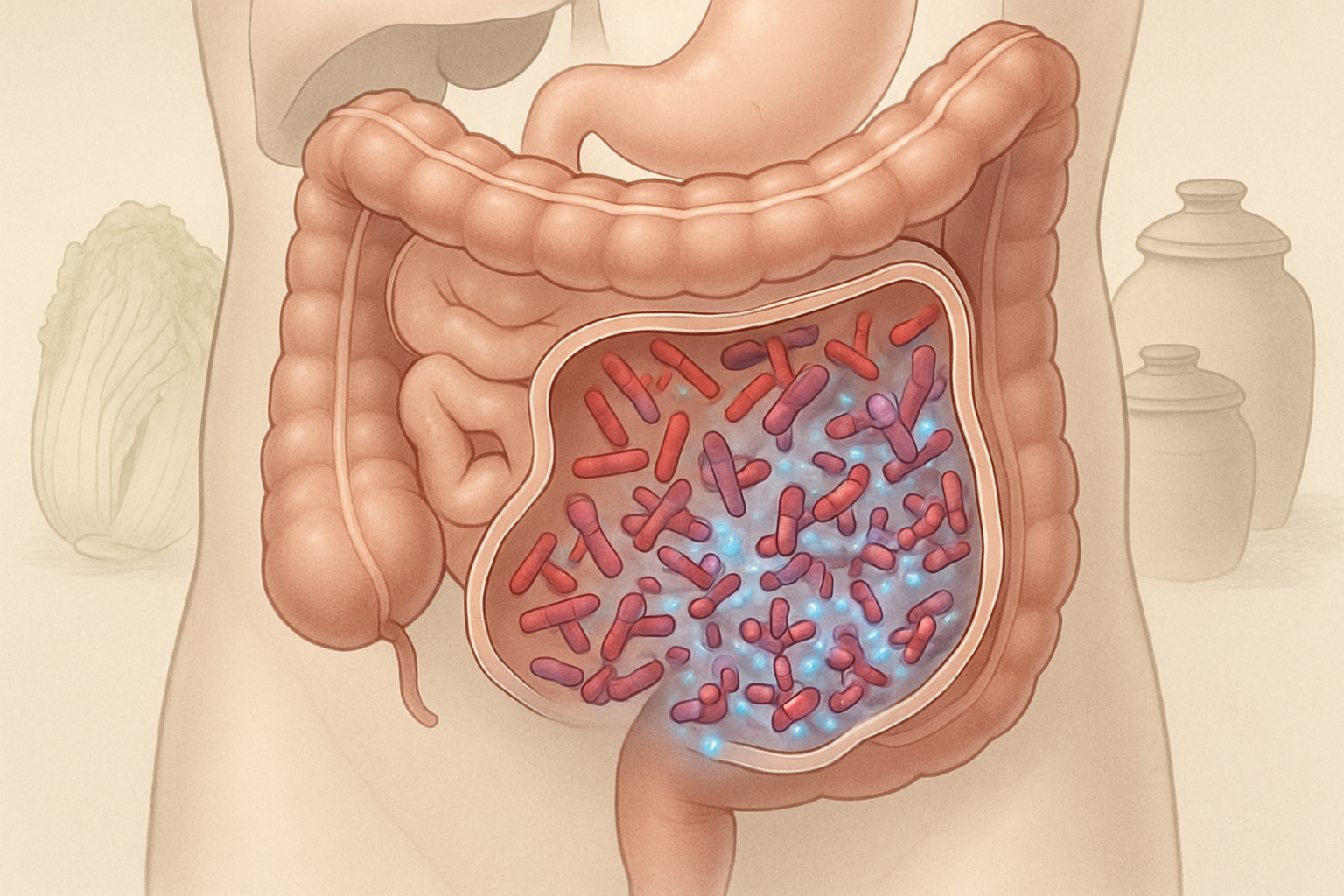
The strain, identified as Leuconostoc mesenteroides CBA3656, was tested against nanoplastics across a range of concentrations, temperatures and acidity levels. It also performed better than comparison strains in a simulated intestinal environment, suggesting that its particle-binding ability may persist under conditions resembling the digestive tract.
The researchers describe the process as biosorption. In practical terms, the plastic particles attach to components on the bacterium’s cell surface. The study’s spectroscopy and modeling results point mainly to physical adsorption—not to the bacterium breaking plastic apart or chemically neutralizing it.
That distinction matters. The potential benefit is not that the microbe destroys nanoplastics. It may instead keep some particles clumped with bacterial material in the gut, making them more likely to leave the body in feces rather than remain available for absorption.
The mouse experiments provided the most biologically relevant result in the paper: animals given the kimchi-derived strain showed significantly enhanced fecal excretion of nanoplastics. But a mouse result is not a human treatment. The experiment does not establish how the strain would behave in people, whether it would survive digestion at useful levels, or whether eating a serving of ordinary kimchi would provide a meaningful dose.
It also does not mean that every jar of kimchi contains this particular strain. Kimchi is a fermented food whose microbial makeup can vary with ingredients, fermentation conditions, storage and production methods. The paper studied a selected isolate, not kimchi as a whole.
The study’s design leaves other questions open. The researchers focused on nanoplastics and tested a defined experimental system; the results do not automatically apply to every type, shape or chemical composition of plastic encountered in food or the environment. Nor do they show whether binding the particles changes their toxicity or prevents all movement across the intestinal wall.
For now, the finding is best understood as an early-stage materials and gut-microbiology result. It identifies a food-associated bacterium that could eventually be developed into a microbial adsorbent or probiotic-based strategy. Before that could be considered for human use, researchers would need safety studies, controlled human trials and evidence that the strain works under realistic exposure conditions.
So the headline is intriguing, but the consumer takeaway is limited: this study does not show that eating kimchi flushes plastic from the human body. It shows that one kimchi-derived bacterium can capture nanoplastics under experimental conditions—and that mice receiving it excreted more of the particles.
Sources & Further Reading
- PubMed / National Library of MedicinePrimary source
- ScienceDirect / ElsevierPrimary source
- EurekAlert!
- Substrate Digest
StoryBreak
Independent digital news and reporting, updated throughout the day.
This article was researched and drafted with AI assistance and reviewed as part of StoryBreak's editorial process before publication. Read our editorial standards.