
“Low-Cortisol” Workouts Are Going Viral. The Science Is More Complicated
Walking, yoga and Pilates can be smart ways to manage stress—but the idea that every tough workout is harming your hormones misunderstands what cortisol does and how exercise affects it.
By StoryBreak
Published September 22, 2026 at 11:28 PM
The latest wellness trend asks a deceptively simple question: Is your workout calming your body, or stressing it out?
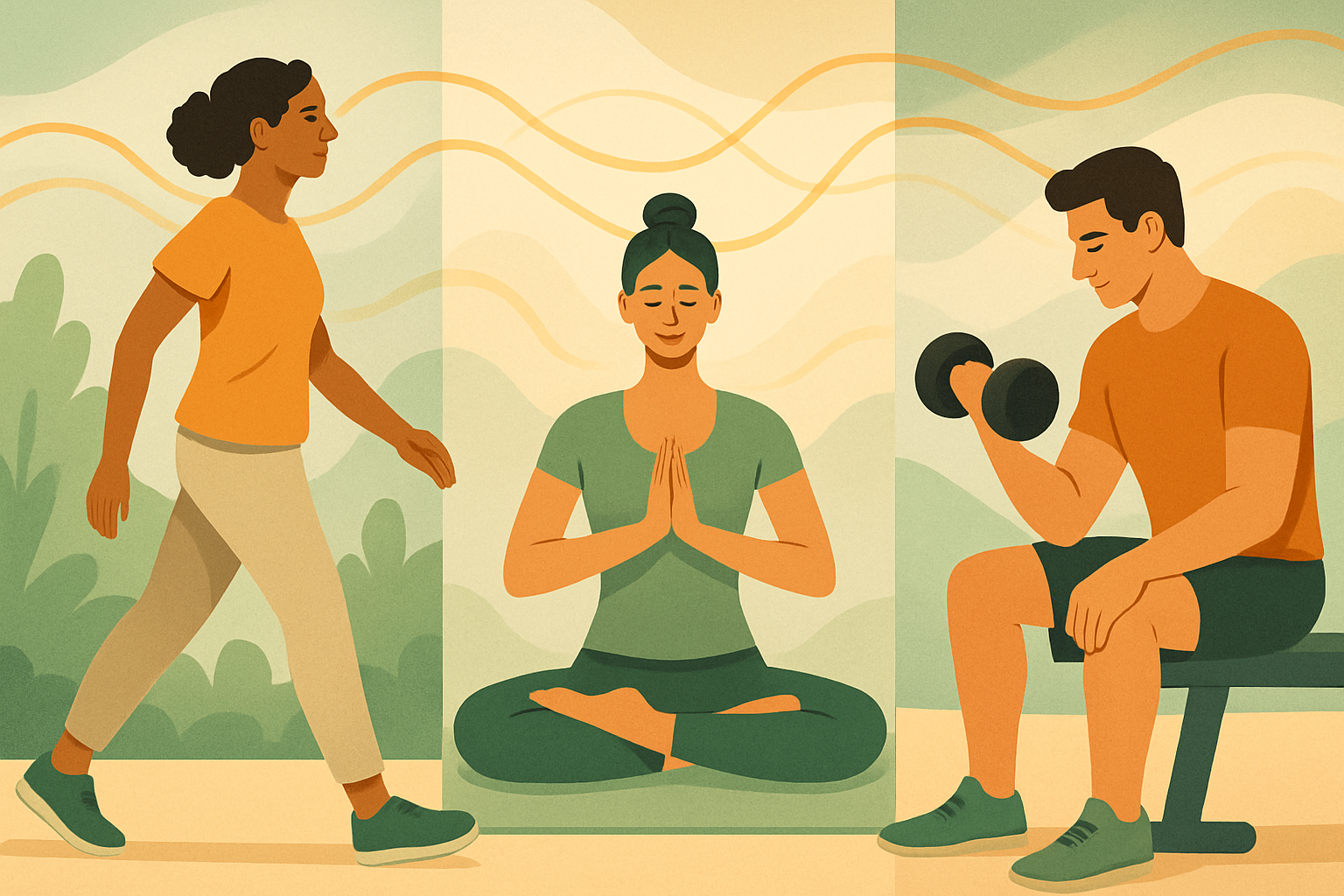
On social media, “low-cortisol workouts” are being marketed as the gentler alternative to high-intensity interval training, hard runs and punishing gym sessions. The recommended menu is familiar: walking, yoga, Pilates, light cycling, mobility work and strength training performed at a manageable pace. The pitch is that these activities help the body burn calories without triggering a damaging spike in cortisol, commonly known as the stress hormone.
There is a useful idea inside that pitch. Exercise does not have to be exhausting to be worthwhile, and a workout that leaves someone energized is often more sustainable than one that repeatedly leaves them depleted. Gentle movement can also be a practical choice after poor sleep, during a stressful week or while returning from illness or injury.
But the hormone explanation is where the trend begins to overreach.
Cortisol is not a toxin that the body should eliminate. The hormone helps regulate blood sugar, metabolism, inflammation, blood pressure and the body’s response to physical demands. Exercise itself is one of those demands. A temporary rise during or immediately after a challenging workout is part of the body’s normal effort to make energy available; it is not, by itself, evidence of injury or “hormonal imbalance.”
The research also does not support a simple division between “good” low-cortisol exercise and “bad” high-cortisol exercise. A 2024 systematic review of 31 studies found that acute exercise generally reduced cortisol responses when participants later faced a standardized psychological stress test. In that research, higher-intensity exercise sometimes produced larger reductions in later stress reactivity. That does not mean harder is always better—it means the timing and outcome being measured matter.
Other evidence points in a different but compatible direction. A 2025 network meta-analysis of exercise programs for people experiencing psychological distress found that yoga ranked especially well for reducing cortisol, with qigong and mixed exercise programs also showing benefits. High-intensity interval training tended to raise cortisol temporarily, though the increase was not statistically significant in that analysis. The certainty of evidence varied, and the findings do not establish one universally best workout.
That distinction is crucial. Scientists may measure cortisol immediately after exercise, across the day or as part of the “cortisol awakening response,” the normal rise that helps prepare the body for activity after waking. Those measurements answer different questions. A single saliva test—or a feeling of being tired after a workout—cannot reveal whether someone has chronically high cortisol.
Nor is cortisol a reliable shortcut for explaining weight gain, abdominal fat, facial appearance or every kind of fatigue. Genuine disorders involving abnormal cortisol levels exist, but they are medical conditions that require clinical assessment. Social-media labels such as “cortisol face” or “cortisol belly” can turn ordinary variations in sleep, diet, stress, body composition and fluid retention into a misleading hormone diagnosis.
The practical lesson is less dramatic than the trend’s language. If high-intensity exercise makes you dread movement, disrupts your recovery or aggravates an injury, scaling back may be sensible. If walking or yoga is the activity you can do consistently, it is a strong choice. But people who enjoy running, lifting or interval training do not need to abandon those activities simply because cortisol rises briefly during a workout.
Federal activity guidelines recommend at least 150 minutes of moderate-intensity aerobic activity or 75 minutes of vigorous activity each week, along with muscle-strengthening exercise. Those recommendations do not divide exercise into cortisol-safe and cortisol-dangerous categories. They emphasize a broader principle: some activity is better than none, and a sustainable routine matters more than chasing a supposedly perfect hormonal state.
The best “low-cortisol” workout may therefore be the one that matches the day you are having—and that you can keep doing next week. The science supports adjusting intensity when recovery, health or enjoyment call for it. It does not support treating cortisol as the enemy.
Sources & Further Reading
- AOL
- Associated Press
- Endocrine SocietyPrimary source
- Journal of Behavioral Medicine / PubMedPrimary source
- PubMedPrimary source
- U.S. Department of Health and Human ServicesPrimary source
- Psychoneuroendocrinology / PubMedPrimary source
StoryBreak
Independent digital news and reporting, updated throughout the day.
This article was researched and drafted with AI assistance and reviewed as part of StoryBreak's editorial process before publication. Read our editorial standards.