Moldova Declares 60-Day Energy and Water Emergency as Rivers Fall to Critical Levels
Moldova’s Parliament approved a 60-day emergency beginning September 26 as low levels in the Dniester and Prut rivers threaten water-supply systems and the country prepares for a winter heavily dependent on imported electricity. Officials say the measure is preventive, giving the government faster tools to respond if supplies deteriorate.
By StoryBreak
Published September 22, 2026 at 10:46 PM
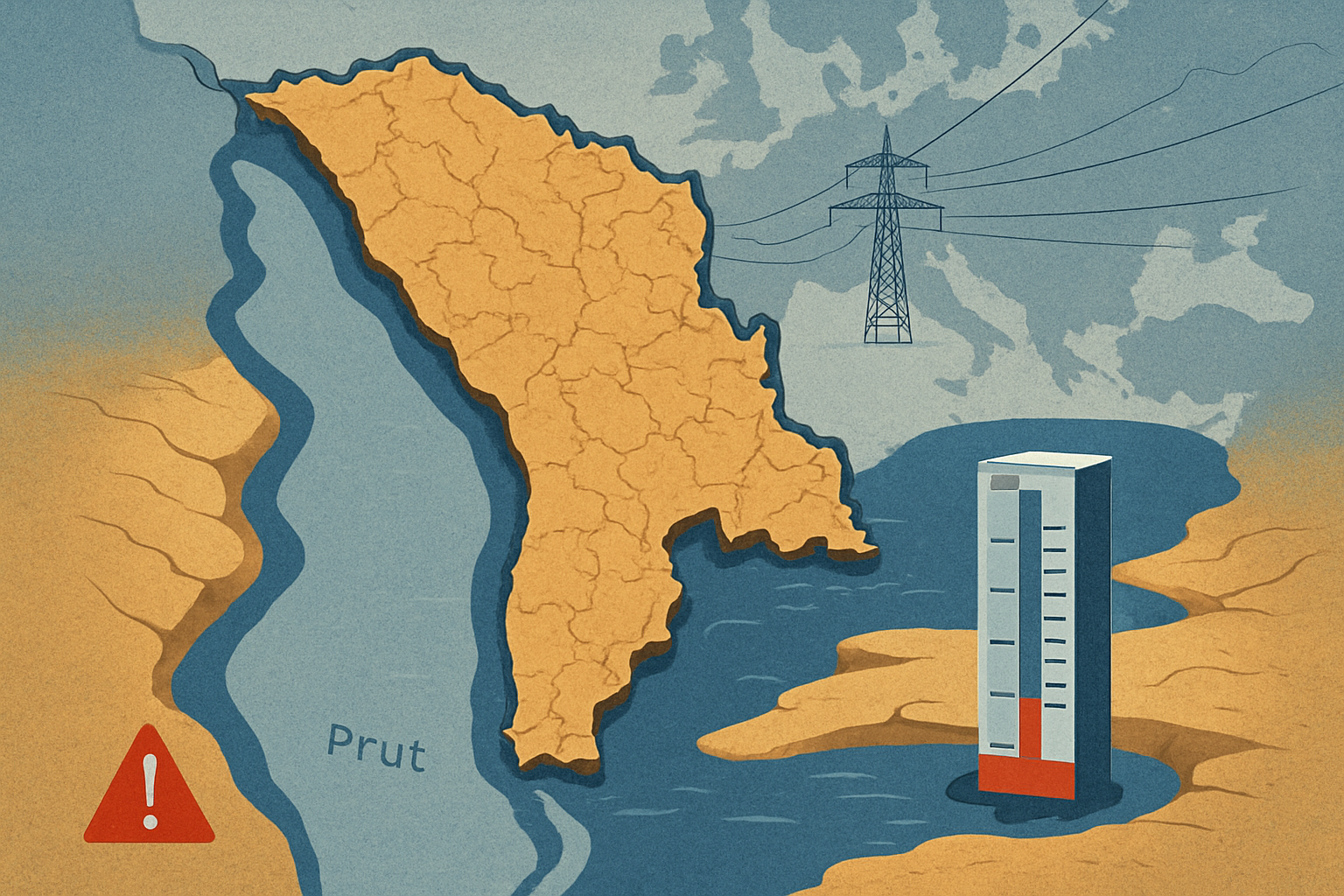
Moldova’s Parliament voted Tuesday to impose a 60-day state of emergency in the country’s energy and hydrological sectors, beginning September 26, as critically low water levels in the Dniester and Prut rivers collide with mounting pressure on the power system ahead of winter.
The measure does not mean Moldova is currently facing a nationwide loss of drinking water or electricity. It gives the government broader powers to move quickly if supply risks worsen — including accelerating purchases of emergency equipment, deploying pumps and generators, prioritizing drinking-water deliveries and temporarily limiting nonessential water use.
The immediate concern is the country’s deteriorating hydrological balance. Moldova’s Ministry of Environment said the Dniester and Prut are experiencing a severe water deficit, with low levels threatening the ability of intake stations to draw water for public-supply systems.
The figures from the Novodnestrovsk reservoir show why officials are concerned. During the first 20 days of September, roughly 40.3 million cubic meters of water entered the reservoir, while about 103.7 million cubic meters were released. In other words, outflows exceeded inflows by approximately 63.4 million cubic meters in less than three weeks.
That gap matters beyond the reservoir itself. The Dniester is one of Moldova’s principal water sources, and much of the river’s flow is generated upstream in Ukraine. Moldova’s environment ministry said rainfall inside the country has not been sufficient to reverse the decline, while precipitation in the upper basin has not yet produced a significant increase in flows reaching the reservoir.
The water emergency is arriving alongside a separate energy vulnerability. Moldova’s Energy Ministry says approximately 59% of the electricity needed this winter will have to come from imports. During peak hours, the country is expected to require between 400 and 450 megawatts from abroad, according to government figures.
That dependence makes the timing significant. The emergency measure begins just as Moldova enters the colder season, when demand for electricity and heating typically rises. Government officials have described the declaration as a way to prepare for the possibility that energy-market pressure, regional instability and water shortages could occur at the same time.
The authorities have already used a lower-level alert system to monitor fuel stocks, energy imports and water-supply risks. The new emergency framework is intended to provide additional powers if those measures are no longer enough. Possible steps include temporary restrictions on nonessential water consumption, emergency support for critical infrastructure and faster procedures for installing storage systems, generators or other equipment.
Officials are emphasizing that the declaration is preventive. The practical test will be whether river flows and reservoir levels stabilize before winter demand peaks — and whether Moldova can maintain reliable electricity imports while protecting water supplies for households and essential services.
For residents, the government is urging conservation: repair leaks, avoid unnecessary use of treated drinking water and do not assume that a formal emergency declaration automatically means taps will run dry. But the reservoir data make clear why authorities are acting before a visible breakdown occurs.
Sources & Further Reading
- Ministry of Environment of the Republic of MoldovaPrimary source
- Ministry of Energy of the Republic of MoldovaPrimary source
- Government of the Republic of MoldovaPrimary source
- The Associated Press
StoryBreak
Independent digital news and reporting, updated throughout the day.
This article was researched and drafted with AI assistance and reviewed as part of StoryBreak's editorial process before publication. Read our editorial standards.