Nanobots Inside the Human Body: The Medical Revolution Is Still in the Lab
Tiny machines that can move through the body, release drugs and respond to disease signals are advancing rapidly—but most medical nanorobots remain experimental, with major hurdles still blocking routine use in patients.
By StoryBreak
Published September 5, 2026 at 2:19 AM
The idea of microscopic robots travelling through the human body has moved from science fiction into serious biomedical research. But despite striking results in animals and laboratory models, the medical “nanobot revolution” is not yet ready for the average hospital.
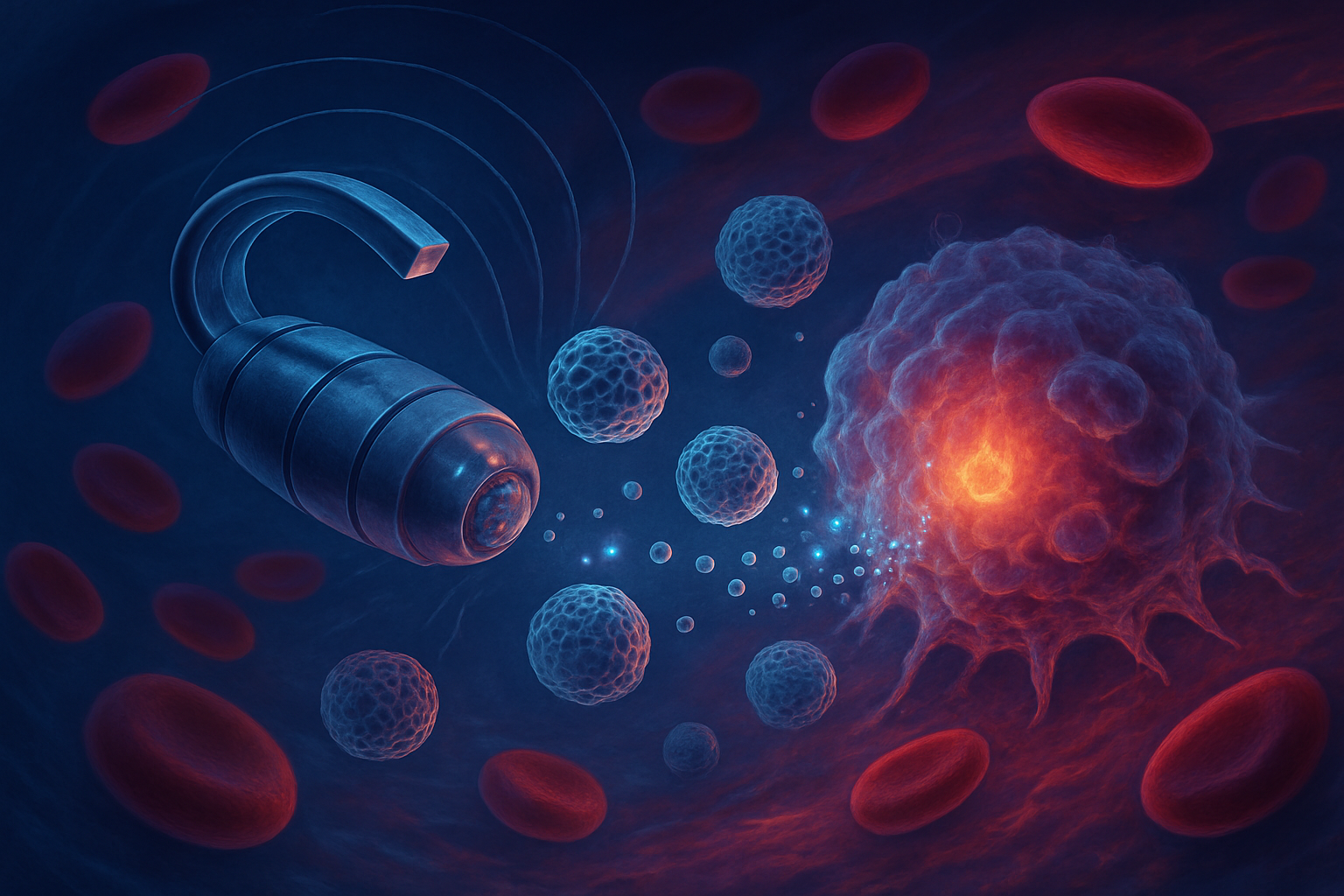
Researchers are developing particles and microrobots that can be guided by magnetic fields, powered by chemical reactions or designed to respond to conditions inside diseased tissue. Their goal is to improve on conventional drug delivery, which often spreads medicine throughout the body rather than concentrating it precisely where it is needed.
Some of the most advanced systems are being developed for cancer. In principle, a remotely guided microrobot could carry chemotherapy into a tumour, release its cargo at a controlled rate and then be tracked using medical imaging. A 2025 review in *Nature Reviews Materials* described a magnetic platform that combines navigation, drug delivery and imaging. The system is designed to operate in environments including blood vessels and spaces containing cerebrospinal fluid, while external magnetic fields can trigger drug release and help move the particles through small vessels.
That is a significant engineering step—but it does not mean such machines are treating patients today. The platform was described as approaching clinical readiness, not as an approved therapy. A *Nature* report published in October 2025 likewise noted that cancer-targeting nanorobots had not yet entered clinical trials.
The word “nanobot” can also create confusion. Many systems called nanorobots are not autonomous mechanical devices resembling miniature submarines. Some are specially engineered nanoparticles. Others are molecular structures, magnetic beads, biological organisms or hybrid systems that move only when activated by an external field. Their functions may be sophisticated, but they generally lack the independent sensing, decision-making and self-repair associated with popular visions of medical robots.
Recent research nevertheless shows why scientists remain interested. A 2025 study in *Nature Communications* tested a biohybrid microrobot built from magnetically responsive bacteria and drug-loaded, cell-membrane-coated particles. In an animal model of pneumonia, the system could be directed with a rotating magnetic field and showed increased accumulation in the lungs. The researchers reported reduced inflammation and improved delivery of the therapeutic material.
Other experiments are targeting cancer cells without relying on a conventional mechanical motor. In *Nature Nanotechnology*, researchers described a peptide-based nanorobot designed to recognize PD-L1, a protein involved in immune evasion by some tumours. In mouse models of colorectal cancer, the system both interfered with PD-1/PD-L1 signalling and formed structures that damaged tumour-cell membranes. The findings are promising, but they remain preclinical results rather than evidence of safety or effectiveness in people.
The main obstacles are biological as much as technological. A device must survive in blood or tissue without being rapidly cleared by the immune system. It must reach the right location despite flowing blood, branching vessels and dense tissue. It must release its payload at the correct time, avoid damaging healthy cells and eventually leave the body or break down into safe components.
Manufacturing is another challenge. A therapy intended for widespread clinical use must be produced consistently, sterilised, stored and administered at a predictable dose. Doctors also need a practical way to track the devices and control them safely inside different patients. Magnetic navigation, for example, may work well in a laboratory or specially equipped imaging system but be harder to deploy in ordinary clinical settings.
The broader nanomedicine field is further ahead than nanorobotics. Reviews published in 2025 noted that several nanoparticle-based cancer medicines are already approved or being tested in clinical trials. These products can improve how drugs circulate or release their cargo, but they are not necessarily steerable robots. That distinction matters: progress in nanoparticles should not be presented as proof that autonomous nanobots are already in hospitals.
So how close are we? The realistic answer is that targeted nanoscale delivery is becoming a genuine medical technology, while fully controllable nanorobots remain an experimental ambition. The next milestones will be reproducible results in large-animal studies, clear safety data, reliable manufacturing and carefully designed human trials. If those hurdles are overcome, the first successful systems may not look like tiny doctors inside the bloodstream. They may instead be highly specialised drug carriers—guided, triggered or activated only when and where treatment is needed.
StoryBreak
Independent digital news and reporting, updated throughout the day.
This article was researched and drafted with AI assistance and reviewed as part of StoryBreak's editorial process before publication. Read our editorial standards.