NASA and IBM Build Lunar AI to Search for Water and Hidden Moon Features
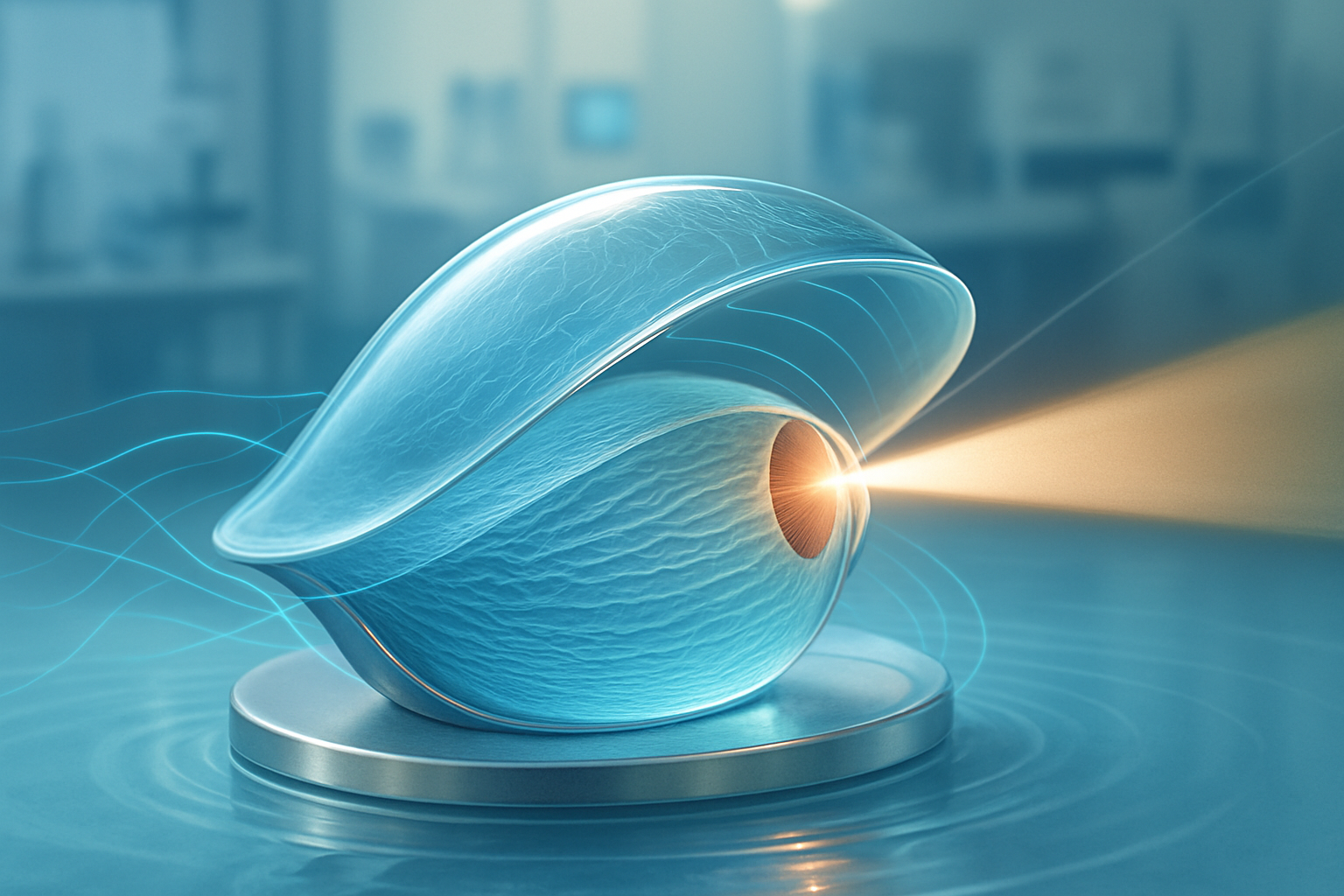
A new NASA-IBM lunar foundation model is being developed to combine imagery, spectroscopy, radar and topographic data, helping scientists map the Moon, investigate water signals and assess future landing sites. But it is a research tool—not proof that the AI has already discovered a new mineable ice deposit.
By StoryBreak
Published September 10, 2026 at 1:50 PM
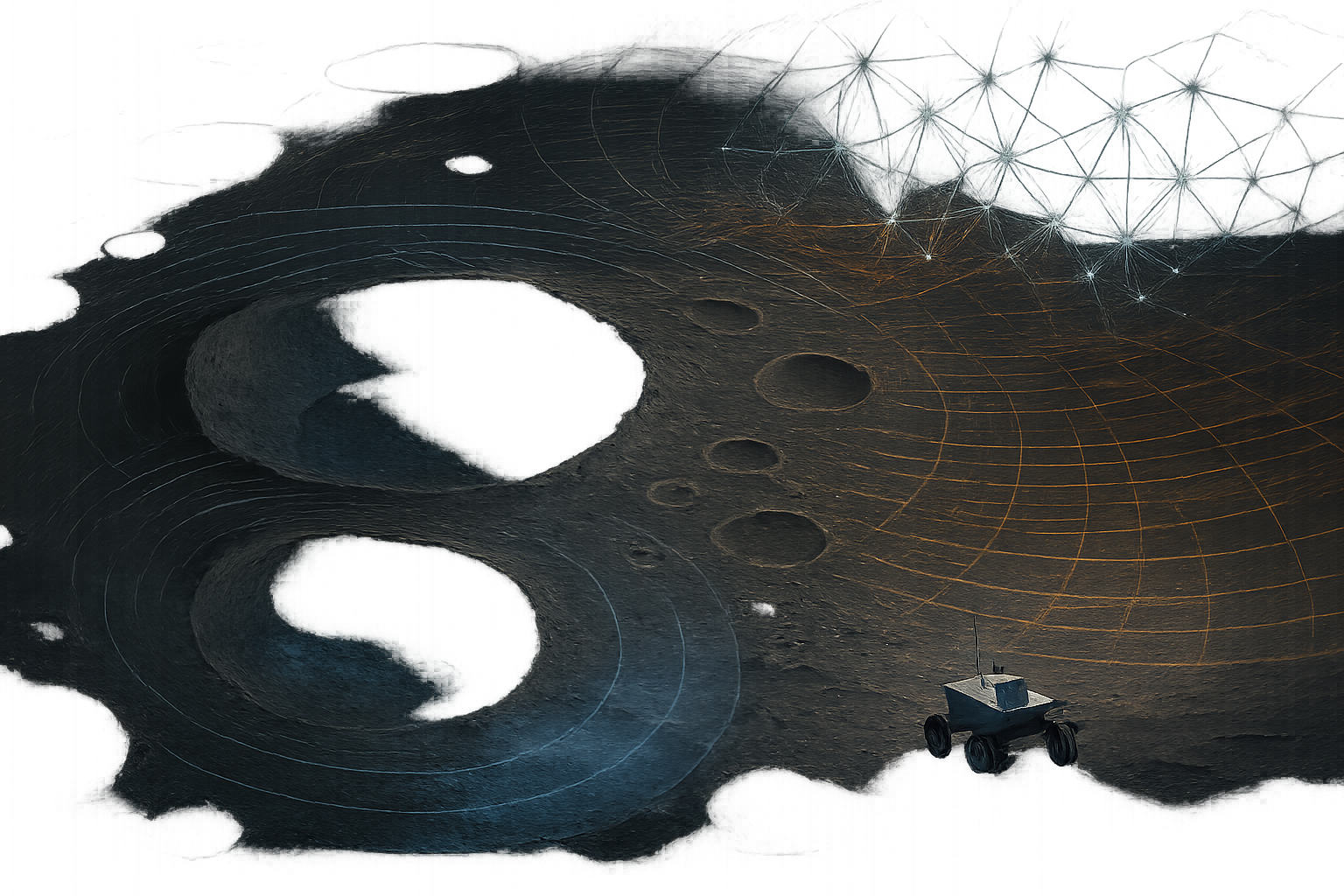
NASA and IBM are developing an artificial-intelligence model designed to help scientists read the Moon as a single, connected dataset rather than as a collection of separate maps.
The system, described as a lunar foundation model, is intended to analyze multiple forms of lunar data at once. Potential applications include geological mapping, searching for evidence of water, identifying hazardous terrain and studying unusual volcanic features, according to IBM Research’s description of the project.
That combination matters because the Moon’s most valuable clues are not all visible in ordinary photographs. Cameras can show craters, ridges and boulders. Spectrometers can reveal chemical signatures. Radar and elevation data can expose structure and terrain that sunlight alone cannot show. Bringing those layers together could help researchers find relationships that are difficult to see when each dataset is examined separately.
Water is the most consequential target. NASA has confirmed evidence of water ice in permanently shadowed polar regions and has also detected water molecules on sunlit parts of the lunar surface. But “water on the Moon” is not the same thing as a clearly defined underground reservoir. Orbital measurements may indicate a signal without resolving how much water is present, whether it is loose ice or chemically bound to minerals, or whether it could be extracted by a future mission.
That is why the new AI should not be described as having already found a new lunar ice field. The documented work presents the model as a platform for science and for building specialized applications. Its value is the ability to help researchers narrow the search, compare terrain types and generate maps that can then be checked against spacecraft observations and surface measurements.
The same distinction applies to the model’s promise of revealing “hidden” lunar features. In this context, hidden does not mean a secret structure buried beneath the Moon. It can mean a feature that is difficult to identify in one kind of image but becomes clear when topography, illumination, spectral information and other measurements are combined.
NASA has already explored related uses of artificial intelligence. One NASA navigation project trained an AI system to recognize ridges, craters and boulders on the horizon using elevation data from the Lunar Reconnaissance Orbiter. Such a capability could provide a backup way for robots or astronauts to determine their location when conventional communications or navigation services are unavailable.
The broader goal is practical: better maps before a spacecraft arrives. Future lunar missions will need to choose routes that balance scientific interest, sunlight, temperature, communications and physical safety. A site with promising water indicators may still be unusable if it is too steep, too rough or permanently cut off from sunlight and Earth-based contact.
NASA’s planned VIPER rover illustrates why the distinction between prediction and confirmation matters. VIPER is designed to travel near the lunar South Pole, drill into the soil and map water ice and other volatiles at different depths and temperatures. An AI model can help identify the most informative places to investigate, but only instruments operating at the surface can test what the regolith actually contains.
For now, the NASA-IBM model is best understood as an analytical foundation for lunar science, not an autonomous prospector. Its success will be measured by whether it produces maps and predictions that hold up against independent spacecraft data and, eventually, direct measurements on the Moon.
If that validation succeeds, the most important result may not be a single dramatic discovery. It may be a faster way to turn the Moon’s enormous archive of orbital observations into decisions about where humans and machines should go next.
Sources & Further Reading
- IBM ResearchPrimary source
- NASA SciencePrimary source
- NASAPrimary source
- NASAPrimary source
- NASAPrimary source
- NASA-IBM AI4Science
StoryBreak
Independent digital news and reporting, updated throughout the day.
This article was researched and drafted with AI assistance and reviewed as part of StoryBreak's editorial process before publication. Read our editorial standards.