Why Hollywood Keeps Chasing Strange True Stories—and What Nathan Fielder’s Elizabeth Holmes Film Reveals
Nathan Fielder’s surprise documentary about Elizabeth Holmes is not just another Theranos retelling. Its secret production and intimate access point to Hollywood’s growing interest in real stories that offer both built-in recognition and unusual narrative risk.
By StoryBreak
Published September 7, 2026 at 9:27 PM
Nathan Fielder’s new Elizabeth Holmes documentary arrived like a secret rather than a conventional film release: hidden from Telluride’s public lineup, screened in a phone-free mystery slot and revealed only after the audience had taken its seats.
The film, titled *You Can See Everything*, was directed by Fielder and Lance Oppenheim and reportedly made in secret over three years. It begins 34 days before Holmes was scheduled to report to federal prison, then follows her life with partner Billy Evans and their young children. A24 is backing the project.
That setup makes the documentary notable for more than its subject. Holmes is no longer an undiscovered figure whose story needs to be introduced. The Theranos founder has already become one of the defining characters of the fraud-and-ambition era: a startup executive whose promise of revolutionary blood testing ended in criminal convictions and a 135-month prison sentence for defrauding investors.
Her story has also been repeatedly adapted. That creates a problem for any new filmmaker. The audience already knows the outline, the downfall and much of the cultural symbolism. A new version has to justify its existence through access or interpretation.
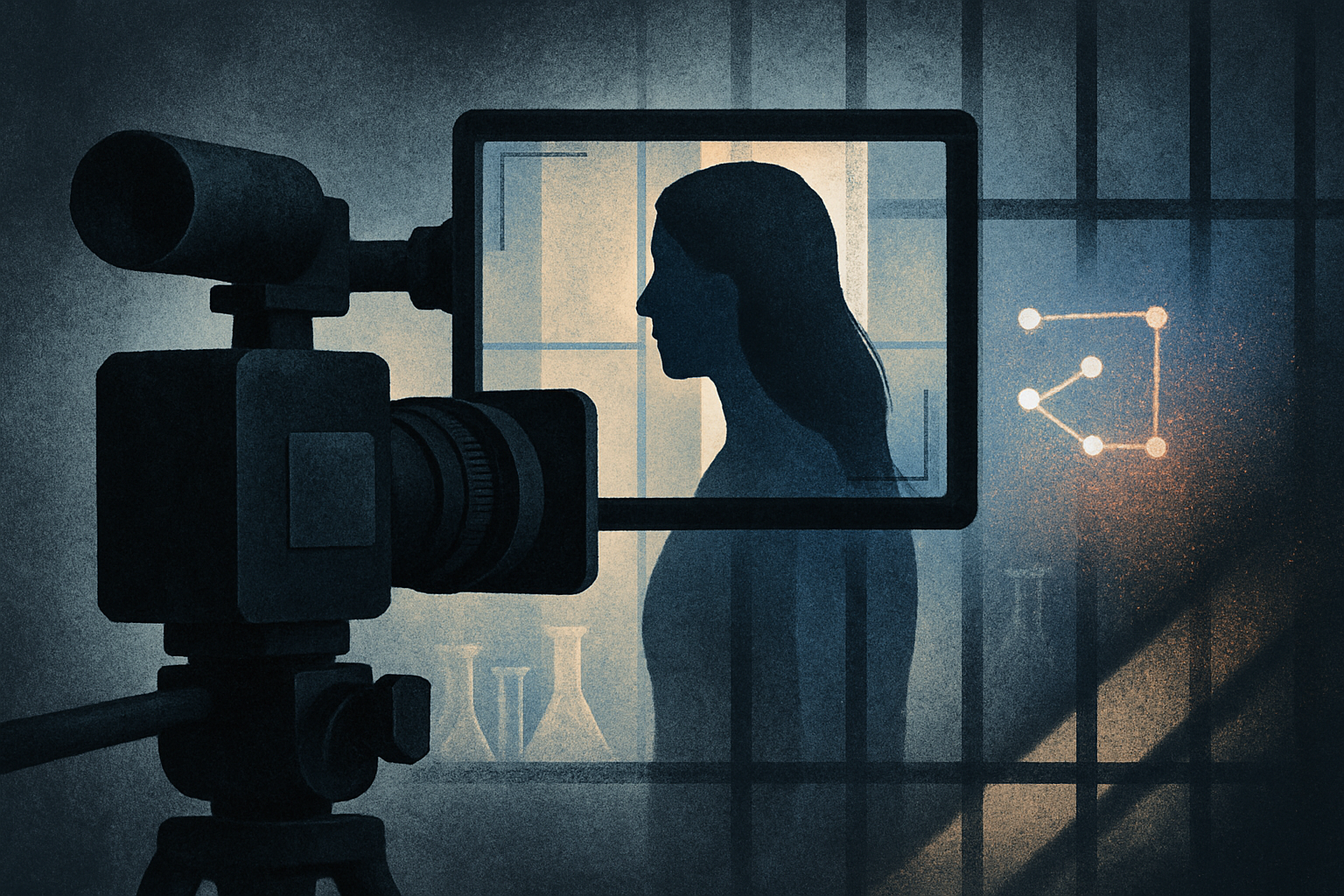
Fielder’s answer appears to be access. Previous treatments examined Theranos through investigative reporting, archival material, interviews and scripted reconstruction. *You Can See Everything* instead places cameras close to Holmes after the collapse, when the central question is no longer only what happened at Theranos. It is what Holmes believes happened to her—and how she presents that belief when the consequences are no longer theoretical.
That is a particularly fertile question for Fielder, whose work often examines people performing versions of themselves inside elaborate social systems. His films and television projects are built around discomfort: the gap between what people say they are doing and what their behavior reveals. Holmes, meanwhile, is a subject whose public identity was inseparable from performance. The pairing creates a built-in tension, but not necessarily a simple answer. The film’s own reported premise asks whether Holmes is manipulating the filmmakers, being manipulated by them or participating in both processes at once.
This is where the project fits a wider Hollywood bet on unusual true stories. Studios and streamers are not abandoning franchises, but they are increasingly looking for real-world material that already has an audience’s attention while leaving room for a distinctive format. Celebrity documentaries can offer intimate access. True-crime projects come with built-in suspense. Internet-born stories can arrive with communities of fans. The most valuable subjects are those that are recognizable but not exhausted—stories people know enough to click on, but not enough to feel finished with.
The strategy is partly economic. An unfamiliar original can require a large marketing campaign simply to explain why it matters. A notorious founder, a scandal, a vanished person or a bizarre online phenomenon comes with an existing headline. But recognition is only the entry fee. The project still needs a reason to exist beyond repetition.
Holmes is an unusually revealing test case because the public record is already extensive. The question is not whether she committed fraud; that has been established in court. The question is whether proximity can produce insight that investigation and dramatization could not. More access may humanize Holmes, expose contradictions or simply give a charismatic subject another venue to control the narrative.
That uncertainty is part of the attraction. Hollywood’s current true-story appetite is not limited to clean inspirational biographies. It increasingly favors morally unstable material: people who are famous for the wrong reasons, institutions that failed in public and stories in which the camera itself becomes part of the subject.
The next measure of Fielder’s film will therefore be more demanding than the shock of its reveal. Once the secrecy fades, audiences will have to decide whether *You Can See Everything* changes the Holmes story—or only finds a new, stranger way to look at it.
Sources & Further Reading
StoryBreak
Independent digital news and reporting, updated throughout the day.
This article was researched and drafted with AI assistance and reviewed as part of StoryBreak's editorial process before publication. Read our editorial standards.