America’s Largest Public-Lands Volunteer Day Returns Saturday. Here’s What to Know
National Public Lands Day returns September 26 with cleanups, trail work, habitat restoration and other volunteer projects across the country. The 2026 observance connects hands-on conservation with America’s 250th anniversary.
By StoryBreak
Published September 26, 2026 at 12:32 AM
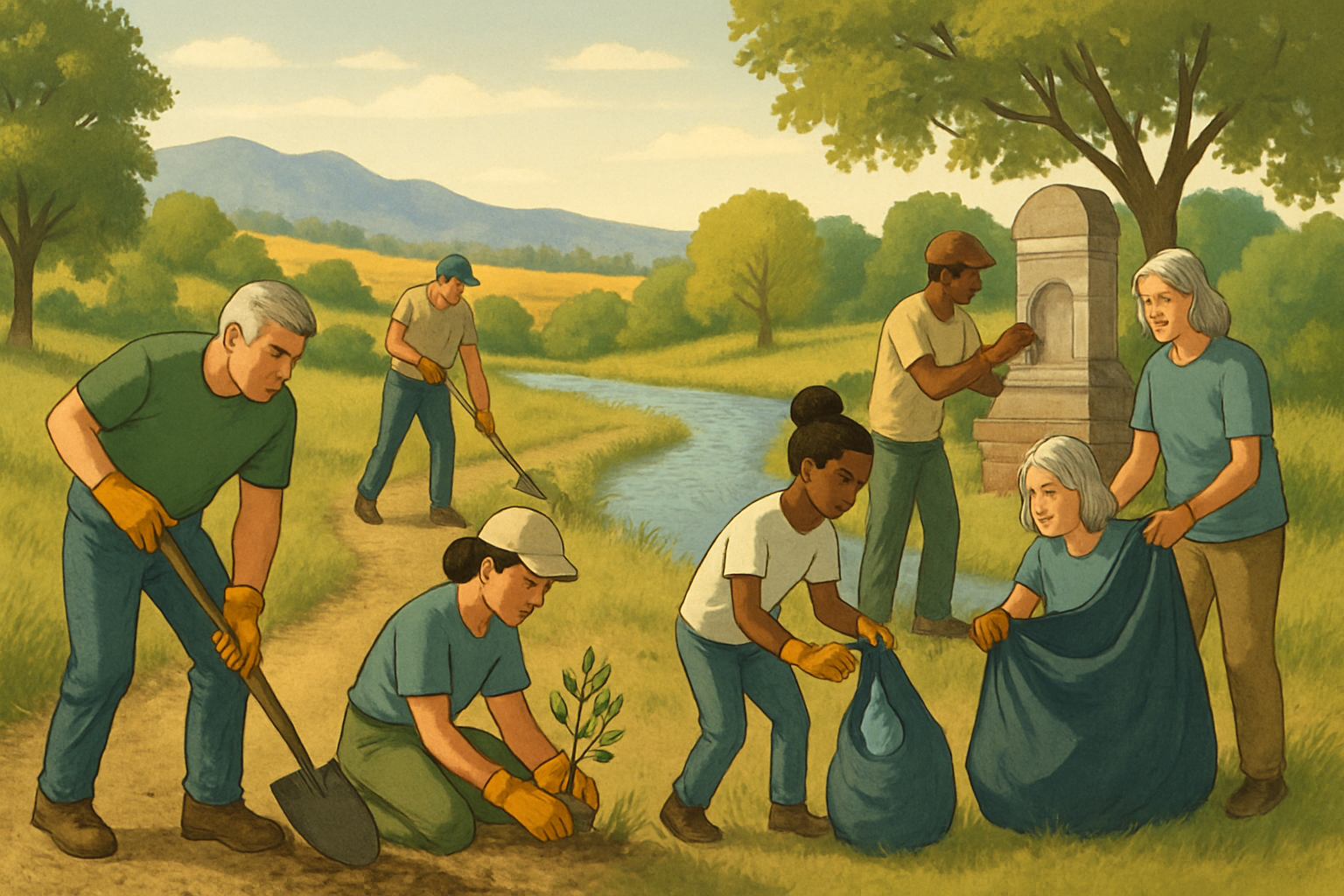
America’s largest single-day volunteer effort for public lands returns this weekend, with National Public Lands Day scheduled for Saturday, September 26, 2026.
The annual observance brings volunteers to parks, forests, trails, waterways, historic sites and other public spaces for hands-on projects. This year’s theme, “Caring for Our Shared America,” links the event to the country’s 250th anniversary and emphasizes a straightforward idea: places that belong to everyone also require care from everyone.
National Public Lands Day is not one giant gathering at a single location. It is a nationwide collection of local events coordinated by public agencies, nonprofits and community partners. The National Environmental Education Foundation, the event’s national coordinator, says last year’s observance included more than 900 events and 55,000 volunteers across all 50 states, Washington, D.C., and Puerto Rico.
The work varies widely depending on the site. Volunteers may repair trails, remove invasive plants, clean beaches and riverbanks, improve pollinator gardens, restore habitat, reduce wildfire risks or maintain historic landscapes. At Yaquina Head Outstanding Natural Area on the Oregon coast, projects include beach cleanup, invasive-plant removal and garden maintenance. At El Malpais National Conservation Area in New Mexico, volunteers are scheduled to help repair fences or maintain the Narrows Rim Trail.
A signature 2026 event will take place along Arizona’s Lower Salt River near Mesa. The cleanup is returning for its 11th consecutive year in partnership with the U.S. Forest Service’s Tonto National Forest, according to NEEF. Other official events include trail and pollinator-garden work at BLM’s Water Canyon Recreation Area in Nevada and restoration projects at public sites across the country.
That variety is part of the day’s practical importance. Public lands are often experienced as finished products—a hiking trail, a clean shoreline, a maintained campground—but the condition of those places depends on recurring labor. A volunteer day can produce visible improvements while also giving land managers an opportunity to connect with residents who use the sites throughout the year.
For people who want to participate, the most important step is choosing the right local event rather than simply showing up at a public property. NEEF’s official event map lists opportunities by location and activity. Individual listings may require registration and can differ on age limits, accessibility, transportation, equipment and weather plans. Volunteers should check the listing before leaving home and follow instructions about footwear, water, sun protection and tools.
The National Park Service is also extending its programming beyond the main Saturday. Its 2026 calendar includes events from September 12 through October 10, giving people who cannot volunteer on September 26 additional options. Some federal sites may also offer fee-free entry or other recognition for participants, but those details are set locally and should be confirmed with the host site.
The deeper message of this year’s observance is less ceremonial than practical. America’s public lands are shared spaces, but “shared” does not mean self-maintaining. National Public Lands Day offers a way to turn appreciation into a few hours of measurable work—and to see, up close, what it takes to keep a public trail open, a riverbank clean or a historic site cared for.
For those who cannot find a nearby work project, NEEF also promotes activities such as nature observation and citizen-science participation. The point is not that every volunteer must do the same task. It is that the country’s public spaces are sustained through repeated local acts of attention, often by people who simply decided to spend one day helping.
Sources & Further Reading
- National Park ServicePrimary source
- National Environmental Education FoundationPrimary source
- National Environmental Education FoundationPrimary source
- National Environmental Education FoundationPrimary source
- Bureau of Land ManagementPrimary source
- Bureau of Land ManagementPrimary source
- Bureau of Land ManagementPrimary source
StoryBreak
Independent digital news and reporting, updated throughout the day.
This article was researched and drafted with AI assistance and reviewed as part of StoryBreak's editorial process before publication. Read our editorial standards.