Nepal flood disaster leaves more than 2,400 people unaccounted for, including Kailash pilgrims
Families are still waiting for word about relatives believed to have been caught in the Aug. 26 flash floods along the Nepal-China border. Nepal’s government said 626 bodies had been recovered and about 2,400 people remained unaccounted for as of Aug. 29, while searches continued amid warnings of additional flooding.
By StoryBreak
Published August 31, 2026 at 12:56 AM
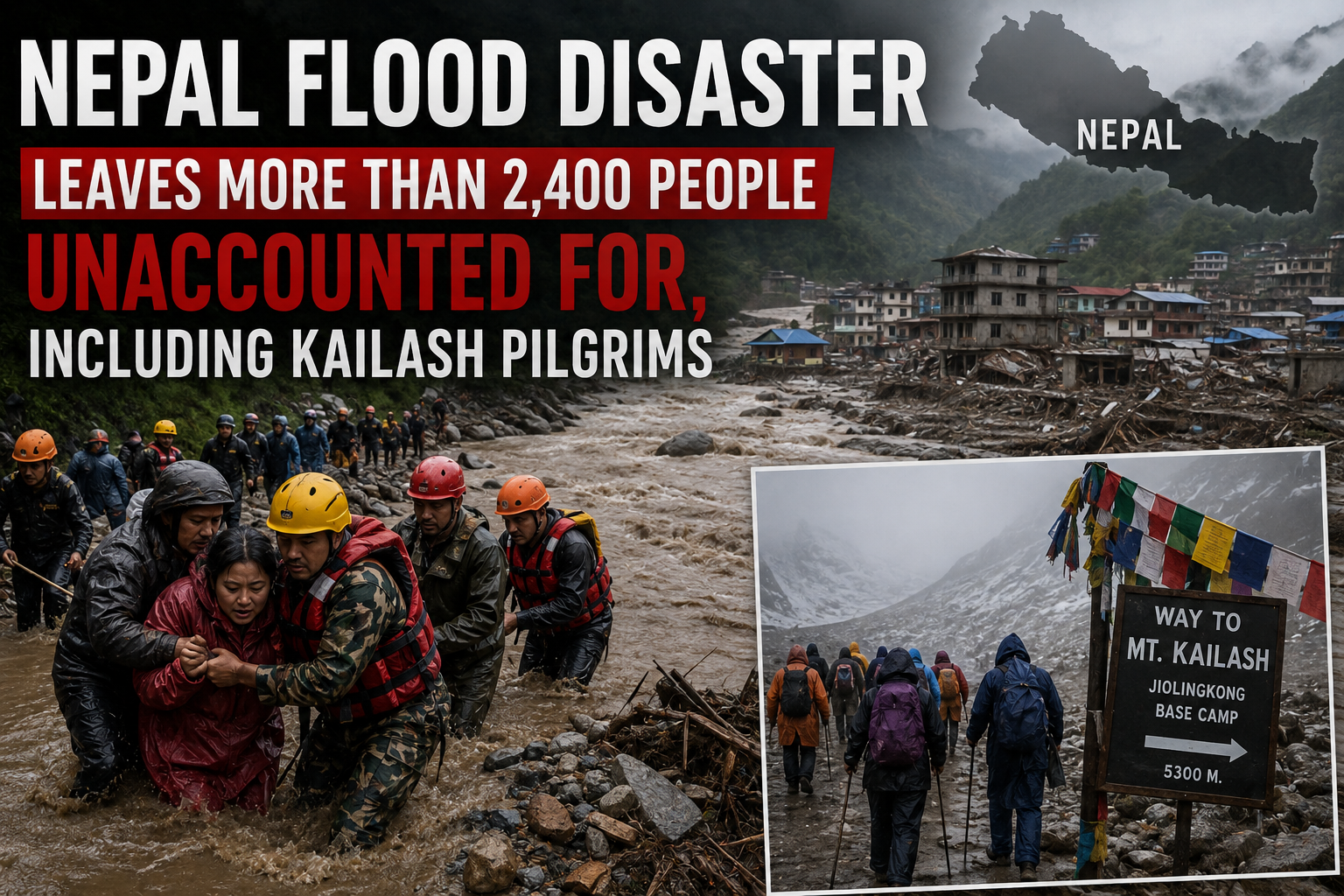
Families across several countries are still waiting for news about relatives who may have been caught in catastrophic flash floods along Nepal’s northern border, where rescue teams are searching for thousands of people reported missing.
Nepal’s Ministry of Foreign Affairs said Saturday that 626 bodies had been recovered and about 2,400 people remained unaccounted for after flooding along the Bhote Koshi River on Aug. 26. The figures include Nepali citizens and foreign nationals, and officials cautioned that the scale of the disaster was still being assessed.
The floods struck the Rasuwa district near the border with China, a mountainous region used by trekkers, workers and religious travelers heading toward Mount Kailash in Tibet. The sudden surge destroyed or damaged roads, bridges, buildings and other infrastructure, complicating efforts to reach isolated areas and identify people who may have been swept away.
Among those feared missing are pilgrims traveling with an organized group connected to Isha Foundation, the organization led by Indian spiritual teacher Sadhguru. The group was at or near the Gyirong Port immigration center on the Chinese side of the border when floodwaters hit. Isha Foundation has said 77 participants were caught in the disaster and that Chinese authorities resumed search operations after a temporary suspension caused by the threat of another flood.
The uncertainty has left families trying to piece together information from tour operators, religious organizations, embassies and social media. In the United States, relatives of some travelers have told NPR they have been unable to establish contact. Communications outages, blocked roads and the destruction of border facilities have made it difficult to determine who escaped, who was evacuated and who remains missing.
Officials are also warning that the danger has not ended. Nepal’s disaster authorities have continued monitoring river systems, while additional flood notices were issued after Chinese authorities reported increased water flow upstream. Rescue work has at times been paused because of the risk of further surges and landslides.
The flood’s cause remains under investigation. Satellite analysis and reports from officials and scientists have pointed to a sudden release of water associated with an ice-and-rock collapse in the Himalayan region, but Nepal’s foreign ministry said the precise circumstances had not yet been fully determined.
The disaster is especially difficult to manage because the affected region is remote and sits near an international boundary. Search teams must work through unstable terrain while coordinating across Nepal and China, and the identification of foreign nationals requires communication with diplomatic missions and families abroad.
Nepal has established an emergency response team for foreign nationals affected by the floods and has asked families to rely on official channels rather than circulate unverified reports. The government has also created an online rescue portal for reporting missing people, requesting assistance and checking emergency information.
For families, however, the central question remains unanswered: which missing people are alive, where survivors have been taken and when authorities will be able to provide confirmed identities. Officials say search, rescue, relief and recovery operations remain the national priority as conditions in the flood zone continue to change.
StoryBreak
Independent digital news and reporting, updated throughout the day.
This article was researched and drafted with AI assistance and reviewed as part of StoryBreak's editorial process before publication. Read our editorial standards.