Nearly 3,000 missing after catastrophic Nepal floods as massive rescue effort continues
Rescuers are searching devastated communities along the Nepal-Tibet border after catastrophic flooding killed hundreds and left nearly 3,000 people missing, as scientists say the disaster was likely triggered by the collapse of rock and ice from a Himalayan glacier.
By StoryBreak
Published August 29, 2026 at 9:45 PM
Updated September 7, 2026 at 12:07 AM
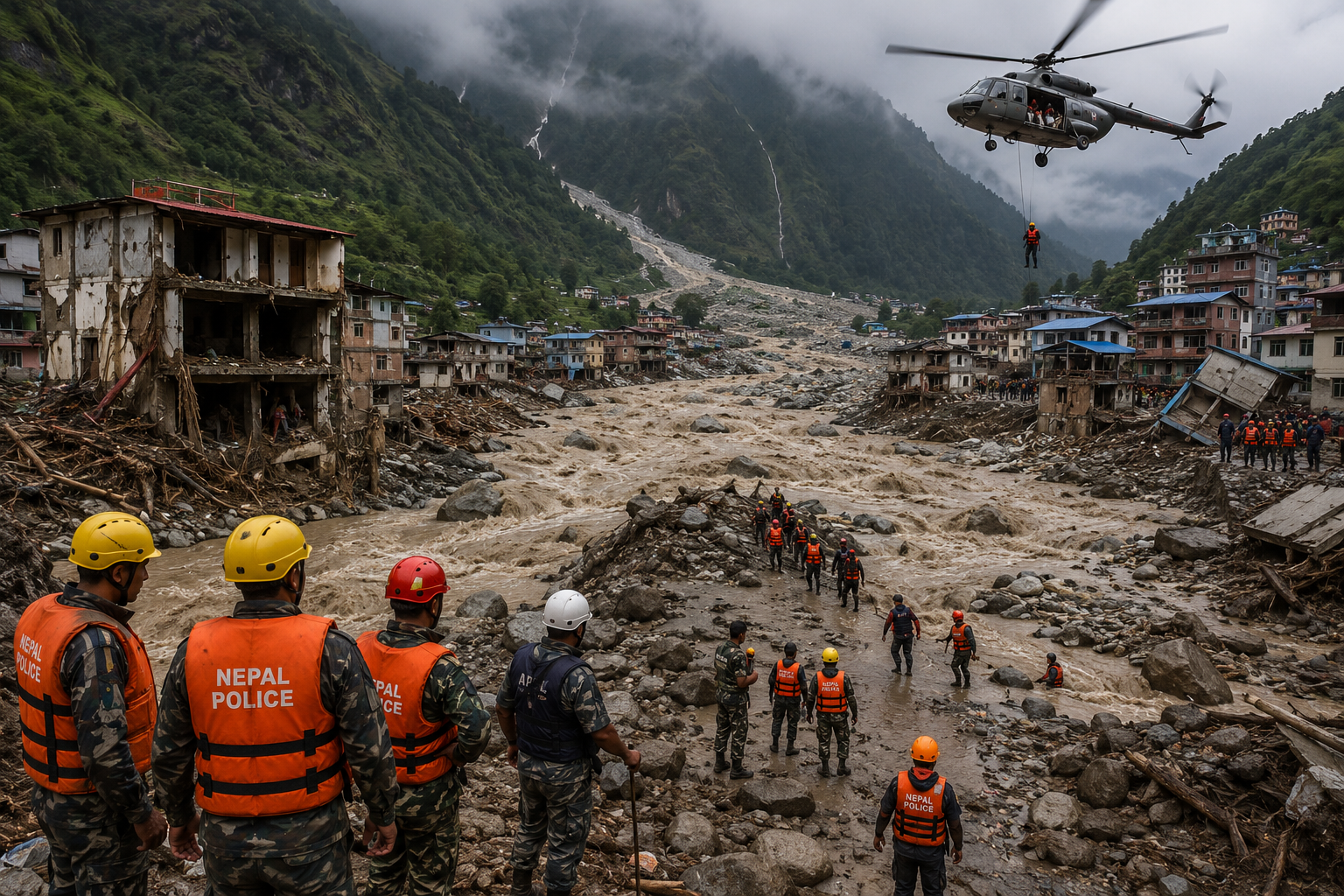
A massive search and rescue operation is continuing along the Nepal-Tibet border after catastrophic flooding swept through Himalayan communities, killing hundreds of people and leaving nearly 3,000 missing.
The disaster began Wednesday when a massive collapse involving rock and ice from a glacier sent debris plunging into the valley below. The resulting torrent of water, mud, ice and rock raced through mountain river systems, destroying communities and critical infrastructure in its path.
By Saturday, authorities reported 669 deaths in Nepal and seven in Tibet, bringing the combined death toll to 676.
Approximately 2,426 people remained missing in Nepal, while more than 550 were missing in Tibet's Gyirong County.
More than 3,700 people have been rescued in Nepal.
Rescue crews search for survivors
Rescuers are working across difficult Himalayan terrain while families wait for information about missing relatives.
Helicopters have been carrying food, clothing and other supplies into devastated areas while evacuating survivors.
Poor weather temporarily halted some operations Saturday, but helicopter flights resumed after conditions improved.
The scale of the disaster has also created unusual challenges for rescue crews. Nepal has requested specialized international assistance for operations including tunnel rescues, restoring transportation and communications, identifying victims and conducting DNA testing.
One major focus is the Upper Trishuli-1 Hydropower Project, where more than 100 people may be trapped in a mud-filled tunnel, according to AP.
Hundreds of foreigners are among the missing
The disaster has affected people from well beyond Nepal and Tibet.
At least 540 foreign nationals are among those reported missing, many of them Hindu pilgrims from India.
The region attracts tourists, trekkers, workers and religious pilgrims from around the world, complicating efforts to determine exactly who was in the affected areas when the flooding began.
What caused the Nepal flood?
Scientists studying satellite imagery believe a massive slope failure involving a glacier triggered the disaster.
The U.S. Geological Survey said a catastrophic debris flow and flood was likely triggered by a rapid slope failure involving a glacier in Nepal's Langtang National Park near the Chinese border.
The collapse produced seismic energy equivalent to approximately a magnitude 5.2 earthquake, according to the USGS.
The resulting debris flow and flood traveled approximately 100 kilometers — about 62 miles — downstream, affecting populated areas along the Lende Khola and Trishuli river systems.
Satellite imagery examined by scientists subsequently indicated that bedrock underneath part of the glacier also collapsed, carrying a huge mass of rock and ice into the valley.
That material maintained enormous momentum as it moved through the steep terrain, sending water, mud and debris through communities downstream.
Entire communities and infrastructure damaged
The destruction extends far beyond homes.
Floodwaters swept away roads and bridges and damaged major hydroelectric power facilities.
Satellite images show sections of the Trishuli River becoming significantly wider and filled with sediment and debris following the disaster. Communities along the river were buried beneath mud and wreckage.
Damage to Nepal's energy infrastructure could have lasting consequences.
Reuters reports that affected power projects represent more than 12% of Nepal's national generating capacity.
Nepal could need up to $5 billion to rebuild
Even as the search for survivors continues, Nepal is beginning to confront the enormous cost of rebuilding.
Finance Minister Swarnim Wagle estimates reconstruction could require approximately $4 billion to $5 billion.
That would amount to nearly one-tenth of Nepal's economy.
Officials stress that the figure is preliminary because assessments of the damage are still underway.
The disaster represents another major economic challenge for a country heavily dependent on tourism, remittances and hydropower.
Scientists study whether warming contributed
The disaster is also drawing attention to the changing risks facing communities throughout the Himalayas.
Warming temperatures are causing glaciers and permafrost to change, potentially destabilizing high-altitude mountain slopes.
Scientists caution, however, that it is too early to say definitively that climate change directly caused this particular collapse.
Researchers say the immediate evidence points to a massive failure of bedrock and glacier ice that produced a cascading series of events — first the collapse, then the debris flow and finally catastrophic flooding downstream.
The search continues
For thousands of families, the immediate concern remains finding those who have not been accounted for.
Rescuers continue moving survivors to safer areas while supplies are delivered to isolated communities.
Authorities are also monitoring newly formed lakes upstream from the disaster area because of concerns that additional water releases could cause more flooding.
While one of those threats appeared to be easing Saturday, officials continued monitoring the area.
With nearly 3,000 people still missing, the full human cost of the disaster may not be known for some time.
Editor's note: This article reflects initial reporting on the disaster. For more current confirmed figures as the search-and-rescue operation continued, see StoryBreak's later coverage of the Nepal flood.
StoryBreak
Independent digital news and reporting, updated throughout the day.
This article was researched and drafted with AI assistance and reviewed as part of StoryBreak's editorial process before publication. Read our editorial standards.