Scientists Identify First New Living Cat Species in More Than 100 Years
A tiny spotted cat from Bolivia’s Yungas cloud forests has been formally recognized as Leopardus tilcayo after genetic and museum-based analysis. The discovery expands the known diversity of South America’s tiger cats—and leaves scientists racing to determine how many of the newly named animals remain in the wild.
By StoryBreak
Published September 24, 2026 at 1:00 AM
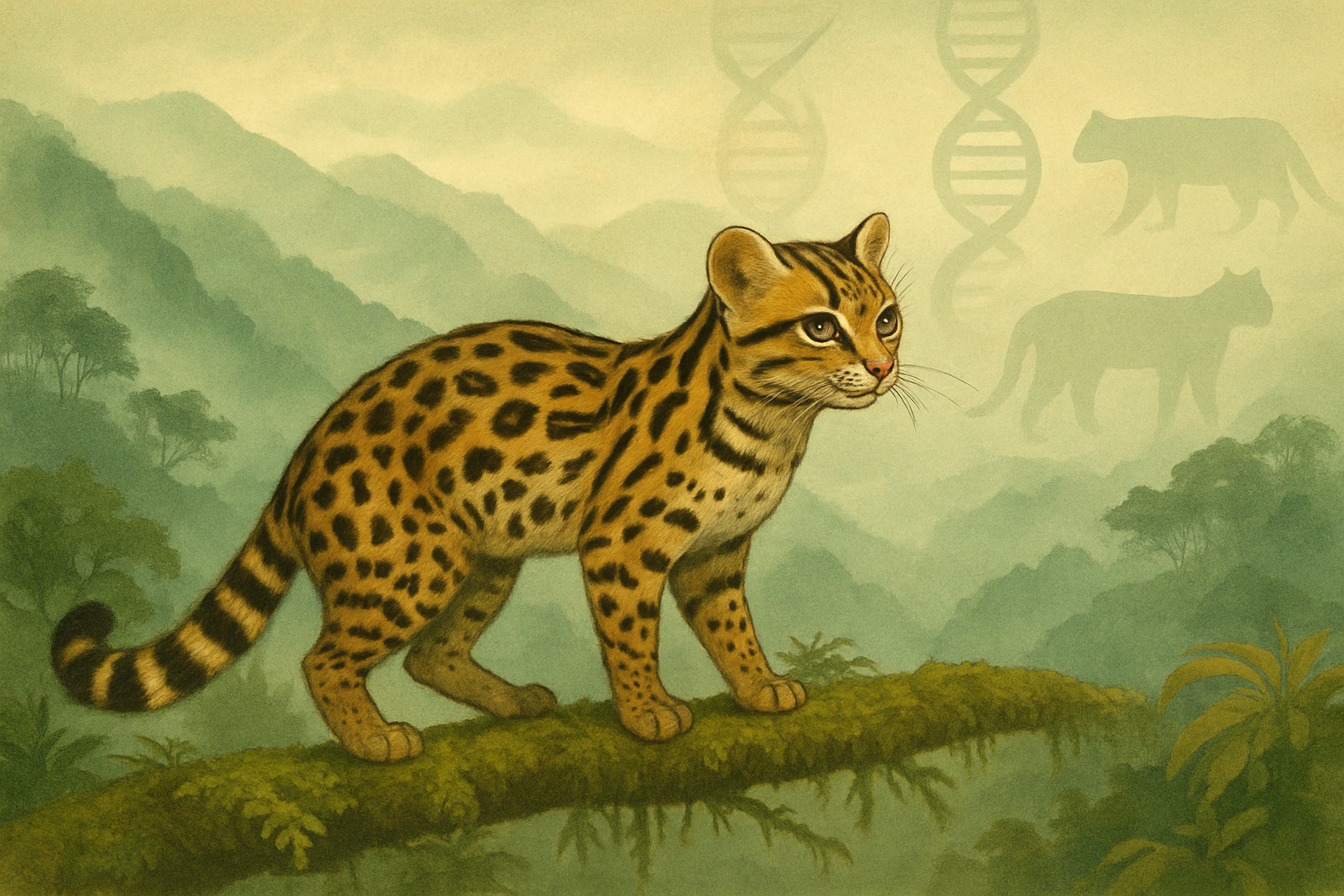
A small spotted cat from Bolivia’s cloud forests has become the first living feline species formally described by scientists in more than a century.
Researchers have named the animal Leopardus tilcayo, using “tilcayo,” a name long used by communities in Bolivia’s Yungas region. The species belongs to a group of elusive South American cats commonly known as tiger cats and is smaller than an average domestic cat.
The finding, published September 17 in the journal Current Biology, is less a story of an animal suddenly appearing than of science finally recognizing what was already there. For years, the tilcayo was generally treated as one of several closely related tiger-cat populations. Its distinct identity emerged after researchers compared complete genomes from 38 cats in the Leopardus genus, including living animals and historical museum specimens.
That analysis found that the Yungas cat forms its own evolutionary lineage. Researchers estimate that it separated from related tiger cats about 1.4 million years ago. Physical features—including its distinctive rosettes, tail and coat pattern—also help distinguish it from neighboring species.
The study does more than add one name to the cat family. It redraws the scientific picture of South America’s tiger cats, identifying five distinct species within a group whose members can look remarkably similar. The researchers also recognized a new subspecies in Peru, Leopardus tigrinus antisuyo.
The distinction matters because taxonomy is the foundation of conservation. If several species are treated as one, a decline in a small, isolated population can be hidden by healthier populations elsewhere. Once a population is recognized as a separate species, scientists can begin asking more precise questions: Where does it live? How many individuals are there? Does it interbreed with neighboring cats? Which threats are most serious?
For the tilcayo, most of those answers are still missing. Researchers have not yet established its full geographic range or population size, and it does not yet have a complete conservation assessment based on those data. Bolivian scientists have pointed to habitat loss, conflict over poultry, and capture for the pet trade as possible risks.
The discovery also illustrates why “new species” headlines require some translation. The tilcayo is new to formal scientific classification, not necessarily unknown to people who share its habitat. Local knowledge supplied the name that researchers chose to preserve, while DNA sequencing and comparisons with museum material provided the evidence for recognizing the cat as distinct.
The next phase will take place on the ground. Camera traps, field surveys and genetic sampling could reveal whether the tilcayo is confined to a narrow section of the Yungas or occurs across a broader stretch of Andean forest. Those findings will determine whether this newly named cat is a conservation emergency—or a rare example of a species that has remained overlooked but comparatively secure.
Either way, the result is a reminder that scientific discovery does not always mean finding something no one has ever seen. Sometimes it means learning to see the difference between animals that have been placed in the same category for too long.
Sources & Further Reading
- Pontifícia Universidade Católica do Rio Grande do Sul (PUCRS)Primary source
- Current Biology study recordPrimary source
- Associated Press
- National Geographic
- Universidad Mayor de San AndrésPrimary source
StoryBreak
Independent digital news and reporting, updated throughout the day.
This article was researched and drafted with AI assistance and reviewed as part of StoryBreak's editorial process before publication. Read our editorial standards.