
The NFL Is Going Global Like Never Before. The 2026 Season Could Change Where Football Is Played
The NFL’s 2026 schedule includes a record nine international games across seven countries, with first-time regular-season stops in Australia, France and Brazil. The bigger story is the league’s attempt to turn overseas games into a permanent global business—and eventually a routine part of every team’s calendar.
By StoryBreak
Published September 7, 2026 at 9:45 PM
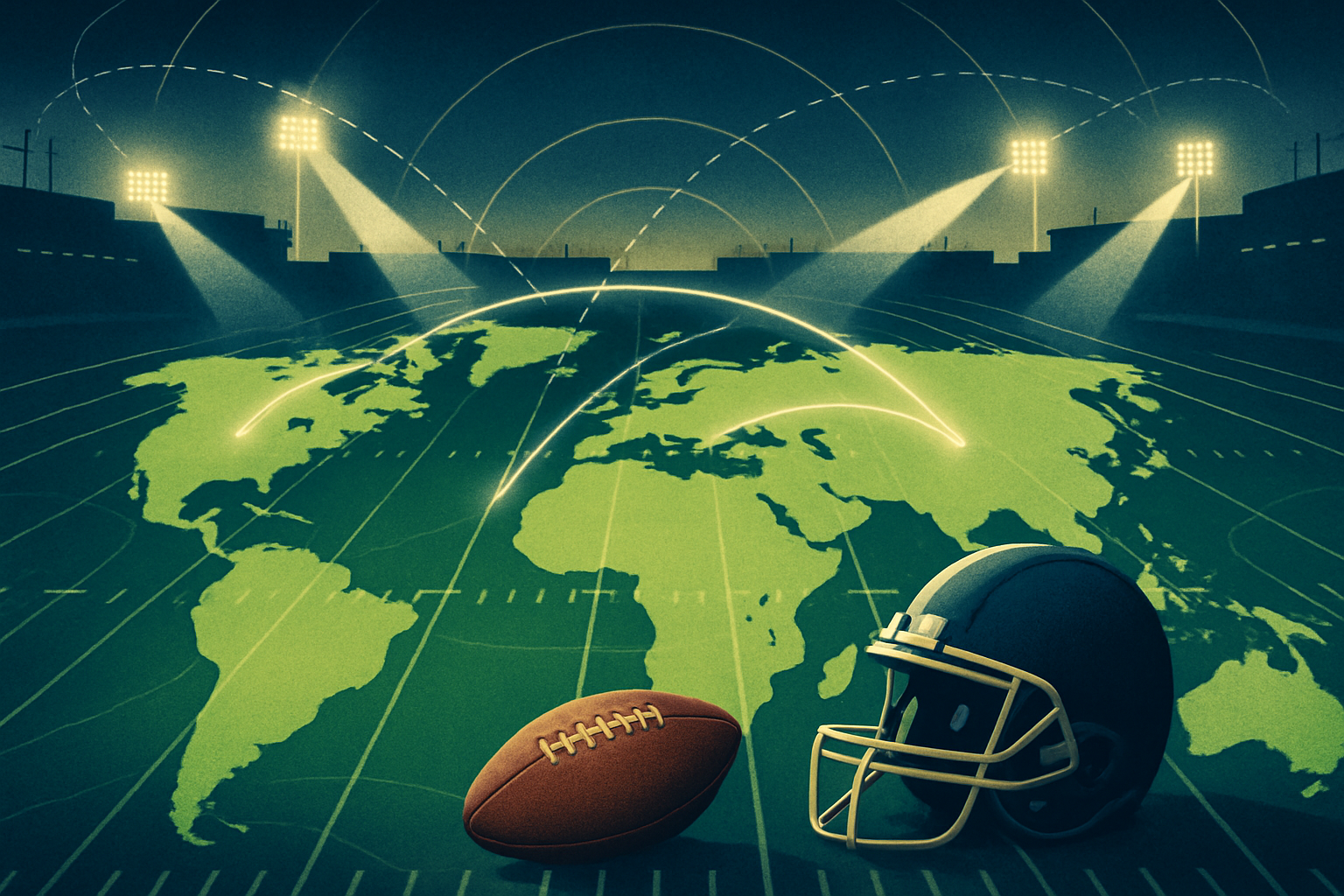
The NFL’s 2026 season will begin with a signal that the league is no longer treating international football as a special attraction. On September 10, the San Francisco 49ers and Los Angeles Rams will meet at Melbourne Cricket Ground in the NFL’s first regular-season game in Australia.
That game is the opening act of the league’s largest international schedule yet: nine regular-season games across four continents, seven countries and eight stadiums. The 2026 slate also includes the NFL’s first regular-season game in France, a debut in Rio de Janeiro and return trips to established markets including London, Madrid, Munich and Mexico City.
The schedule matters, but the deeper change is strategic. The NFL is building an international network rather than simply exporting a few games each year.
Through its Global Markets Program, launched in 2022, all 32 clubs now hold marketing rights in at least one international territory. The program covers 22 markets in 2026 and allows teams to pursue local fan events, commercial partnerships, merchandise activity and NFL Flag programs. In other words, a team’s overseas presence is supposed to continue long after the visiting players leave the stadium.
That gives the 2026 season a different meaning. Melbourne is not only a venue for one game; it is a market where several NFL teams already have designated rights. The same logic applies in Europe and Latin America, where franchises are being encouraged to build recognizable local identities. The league is trying to create fans of individual clubs—not merely occasional viewers of the Super Bowl.
The numbers show how quickly the experiment is expanding. Before the 2026 season, 62 regular-season NFL games had been played outside the United States. Nine more will be added this year alone. NFL owners have also approved up to 10 international games in seasons after 2026, while Commissioner Roger Goodell has described an even more ambitious long-term goal: an international game for every team.
That possibility would change the meaning of home-field advantage. Every international game effectively removes a traditional home date from one club’s schedule, even if the league presents the event as a commercial opportunity. For teams, the trade-off is access to new revenue, sponsors and fans. For supporters in the United States, it can mean fewer games in their own stadiums and more unusual kickoff times on television.
The football consequences are just as important. Long-distance travel, time-zone changes and uneven recovery periods can affect preparation and performance. A trip from California to Australia is not comparable to a short flight between American cities. The league therefore has to prove that the commercial benefits can coexist with competitive fairness and reasonable working conditions for players.
The 2026 season will offer the first broad test of that balance. The international calendar is now spread across the season rather than concentrated in one region, and some teams will travel more than once. San Francisco, for example, begins abroad in Melbourne and later returns to international competition in Mexico City.
The NFL’s global push is therefore about more than putting games in famous stadiums. It is an attempt to make geography part of the league’s permanent business model. If the new markets generate sustained audiences, local participation and strong team identities, overseas games may become a routine feature of the NFL schedule. If the travel and competitive costs outweigh the gains, the league’s expansion plans will face a harder limit than its ambitions suggest.
For now, the clearest conclusion is simple: in 2026, the NFL is not merely visiting the world. It is beginning to organize itself around it.
Sources & Further Reading
- NFL Football OperationsPrimary source
- NFL.comPrimary source
- NFL.com
- NFL.comPrimary source
- Associated Press
StoryBreak
Independent digital news and reporting, updated throughout the day.
This article was researched and drafted with AI assistance and reviewed as part of StoryBreak's editorial process before publication. Read our editorial standards.