Nvidia’s Australia AI Buildout Could More Than Double the Country’s Computing Capacity
Nvidia says eight Australian infrastructure and cloud partners could deliver up to 2 gigawatts of AI data-center capacity by 2027. That would represent a major expansion—but the figure is a development target, not yet operating compute.
By StoryBreak
Published September 10, 2026 at 1:37 PM
Nvidia is backing a potential data-center buildout in Australia that could more than double the country’s current computing capacity, placing the chipmaker at the center of Canberra’s push for greater domestic access to artificial intelligence infrastructure.
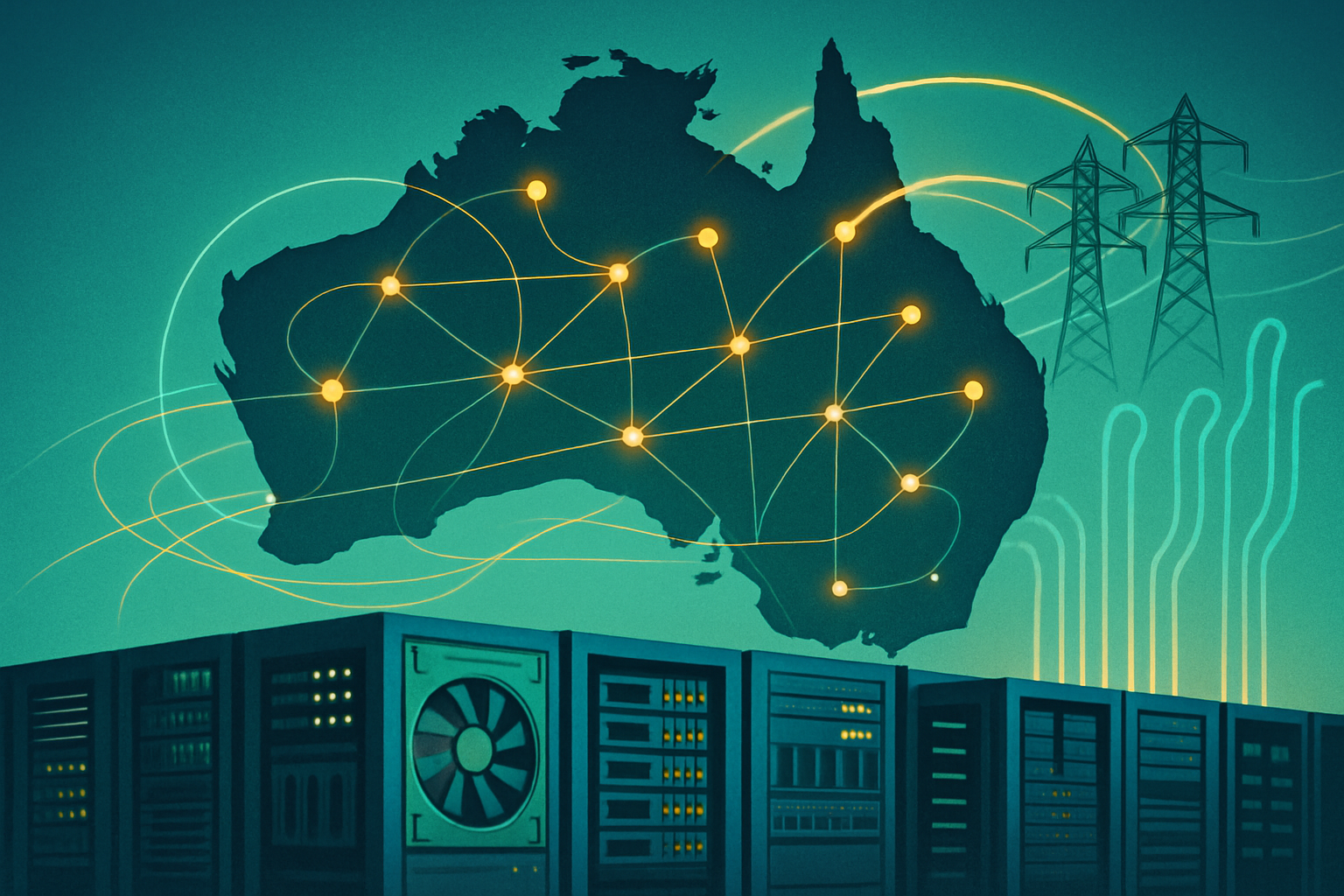
The company said September 9 that it is working with Firmus, Sharon AI, IREN, Megaport, ResetData, CDC, NEXTDC and AirTrunk on facilities designed to host up to 2 gigawatts of Nvidia-powered AI infrastructure by 2027. The announcement covers what Nvidia calls “AI factories”—data centers built specifically to train and run demanding AI systems.
Reuters reported that Australia currently has about 1.6 gigawatts of computing capacity, citing industry research. On that basis, the proposed expansion is significant: 2 gigawatts would equal 125% of the existing baseline. If the full target were delivered and measured on the same basis, Australia’s total would reach roughly 3.6 gigawatts—about 2.25 times today’s capacity.
That calculation also points to the most important qualification in the announcement. The 2-gigawatt figure describes capacity the partners aim to develop. It does not mean that 2 gigawatts of new AI computing is already operating, nor does Nvidia provide a detailed schedule showing when each project will be online.
The division of labor matters. Nvidia says its role will include the DSX platform, accelerated computing hardware, networking, software and ecosystem support. The Australian partners will provide or operate the facilities, power arrangements and cloud services. The plan therefore depends on a chain of projects rather than a single Nvidia-owned campus.
The company says the facilities are intended to serve Australian startups, universities, researchers, enterprises, developers and government customers. Local capacity could be especially valuable for organizations handling sensitive information or needing data to remain within Australia. It could also reduce latency for AI applications used by Australian customers and give domestic companies access to the same class of computing infrastructure that has largely been concentrated in major overseas cloud markets.
Several partners are already describing the physical requirements behind the plan. CDC says it operates more than 550 megawatts across Australia and New Zealand, with another 800 megawatts under construction. NEXTDC and AirTrunk are developing high-density sites using liquid-cooling systems, while IREN is linking Nvidia’s design to an 800-megawatt campus planned for South Australia. Sharon AI separately disclosed a six-year collaboration with Nvidia involving 72 megawatts of new Australian data-center capacity and up to 40,000 GPUs.
Those figures illustrate both the scale and the uncertainty. Building AI capacity is not simply a matter of purchasing processors. Operators must secure large blocks of electricity, connect sites to networks, install specialized cooling and obtain approvals. Nvidia’s own announcement acknowledges that additional power-generation projects may be needed to support the expansion.
That is where the national argument begins. More local compute could help Australia develop models and applications tailored to its industries, while also strengthening control over sensitive data. But data centers consume electricity continuously and high-density AI facilities create additional cooling demands. Reuters noted that the expansion comes amid calls for tighter scrutiny of the environmental effects of data centers, including their energy and water use.
The next milestone will not be the headline number. It will be evidence that individual projects have secured power, financing, customers and construction timetables. Until then, Nvidia’s announcement is best understood as a blueprint for a much larger Australian AI infrastructure market—not proof that the country has already doubled its computing capacity.
Sources & Further Reading
StoryBreak
Independent digital news and reporting, updated throughout the day.
This article was researched and drafted with AI assistance and reviewed as part of StoryBreak's editorial process before publication. Read our editorial standards.