
A sample of over 5,000 drives reveals one problem with new HDDs
An analysis of 5,106 failed hard drives found that nearly half had operated for no more than a year. The findings also show why drive-health indicators cannot identify every failure before it happens—and why the sample should not be treated as a failure rate for all hard drives.
By StoryBreak
Published November 9, 2026 at 9:01 AM EST
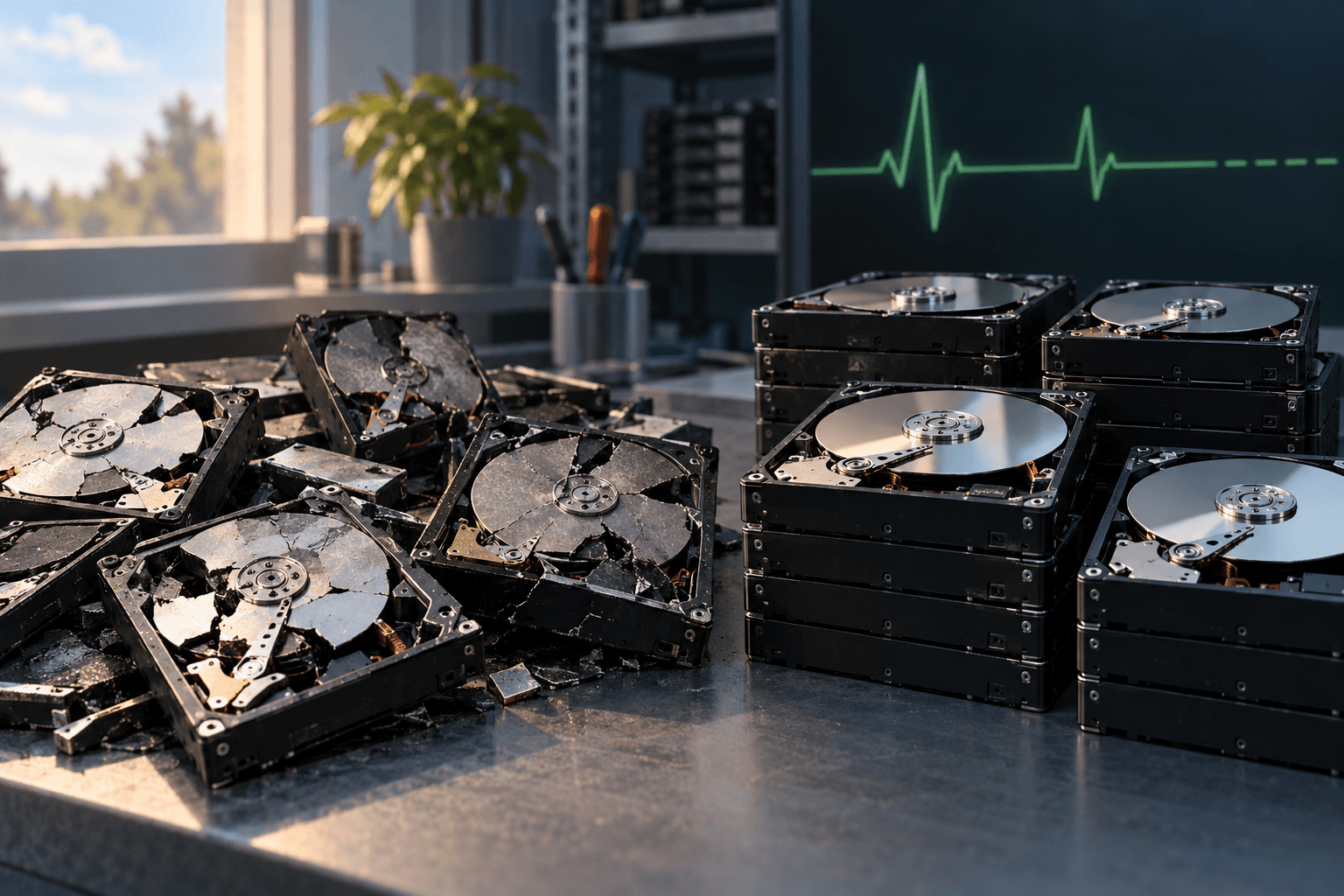
A review of 5,106 failed hard drives points to a difficult reliability problem: many drives can fail relatively early, and some may not show a detectable warning through one commonly tracked metric.
Secure Data Recovery analyzed the drives it received for professional data-recovery work between early 2023 and mid-2026. The sample included drives with mechanical failure or physical damage, while excluding logical failures. Nearly half—49.8%—had failed within their first 365 days of operation.
The typical failed drive in the analysis had operated for 362 days, based on the median. The average was considerably longer, at 807 days, indicating that the results included both early failures and drives that had operated for more time.
The analysis also found that 30.5% of the failed drives had zero current pending sectors when they failed. That finding highlights a limitation in relying on that metric alone to anticipate a drive failure.
There is an important caveat: these were failed drives submitted for professional recovery, not a representative sample of every hard drive in use. The figures therefore describe the characteristics of drives that reached a recovery service, rather than the failure rate for new HDDs as a whole.
A separate Backblaze dataset provides a different view. The company examined 354,415 data hard drives during the second quarter of 2026 and recorded 1,498 failures across 31,553,350 drive-days. It reported a quarterly annualized failure rate of 1.73% and a lifetime annualized rate of 1.41% through June 30, 2026.
Taken together, the datasets suggest two things: early failure is a real concern among drives that fail, while the recovery-service sample cannot establish how frequently all HDDs fail. Backups remain important because a drive can fail even when the cited sector metric shows no pending sectors.
Sources & Further Reading
- Secure Data RecoveryPrimary source
- BackblazePrimary source
- Engadget
StoryBreak
Independent digital news and reporting, updated throughout the day.
This article was researched and drafted with AI assistance and reviewed as part of StoryBreak's editorial process before publication. Read our editorial standards.