
Pacific Island Nations Warn Rising Seas Are Outpacing Efforts to Protect Communities
Leaders meeting in Palau say climate impacts are accelerating faster than adaptation projects and financing can be delivered, as new analysis finds Pacific countries face major shortfalls in the money needed to protect coastlines, water supplies and livelihoods.
By StoryBreak
Published September 3, 2026 at 10:38 PM
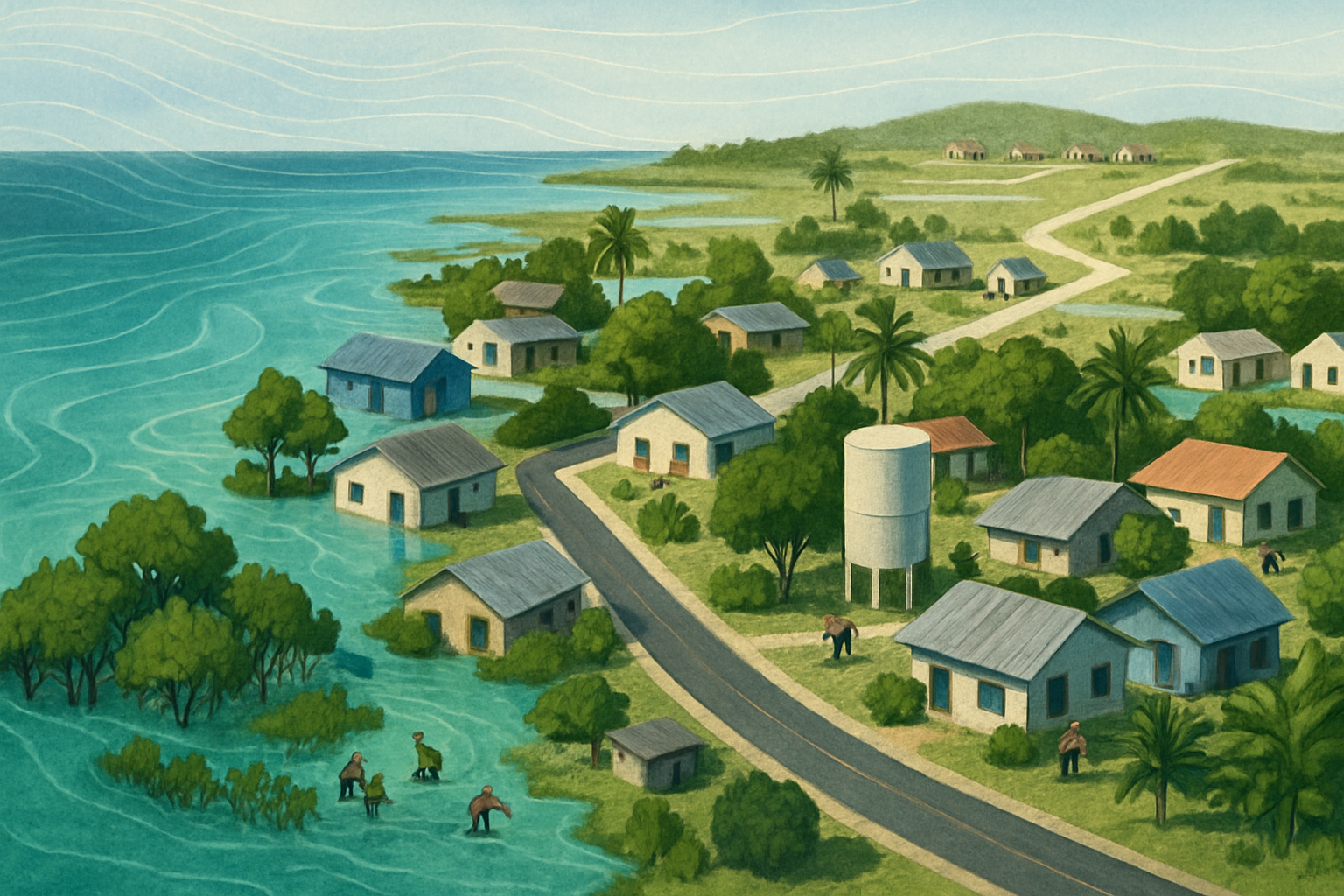
Pacific island leaders are warning that rising seas and worsening climate extremes are advancing faster than the projects designed to protect their communities, as governments seek more funding and stronger emissions cuts at a regional summit in Palau.
The warning came Wednesday from officials attending the annual Pacific Islands Forum, where climate change is competing with geopolitical tensions for attention. Their concerns were reinforced by a new International Monetary Fund analysis that found climate-adaptation commitments and actual disbursements remain far below the region’s projected needs.
For low-lying atoll nations such as Kiribati, Tuvalu and the Marshall Islands, the consequences are already visible. Saltwater is threatening freshwater supplies and agricultural land, while erosion and flooding damage roads, homes and other infrastructure. The IMF said physical risks connected to coastal inundation and sea-level rise account for the largest share of identified adaptation needs, with the heaviest burdens falling on atoll countries.
The problem is not limited to the smallest islands. Larger Pacific nations face flooding in river deltas, stronger cyclones, drought, coastal erosion and damage to ecosystems that support food supplies and jobs. The Pacific Community, a regional scientific and technical organization, said rising seas and changes in ocean temperature and chemistry are affecting coral reefs, fisheries, food security and coastal livelihoods.
In Palau, the gap between urgent needs and slow-moving projects has become a local reality. The Associated Press reported that Melekeok, a chiefdom of about 300 people, is preparing an inland subdivision intended to house residents exposed to climate hazards. But plumbing, sewage systems and street lighting have been funded in small increments, delaying the movement of families.
“We cannot move faster than climate change,” said one resident quoted by AP.
The challenge is both financial and logistical. Pacific island governments often must manage large projects across remote islands with small public administrations and limited access to borrowing. The IMF said institutional capacity, project design and approval procedures can all affect how quickly pledged climate funds reach communities. It also warned that the gap may widen if fiscal pressures in donor countries reduce future climate-finance commitments.
Some new funding is moving forward. In June, the United Nations Development Programme announced that the Global Environment Facility had approved approximately $14 million in grants for four adaptation projects in Fiji, the Federated States of Micronesia, Tuvalu and Vanuatu, with more than $43 million in expected co-financing.
The projects include flood resilience and water management in Fiji’s Rewa Delta, improved early-warning and communications systems in the Federated States of Micronesia, coastal protection and ecosystem restoration in Tuvalu, and climate-resilient power infrastructure in Vanuatu. But the approvals primarily support project preparation and development, meaning communities will still have to wait for detailed studies, consultations and subsequent implementation decisions.
The Asian Development Bank has also launched the Triple-A initiative, a country-led program focused on Kiribati, the Marshall Islands, Tuvalu and the Maldives. It combines climate planning, institutional support and efforts to secure longer-term financing. The bank says sea levels could rise by as much as 1 meter by 2100 without decisive climate action, while most atoll islands stand only about 2 meters above sea level.
Pacific officials argue that adaptation alone cannot solve the problem. At a July meeting in Sydney, climate ministers emphasized the need to keep global warming within 1.5 degrees Celsius, improve access to climate finance and recognize the close relationship between ocean health and climate stability.
That target has become harder to defend. AP reported that a United Nations assessment released this week concluded the world is likely to exceed the 1.5-degree threshold within the next few years, although the report also outlined pathways for bringing temperatures back below the limit over time.
For Pacific governments, the issue is not an abstract future risk. It is a question of whether villages can remain on ancestral land, whether freshwater wells will remain usable and whether national economies can withstand repeated damage. Vanuatu’s climate adaptation minister, Ralph Regenvanu, told AP that loss and damage is already a reality for his country, including losses that cannot be repaired through financing alone.
The next major test will come in October, when Fiji and Tuvalu are scheduled to host a Pacific climate event ahead of the United Nations climate conference, COP31. Pacific leaders hope the meetings will turn international concern into faster, more predictable support—before the next wave, storm or high tide exposes another gap between promises and protection.
StoryBreak
Independent digital news and reporting, updated throughout the day.
This article was researched and drafted with AI assistance and reviewed as part of StoryBreak's editorial process before publication. Read our editorial standards.