Just 10 More Minutes of Sleep and 5 Minutes of Exercise May Help Lower Heart Risk
A 2026 UK Biobank study found that modestly higher sleep, moderate-to-vigorous physical activity and diet quality were associated with a lower risk of heart attack, stroke and heart failure. Researchers caution that the findings show an association—not proof that making these changes will prevent cardiovascular disease.
By StoryBreak
Published September 3, 2026 at 10:30 PM
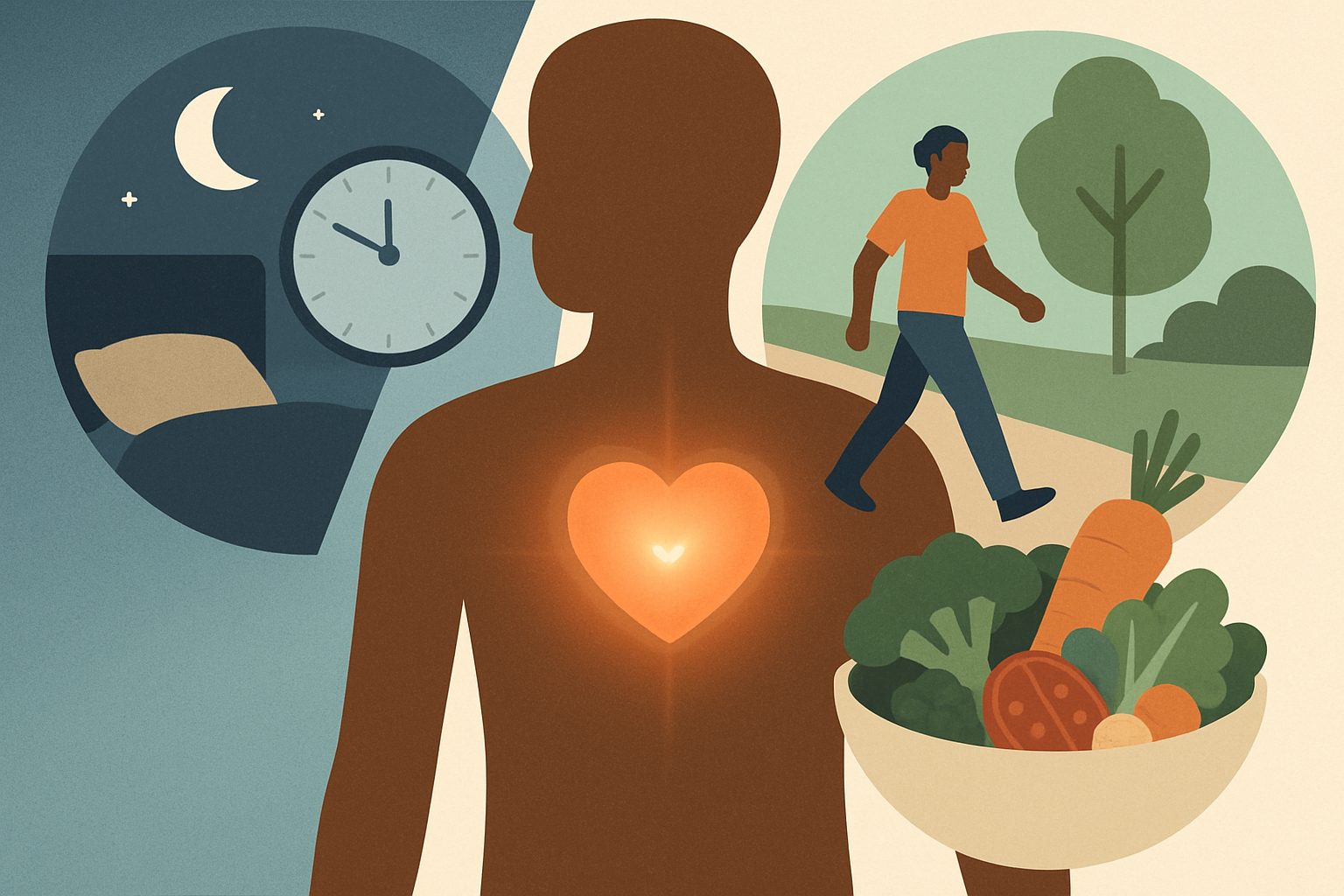
Small, realistic improvements in sleep, exercise and diet may add up to a meaningful difference in long-term heart health, according to a new analysis of more than 53,000 adults.
The study, published March 23, 2026, in the European Journal of Preventive Cardiology, found that a combined increase of about 11 minutes of sleep per day, 4.5 minutes of moderate-to-vigorous physical activity and three points on a diet-quality scale was associated with a 10% lower risk of major adverse cardiovascular events.
Those events included heart attacks, strokes and heart failure. The researchers analyzed 53,242 UK Biobank participants with a median age of 63. Sleep and physical activity were measured with wearable devices, while diet was assessed through a 10-item dietary questionnaire. Participants were followed for approximately eight years, during which 2,034 major cardiovascular events were recorded.
The study’s headline numbers are best understood as a combined pattern rather than a prescription to sleep exactly 11 minutes longer or exercise for exactly 4.5 additional minutes. The dietary improvement was roughly equivalent to adding one-quarter cup of vegetables per day, although the researchers described that comparison as an approximate illustration rather than a calibrated target.
The analysis compared participants across a range of lifestyle behaviors. The researchers estimated that the combination associated with the lowest cardiovascular risk involved approximately eight to 9.4 hours of sleep per day, 42 to 104 minutes of moderate-to-vigorous activity and a higher diet-quality score. That group had a 57% lower risk of major cardiovascular events than people in the lowest category for all three behaviors.
Sleep appeared to matter even when considered alongside exercise. In the statistical models, increasing sleep alone by about 30 minutes was associated with a similar 10% lower risk estimate. The study also found that modest combined changes were associated with lower risks of individual outcomes: heart failure, heart attack and stroke.
But the researchers emphasized an important limitation. This was an observational cohort study, meaning it examined patterns already present in participants rather than randomly assigning people to change their sleep, exercise or diet. The results therefore cannot establish that adding a specific number of minutes will directly prevent a heart attack or stroke. Healthier people may also be more likely to sleep well, exercise and eat better for other reasons that are difficult to measure completely.
The study population was drawn from the UK Biobank, which is known to be healthier and less socioeconomically disadvantaged than the broader UK population. That may limit how precisely the findings apply to other groups, including people with chronic illnesses or major sleep disorders.
Still, the findings fit with existing heart-health guidance. The American Heart Association recommends that most adults aim for seven to nine hours of sleep per night and get at least 150 minutes of moderate-intensity aerobic activity—or 75 minutes of vigorous activity—each week. The organization includes sleep and physical activity among its Life’s Essential 8 measures of cardiovascular health.
For people struggling to meet those broader goals, the practical message is incremental: a slightly earlier bedtime, a brisk walk during a lunch break or a few extra minutes of movement may be easier to sustain than an ambitious overhaul. Those small steps should complement, not replace, treatment for high blood pressure, high cholesterol, diabetes, sleep apnea or established heart disease.
The researchers said future intervention studies will be needed to determine whether deliberately changing sleep, physical activity and diet produces the reductions suggested by the analysis.
StoryBreak
Independent digital news and reporting, updated throughout the day.
This article was researched and drafted with AI assistance and reviewed as part of StoryBreak's editorial process before publication. Read our editorial standards.