
South Korea Says North Korean Mines Likely Caused DMZ Blasts That Injured Three Officers
South Korea’s military says preliminary evidence strongly points to North Korean mines as the cause of two September 21 explosions that injured three officers in the DMZ. The finding could transform a border accident into a new source of tension, although the investigation is not complete.
By StoryBreak
Published September 28, 2026 at 11:19 PM
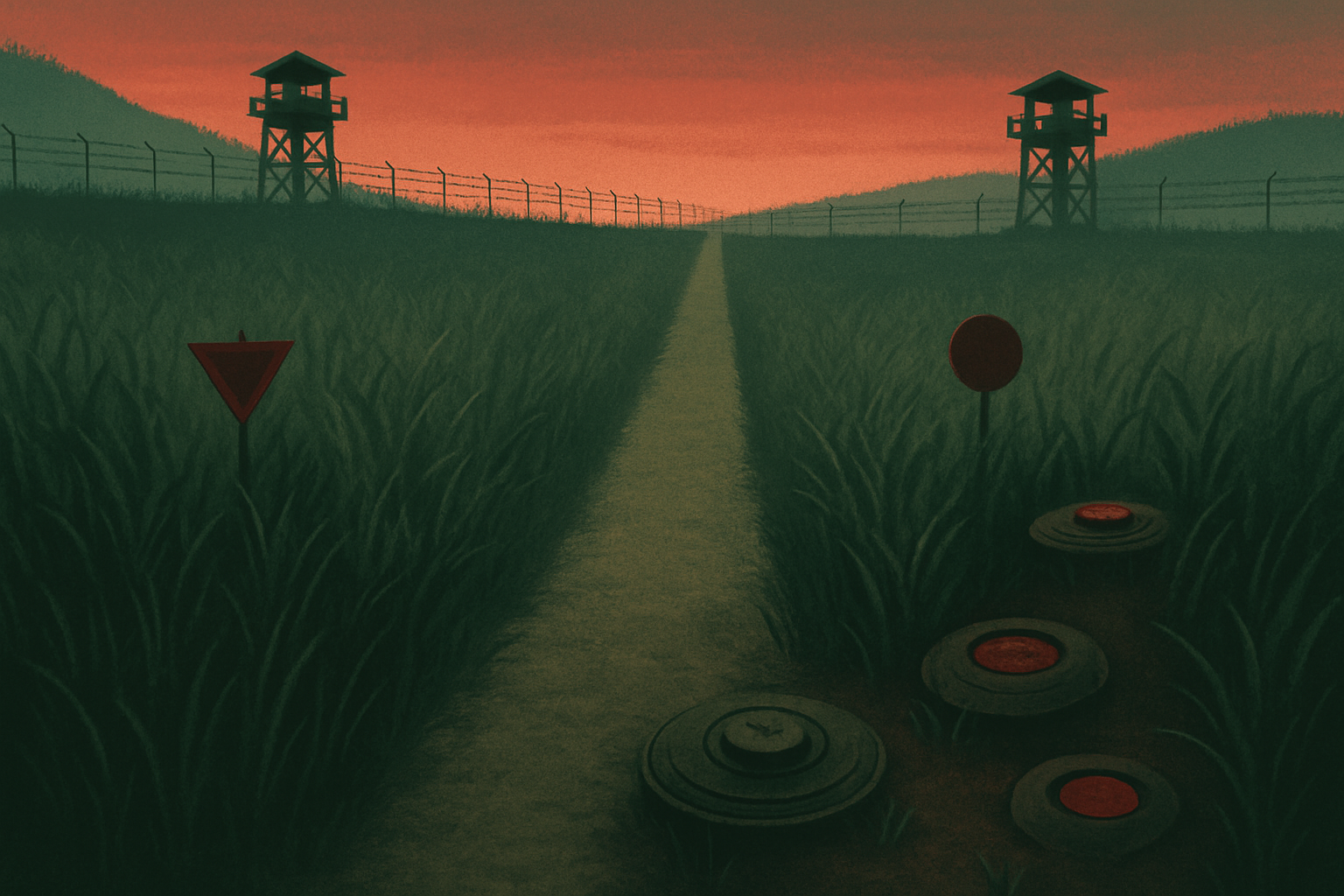
South Korea’s military said Monday that North Korean mines were highly likely to have caused two explosions in the Demilitarized Zone that injured three South Korean officers last week, raising the possibility of a new confrontation along one of the world’s most heavily fortified borders.
The preliminary assessment came after South Korean investigators and the United Nations Command revisited the site of the September 21 blasts. The explosions occurred as an 18-person South Korean team worked to open a new search route near the Military Demarcation Line in the western section of the DMZ.
Two officers suffered serious injuries and a third was lightly injured. South Korea’s Defense Ministry said 15 of the 18 personnel had been discharged by Monday, while the three injured officers remained under treatment.
The Joint Chiefs of Staff cited several indicators pointing away from an accidental detonation of a South Korean mine. Investigators identified two small craters and found TNT residue and brown-colored material on protective equipment. The military said the blast produced relatively limited fragmentation, unlike the effects expected from South Korean mines known to contain metal components.
Investigators also examined a suspected mine reportedly found about a meter from one of the blast sites. South Korean officials said it appeared similar in shape and material to a North Korean wooden-box-style antipersonnel mine, but the object still requires additional examination. The military has not presented the investigation as final.
That distinction matters. The immediate fact is that mines exploded and injured South Korean personnel. The more consequential claim—that North Korean forces planted them—is still a preliminary conclusion based on physical evidence, witness accounts and the location of the blasts. Pyongyang has not accepted responsibility in the reporting reviewed for this article.
The operation itself was prompted by what South Korea described as terrain changes detected in 2025 that may have reflected new mine-laying by North Korea. The search team was working south of the Military Demarcation Line, but close enough to the line that the military treated the area as especially hazardous. After the first blast injured personnel, a second explosion occurred when troops moved toward the wounded, according to the South Korean briefing.
Seoul is now framing the incident as potentially more than a safety failure. South Korea’s deputy chairman of the Joint Chiefs said that if the final investigation determines that North Korean mines caused the injuries, responsibility would rest with North Korea and Seoul would take “appropriate and corresponding measures.”
That language leaves the response open-ended. It does not necessarily signal an imminent military reprisal, but it establishes that South Korea could treat the incident as a hostile act rather than an unexplained accident. Any response would come as relations are already strained by North Korea’s expanded border fortifications and the deterioration of dialogue between the two Koreas.
The immediate next step is forensic confirmation. Investigators must identify the suspected mine, complete the joint examination with the United Nations Command and determine whether the physical evidence can support a definitive attribution. Until then, the most important conclusion is also the most limited one: the DMZ remains dangerous not only because of the soldiers facing each other across the line, but because explosives left beneath the ground can convert routine operations into an international crisis.
Sources & Further Reading
StoryBreak
Independent digital news and reporting, updated throughout the day.
This article was researched and drafted with AI assistance and reviewed as part of StoryBreak's editorial process before publication. Read our editorial standards.