Starbucks’ New Aerocano Puts a Cold, Foamy Twist on the Classic Americano
The new iced espresso drink keeps the basic logic of an Americano but changes the experience through air-whipped Blonde Espresso, a light foam and a cascading pour. It is low in calories and sugar—but not in caffeine.
By StoryBreak
Published October 2, 2026 at 6:19 PM
Starbucks is giving one of its simplest coffee drinks a more theatrical finish.
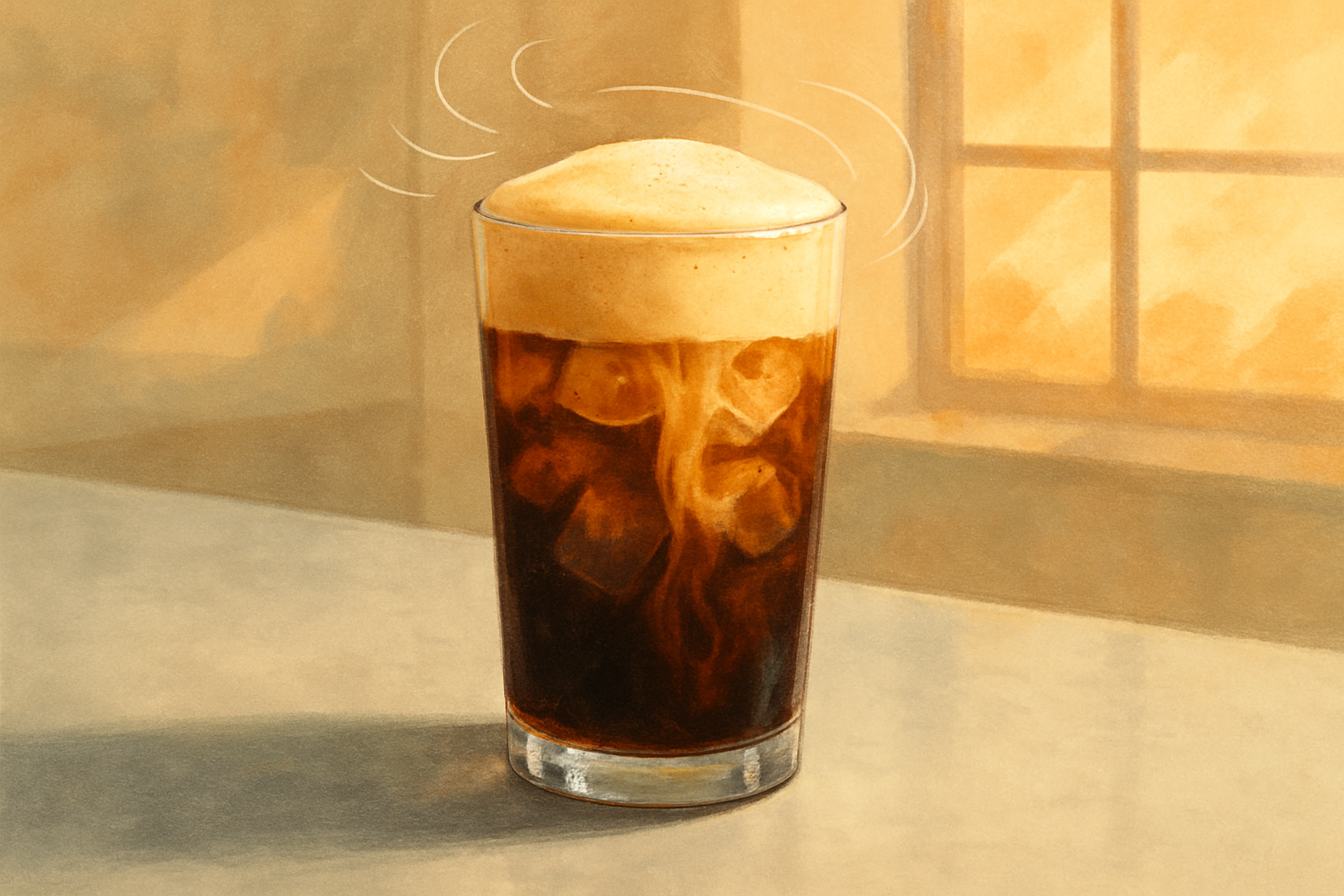
The chain’s new Aerocano, launched across North American coffeehouses on September 29, 2026, starts with a familiar foundation: Blonde Espresso and ice. The difference comes in the preparation. Starbucks air-whips the espresso before pouring it over ice, creating a thin layer of foam, a softer texture and the drink’s signature cascade as it settles in the cup.
That makes the Aerocano less a new set of flavors than a redesign of the iced Americano. An ordinary iced Americano emphasizes the direct combination of espresso, water and ice. The Aerocano keeps the coffee-forward profile but adds air, which changes the first sip and gives the drink a velvety quality without adding milk or cream.
The distinction matters because Starbucks’ cold-coffee menu is often associated with sweeteners, flavored syrups and dairy or non-dairy toppings. The standard grande Aerocano contains 15 calories and no sugar, according to Starbucks’ nutrition listing. It does, however, contain approximately 225 milligrams of caffeine—enough to make it a notably strong choice for customers who want a light-tasting drink.
Starbucks is also selling a Caramel Aerocano, which adds sweetness while preserving the air-whipped format. The two versions give the company a way to position the drink between a plain iced coffee order and the more elaborate flavored beverages that dominate seasonal menus.
The Aerocano did not originate in the United States. Starbucks introduced it in South Korea in February 2026, where iced Americanos are a particularly entrenched part of the coffee routine. The company later expanded the drink into other international markets before bringing it to North America for National Coffee Day.
That path helps explain the product’s design. Starbucks is not asking customers to learn an unfamiliar flavor combination. It is taking a well-known order and changing its texture and presentation—an approach that can feel new while remaining easy to understand at the register.
The visual effect may be the biggest part of the pitch. The coffee appears to move from foam to espresso as it pours and settles, making the drink more demonstrative than a standard iced Americano. But that effect is also temporary. Once the foam dissipates, what remains is still a cold, coffee-forward espresso drink.
That is the Aerocano’s central trade-off: its innovation is subtle in ingredients but noticeable in mouthfeel. For customers who want a zero-sugar iced coffee with a smoother opening sip, that may be enough. For anyone expecting a sweet, creamy specialty drink, the Aerocano may feel closer to an iced Americano with a bit more ceremony than substance.
Whether it becomes a durable menu staple will depend less on the cascade than on repeat orders. Starbucks has placed the drink on its core menu, suggesting it sees the format as more than a limited fall experiment. The next test is whether customers keep choosing the air-whipped version after the novelty fades.
Sources & Further Reading
StoryBreak
Independent digital news and reporting, updated throughout the day.
This article was researched and drafted with AI assistance and reviewed as part of StoryBreak's editorial process before publication. Read our editorial standards.