
Starting Yoga as a Beginner: How to Build a Safe, Sustainable Practice
You do not need to be flexible, fit or familiar with yoga to begin. A beginner-friendly approach starts slowly, focuses on breathing and alignment, and treats discomfort—not difficulty—as a reason to modify or stop.
By StoryBreak
Published September 1, 2026 at 11:53 PM
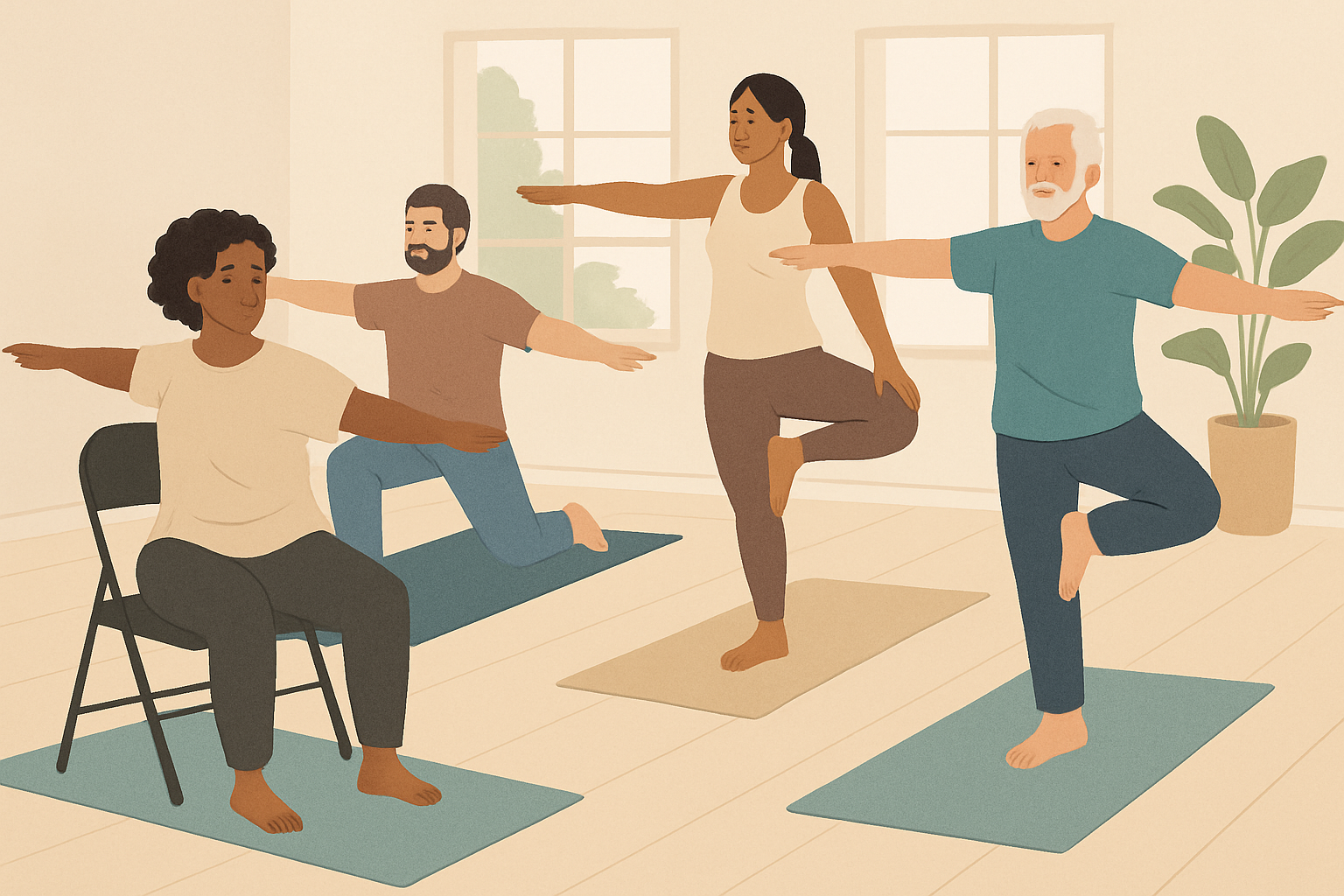
Yoga can look intimidating from the outside: crowded studios, complicated poses and students who seem able to fold themselves in half. But beginners do not need exceptional flexibility, expensive equipment or a demanding workout plan to get started. The safest approach is to begin with simple movements, choose an appropriate class and let consistency matter more than performance.
Yoga commonly combines physical postures, breathing techniques and meditation. Its intensity can vary widely, from gentle, mostly restorative practices to faster classes that challenge strength and balance. That range makes it accessible—but it also means the label “yoga” does not tell a beginner exactly what to expect.
Choose a gentle starting point
Look for classes described as beginner, gentle, restorative, hatha or chair yoga. A slower class gives you time to learn basic positions and understand how to move between them. If you are attending in person, tell the instructor before class that you are new and mention any injuries, medical conditions or limitations.
Online classes can be convenient, but a live instructor can offer corrections and modifications. The National Center for Complementary and Integrative Health advises beginners to practice under the guidance of a qualified instructor, noting that learning without supervision has been associated with greater injury risk.
You also do not need to begin with a long session. Ten to 20 minutes of easy practice can be enough to establish a routine. Start with two or three sessions a week, then increase gradually if your body responds well. Yoga can complement walking, cycling or other forms of exercise, but it does not automatically replace all aerobic or muscle-strengthening activity. Federal guidelines advise adults to work toward at least 150 minutes of moderate-intensity physical activity weekly, along with muscle-strengthening activity on two days.
What to do during your first session
A first practice might include comfortable breathing, gentle neck and shoulder movements, cat-cow stretches, child’s pose, a supported downward-facing dog, a low lunge and a brief relaxation period. You can use a wall, chair, folded blanket or yoga blocks for support. Props are not a sign that you are doing less; they can help you maintain balance and reduce strain while you learn.
Move slowly enough to notice what is happening. Yoga should not require you to force a joint into a position or match the depth of another person’s pose. A mild stretching sensation may be normal, but sharp, pinching, burning or sudden pain is a signal to back out. Stop if you feel dizzy, faint, unusually short of breath or unwell.
Breathing is another useful guide. If you are holding your breath, clenching your jaw or rushing through a movement, make the pose easier. Beginners often benefit more from steady breathing and controlled transitions than from achieving a deeper stretch.
Be cautious with advanced and heated practices
Headstands, shoulder stands, lotus position and forceful breathing are poor choices for a first class. Hot yoga also carries additional concerns, including overheating and dehydration. Wait until you understand your limits before trying a heated studio or a physically intense style.
Yoga is generally considered safe for healthy people when practiced appropriately, but sprains and strains can occur. Older adults may need particular caution, and people who are pregnant or who have conditions such as high blood pressure, glaucoma, balance problems or back, knee or hip injuries may need modified poses. Talk with a health care professional and the instructor before starting if any of those circumstances apply.
Yoga should not be used to delay medical care for persistent pain or other symptoms. If a pose repeatedly causes pain, skip it and seek guidance rather than trying to push through.
Measure progress differently
For a beginner, progress may mean remembering how to adjust a pose, standing more steadily, breathing more calmly or showing up regularly. Flexibility may improve over time, but it is not the only measure of a useful practice. Research summarized by NCCIH suggests yoga may support stress management, sleep, balance and general mental and emotional well-being, while evidence for specific conditions varies by the style of yoga and the quality of the studies.
The best beginner routine is therefore the one you can repeat safely. Choose a manageable class, keep the pace comfortable, use support when needed and leave competitive expectations outside the room. Yoga begins not when you touch your toes, but when you learn to pay attention to your body.
StoryBreak
Independent digital news and reporting, updated throughout the day.
This article was researched and drafted with AI assistance and reviewed as part of StoryBreak's editorial process before publication. Read our editorial standards.