Could Stretching Help Lower Blood Pressure? New Research Points to a Surprising Benefit
A small 2026 study found that six weeks of passive lower-leg stretching lowered blood pressure in adults with hypertension—but the improvement disappeared after participants stopped. Researchers say stretching may support vascular function, though larger trials are needed before it can be considered a stand-alone treatment.
By StoryBreak
Published September 5, 2026 at 2:24 AM
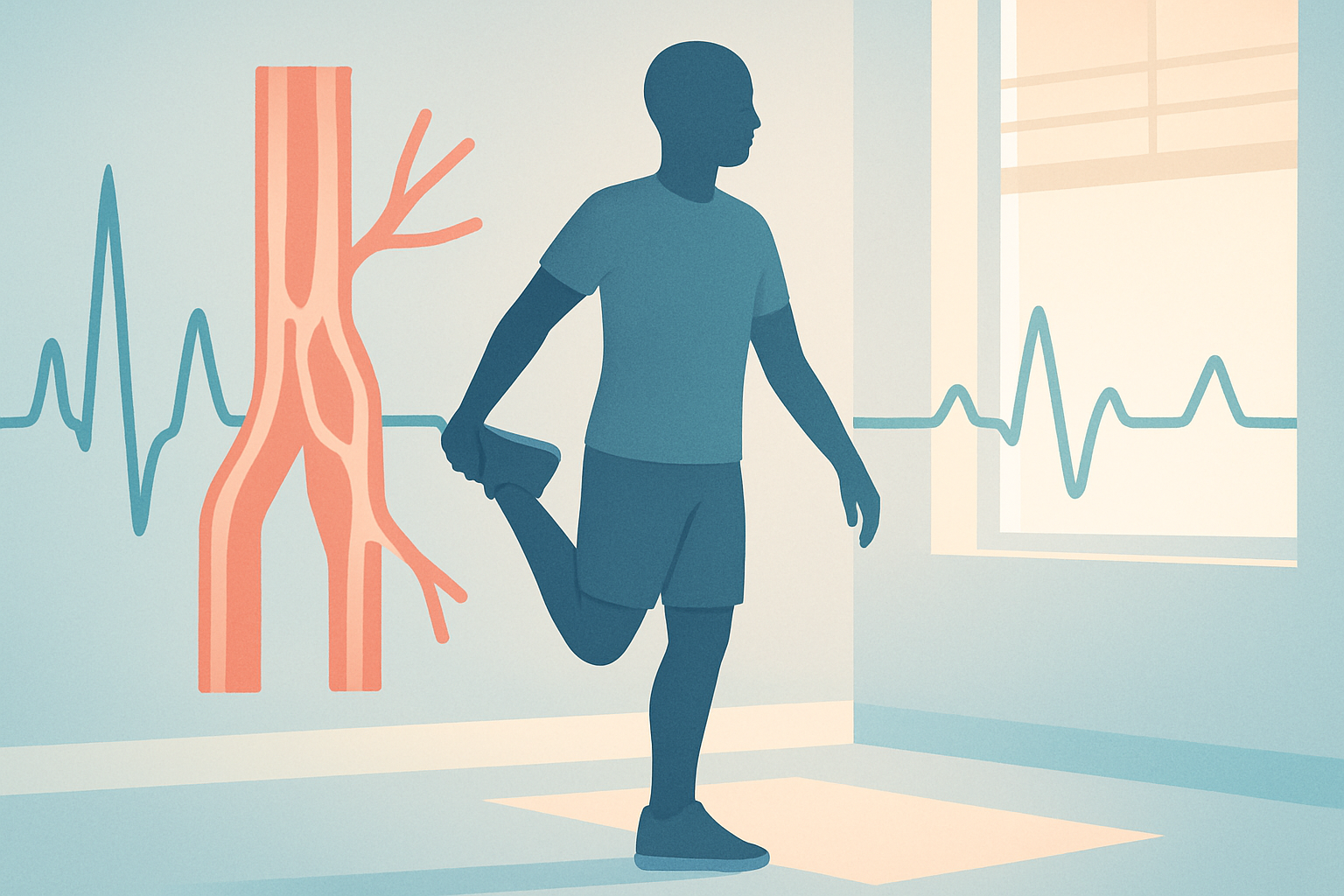
Stretching is usually associated with flexibility, mobility and injury prevention. But new research suggests it may also have a measurable effect on blood pressure—at least for people with hypertension who follow a consistent routine.
In a study published online July 18, 2026, researchers in Italy examined 24 adults with essential hypertension. Participants completed a six-week program of passive stretching focused on the lower limbs. The researchers measured blood pressure, heart rate and several indicators of vascular function before and after the intervention, then assessed whether the changes lasted after stretching stopped.
After six weeks, systolic blood pressure—the top number in a blood-pressure reading—fell by about 4.9% on average. Diastolic pressure, the bottom number, declined by roughly 6.9%, while mean arterial pressure decreased by about 3.7%. The participants also showed improved blood flow responses in the femoral artery, which supplies the leg.
The results were not permanent. During a follow-up period of the same length, after the stretching program ended, the blood-pressure and blood-flow improvements returned to baseline. Heart rate and carotid-femoral pulse-wave velocity, a common measure of central arterial stiffness, did not significantly change.
That pattern suggests stretching may influence blood pressure through short-term changes in vascular responsiveness rather than by permanently altering the stiffness of major arteries. The study authors said the precise biological mechanisms remain uncertain.
The findings add to a growing but still limited body of evidence. A 2026 systematic review identified 11 studies examining stretching in adults with elevated blood pressure or hypertension. Most involved static stretching, but the methods and study populations varied considerably. In an exploratory analysis, stretching was associated with a statistically significant reduction in diastolic blood pressure. The average reduction in systolic pressure also favored stretching, but did not reach statistical significance in the primary analysis.
Earlier research has produced similarly intriguing results. In a randomized trial involving 40 adults with high-normal blood pressure or stage 1 hypertension, an eight-week stretching program produced greater reductions in some blood-pressure measures than brisk walking. Another study of 28 obese postmenopausal women found that eight weeks of stretching lowered several measures of blood pressure and aortic pressure compared with a non-exercise control group.
But these studies should not be interpreted as proof that stretching can replace walking, aerobic exercise, weight management or prescribed medication. The newest study was small, and it used passive stretching—a protocol in which an external force helps move a limb—rather than necessarily reflecting the brief active stretches many people do at home. The systematic review also noted that several available studies had methodological concerns and that the evidence was heterogeneous.
For now, stretching may be best viewed as a potentially useful addition to a broader blood-pressure plan. It is generally low impact and may be easier to perform for people who have pain, limited mobility or difficulty completing vigorous exercise. However, people with hypertension should avoid changing medication or exercise plans without discussing it with a clinician.
The practical question is whether a particular type, intensity and schedule of stretching can produce lasting cardiovascular benefits. Larger randomized trials—with more participants, longer follow-up and standardized routines—will be needed to answer it. Until then, the evidence points to a promising possibility, not a settled treatment: regular stretching may help lower blood pressure while it is being maintained, but stopping appears to erase the benefit.
StoryBreak
Independent digital news and reporting, updated throughout the day.
This article was researched and drafted with AI assistance and reviewed as part of StoryBreak's editorial process before publication. Read our editorial standards.