Sweden’s Center-Left Holds Narrow Lead as Election Count Nears Finish
Preliminary results give Sweden’s center-left opposition a slim parliamentary edge over Prime Minister Ulf Kristersson’s governing bloc, but late ballots and difficult coalition talks mean the next government is far from settled.
By StoryBreak
Published September 15, 2026 at 12:13 AM
Sweden’s center-left opposition is clinging to a narrow lead as the country waits for the final ballots from Sunday’s election, leaving the next government uncertain and setting the stage for difficult coalition negotiations.
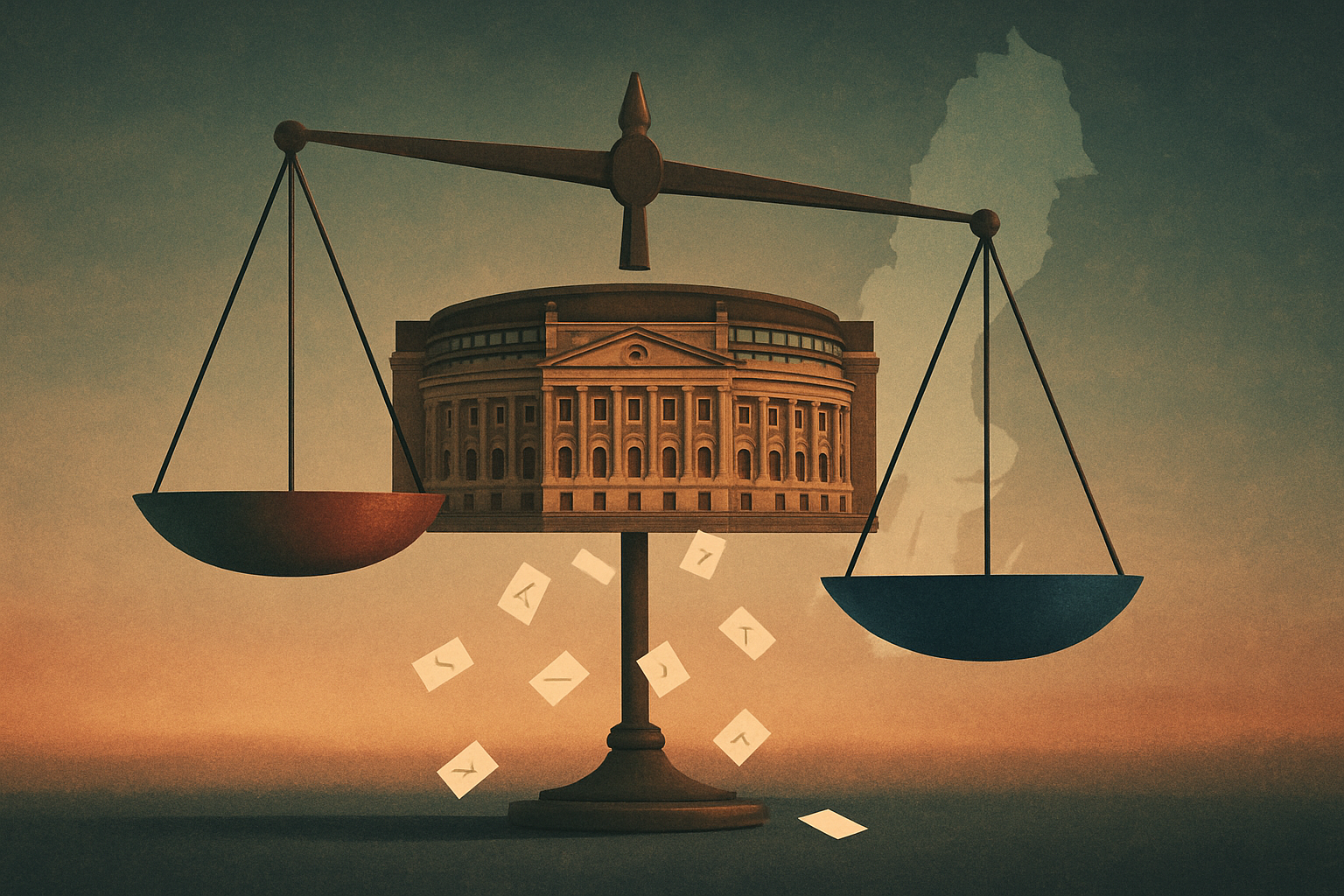
With about 95% of the vote counted, the Social Democrats and their prospective allies held a projected 176 seats in the 349-member Riksdag, compared with 173 for the right-leaning bloc that has supported Prime Minister Ulf Kristersson, according to reporting by The Guardian. The margin has shifted during the count and could still change when late-arriving ballots are processed.
The Swedish Election Authority says municipalities conduct the preliminary count on election night and continue with late advance ballots on the Wednesday after voting. The formal Riksdag result is not complete until county administrative boards finish their checks and the authority allocates the parliamentary seats.
That means the current lead is politically significant but not yet final. A three-seat advantage would put the center-left one seat above the 175 seats needed for a majority in the 349-seat chamber. In practice, however, the arithmetic is more complicated: the parties in the opposition grouping have different priorities and have not settled how closely they would cooperate.
Former Prime Minister Magdalena Andersson’s Social Democrats are expected to seek the first opportunity to form a government if the preliminary result holds. But the likely partners present their own obstacles. The Left Party has pressed for a direct role in government, while the Center Party has expressed reluctance to support an arrangement dependent on the Left, according to Le Monde’s reporting on the preliminary outcome.
That tension creates a paradox for Andersson. The center-left may emerge with the most seats as a bloc, yet forming a durable cabinet could require compromises that alienate one of the parties needed to keep the government in office. A minority government supported from outside parliament remains possible, but it would have to negotiate confidence votes, budgets and major legislation issue by issue.
The result is also a setback for the Sweden Democrats, the anti-immigration party that has been a central parliamentary supporter of Kristersson’s government. Preliminary reporting indicated that the party lost ground and slipped behind the Moderates to become Sweden’s third-largest party. That weakens its leverage compared with expectations that it could play an even larger role in a renewed right-wing government.
For Kristersson, the path back to office is not closed. The right bloc could benefit if the late ballots erase the opposition’s lead, or if disagreements among center-left parties prevent Andersson from assembling a governing majority. But the incumbent coalition would also face its own internal question: whether the Sweden Democrats should receive cabinet positions after supporting the government from outside it since 2022.
Sweden’s new parliament is scheduled to meet on September 28, and the speaker can begin proposing a prime minister the following day. Until then, the country is in a familiar but consequential holding pattern: the preliminary numbers point left, while the negotiations required to turn that lead into a government may prove harder than the count itself.
Sources & Further Reading
- Swedish Election AuthorityPrimary source
- Swedish Election AuthorityPrimary source
- The Associated Press
- The Guardian
- Le Monde
StoryBreak
Independent digital news and reporting, updated throughout the day.
This article was researched and drafted with AI assistance and reviewed as part of StoryBreak's editorial process before publication. Read our editorial standards.