Tesla’s Optimus Robot Is Moving Toward Production — But Mass Deployment Is Still Unproven
Tesla has begun installing first-generation Optimus production lines and is converting factory space in Fremont for robotics, with production expected to begin later in 2026. But the company has recently softened its language around “volume production,” leaving the robot’s true scale, capabilities and commercial launch timetable uncertain.
By StoryBreak
Published September 5, 2026 at 1:44 AM
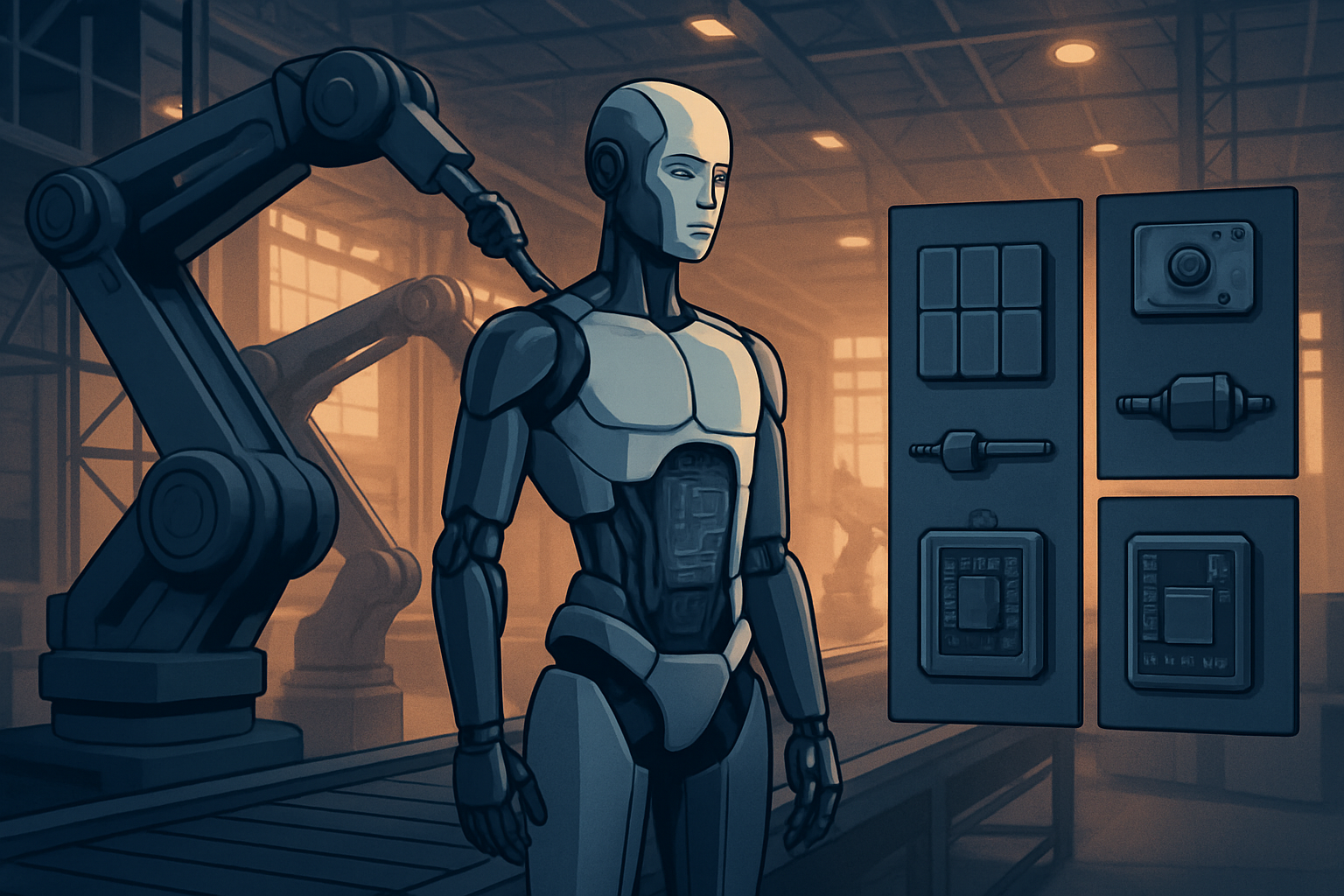
Tesla is taking concrete steps to build its Optimus humanoid robot, but the project remains closer to an early manufacturing ramp than a finished consumer product.
The company has begun installing first-generation production lines for Optimus, according to Tesla’s 2026 disclosures. Its latest regulatory filing lists Optimus manufacturing sites in California and Texas as under construction, rather than in production. Tesla has also been hiring manufacturing engineers to develop assembly processes intended to support high-volume robot manufacturing.
That puts Optimus beyond the concept stage. Tesla is no longer only demonstrating prototypes or describing a long-term vision: it is preparing factories, equipment and production systems. The company has also redirected space at its Fremont, California, complex after ending production of the Model S and Model X, with the former vehicle area intended to support robotics manufacturing.
Still, “production line installed” does not mean Tesla is ready to sell large numbers of robots. Tesla’s second-quarter shareholder materials removed earlier language indicating that Optimus would reach volume production in 2026. That change is significant because it separates a planned initial build from a reliable, repeatable manufacturing operation.
Tesla executives have continued to describe production as a near-term goal. During the company’s July 2026 earnings discussion, management said Optimus production was expected to begin later in the year, while also acknowledging the difficulty of manufacturing humanoid robots at scale. The company has not publicly established a final customer price, delivery schedule, production rate or confirmed commercial launch market.
The technical challenge is also larger than assembling a conventional machine. A useful general-purpose humanoid must balance motors, batteries, sensors, onboard computing, hands and safety systems while operating in unpredictable environments. Each unit must be capable of walking, manipulating objects and responding to changing conditions without creating unacceptable risks around people. Manufacturing those systems consistently—and keeping them affordable—could prove harder than building a limited number of demonstration robots.
Tesla’s advantage is its experience with batteries, electric motors, power electronics, software and automated manufacturing. The company also says it wants Optimus to perform repetitive, dangerous or undesirable work, initially creating an opportunity for internal factory use before any wider household rollout. Internal deployment would give Tesla a controlled setting in which to gather operating data and identify failures.
But the available evidence does not yet establish that Optimus can perform broad, autonomous work at commercial reliability. Tesla’s public materials describe the robot’s intended role and development strategy, while demonstrations and corporate statements provide limited evidence about sustained performance over full shifts, maintenance requirements, safety certification or total operating cost.
The most realistic reading of Tesla’s current position is that Optimus has entered the industrialization phase. The company is building the infrastructure needed for an initial production run, and that is a meaningful step toward a real product. It is not the same as proving that Tesla can manufacture hundreds of thousands of humanoid robots—or that customers are ready to buy them.
The next milestones will be more revealing than another prototype demonstration: a confirmed production start, a disclosed output target, evidence of robots working regularly inside Tesla facilities, and details about safety validation and commercial availability. Until those appear, Optimus is best understood as a promising manufacturing program with a stated 2026 production ambition, not yet a mature product category.
StoryBreak
Independent digital news and reporting, updated throughout the day.
This article was researched and drafted with AI assistance and reviewed as part of StoryBreak's editorial process before publication. Read our editorial standards.