UK threatens visa ban on Eritreans in dispute over migrant returns
The British government has threatened to block visas for Eritrean nationals unless Eritrea accepts more people the UK wants to remove. The first measures, including restrictions on Eritrean diplomats and an end to fast-track visas for VIPs, take effect Thursday, according to BBC reporting.
By StoryBreak
Published October 15, 2026 at 9:01 AM EDT
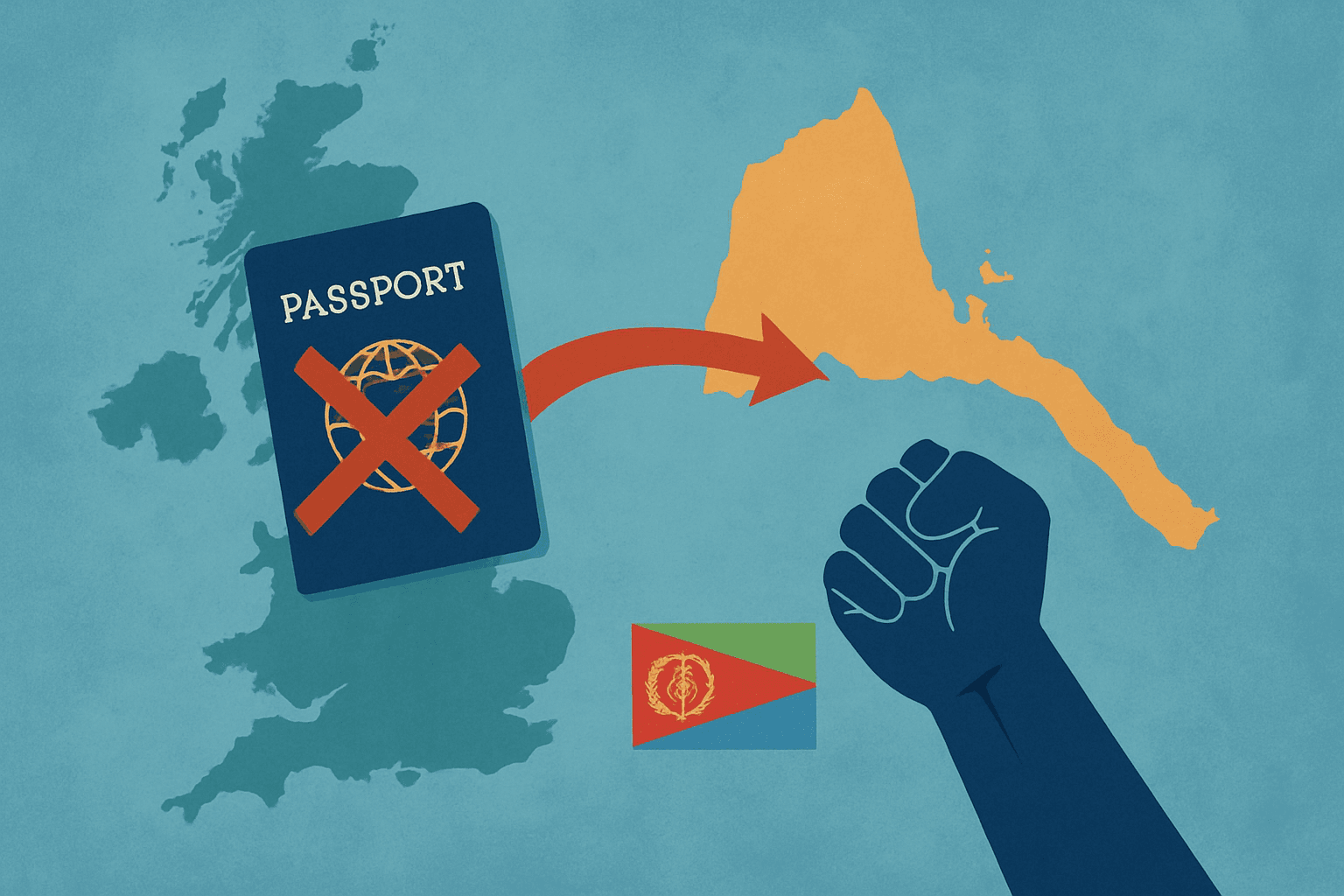
The UK government has threatened to stop issuing visas to Eritrean nationals unless Eritrea agrees to accept more of its citizens whom Britain wants to remove, according to BBC reporting published October 15, 2026.
The warning was issued by Home Secretary Shabana Mahmood. The government says Eritrea has withdrawn cooperation on returns and has refused to accept people who have no legal right to remain in the UK, including some foreign national offenders.
The first measures are narrower than a general visa ban. From Thursday, Eritrean diplomats will reportedly need permission to travel more than 60 kilometers outside London, while fast-track visas for VIPs will be suspended. The Home Office told the BBC that the diplomatic restrictions mirror limits placed on British officials in Eritrea’s capital, Asmara.
Mahmood said Eritrea had been given opportunities to cooperate and warned that further measures could follow if it did not do so. The Eritrean embassy in London was contacted for comment, but no response was included in the BBC report.
The dispute is tied to the UK’s wider effort to increase removals of people who arrive without permission or whose asylum claims have failed. Home Office statistics show that 230 Eritrean nationals who arrived in the UK by small boat had been returned in the year ending June 2026. Eritrean nationals were the second-largest group among returned small-boat arrivals in that period, behind Turkish nationals.
The same Home Office figures record 3,310 returns of people who arrived by small boat in the year ending June 2026, a 35% increase from the previous year. Those figures include voluntary and enforced returns and do not mean that every person returned was sent directly to their country of nationality.
That distinction matters in the Eritrean case. A visa restriction can make travel to the UK more difficult for future visitors, students or workers, but it does not by itself create a functioning system for removing people already in Britain. Removals generally depend on the destination country accepting the person and issuing or recognizing the necessary travel documentation.
The British government has used similar pressure in disputes with other countries. The BBC reported that London previously threatened measures against Angola, Namibia and the Democratic Republic of Congo. The Home Office said restrictions placed on the Democratic Republic of Congo were later lifted after cooperation on returns improved, while Angola and Namibia agreed changes before restrictions were introduced.
The immediate question is whether Eritrea resumes cooperation and whether the UK converts its warning into a broader visa suspension. The available reporting does not establish a deadline for a general ban or describe its precise legal scope.
For Eritrean nationals already living lawfully in the UK, the announced measures are not described as an automatic loss of status. The threat is aimed at entry and at diplomatic pressure over removals, while any individual removal decision would remain subject to the UK’s immigration and asylum procedures.
Sources & Further Reading
StoryBreak
Independent digital news and reporting, updated throughout the day.
This article was researched and drafted with AI assistance and reviewed as part of StoryBreak's editorial process before publication. Read our editorial standards.