UN Leaders Turn to the Hard Part of Pandemic Preparedness: Making Promises Work
World leaders and health officials met at the United Nations on September 25 to review progress since COVID-19 and push for stronger surveillance, financing and equitable access to vaccines and treatments. The meeting’s real test will come after the speeches, when governments must turn a new political declaration into measurable action.
By StoryBreak
Published September 26, 2026 at 12:18 AM
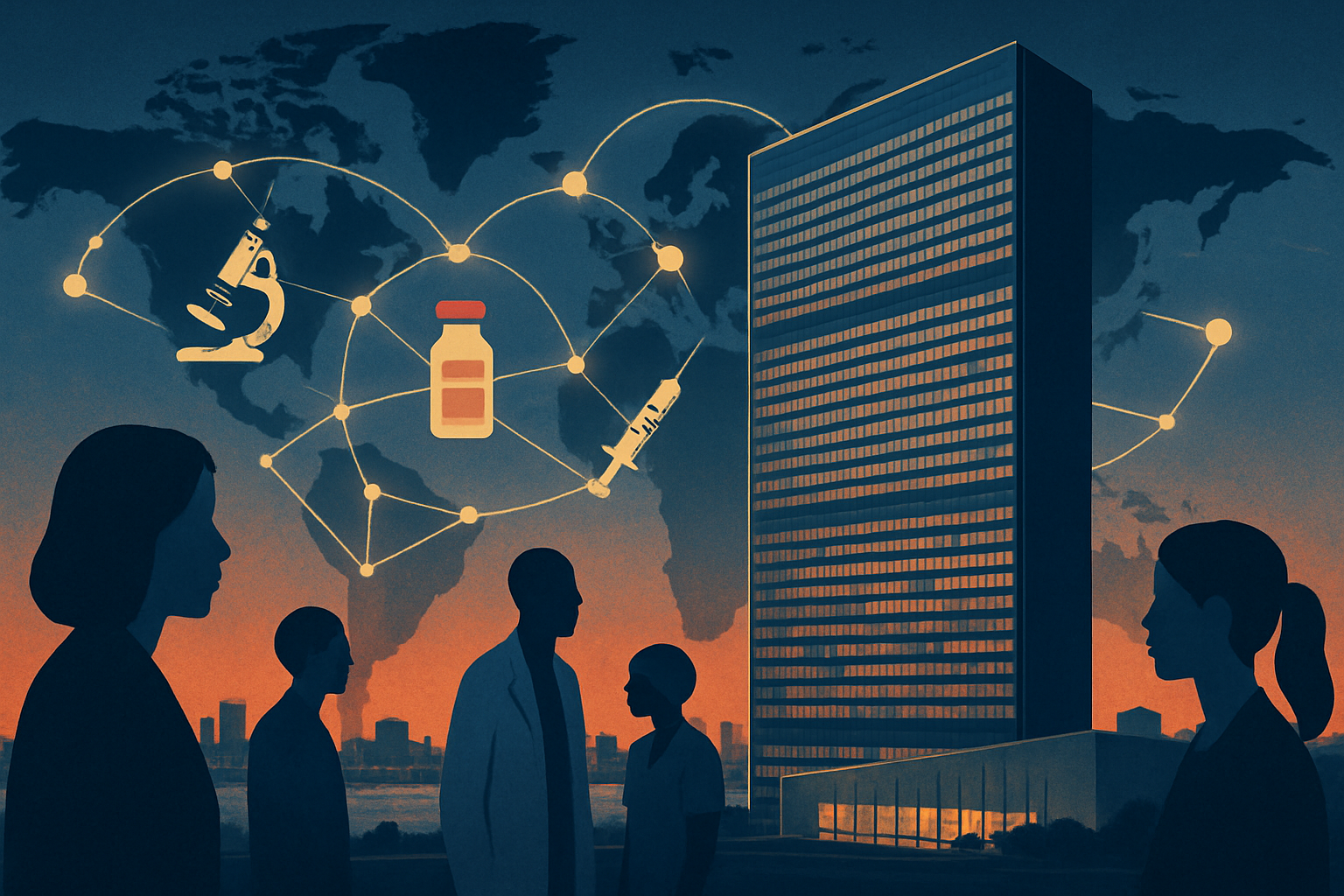
World leaders gathered at United Nations headquarters in New York on Friday, September 25, for a high-level meeting aimed at preparing the world for the next pandemic—before the next outbreak forces the issue again.
The meeting brought together heads of state and government, ministers, international organizations, civil-society groups, scientists and private-sector representatives. Its stated goal was to review progress since the UN’s first pandemic-preparedness summit in September 2023 and agree on the actions needed to prevent, detect and respond to future health emergencies.
The agenda was broad, but its practical priorities were clear: stronger disease surveillance and early-warning systems; more resilient health workforces and health systems; sustainable financing; regional production of vaccines and other medical supplies; and fair access to diagnostics, treatments and vaccines.
Those priorities reflect the central lesson of COVID-19. A pathogen may emerge in one community, but the consequences are shaped by how quickly governments share information, how fast laboratories identify the threat and whether countries have access to the tools needed to contain it. A global system that detects danger early but cannot deliver tests, medicines or vaccines equitably remains only partly prepared.
The meeting also comes after several years of institution-building. According to the World Health Organization, countries have adopted the WHO Pandemic Agreement, strengthened the International Health Regulations, established the Pandemic Fund and created new mechanisms for epidemic intelligence, pathogen sharing and emergency health staffing. Regional vaccine-manufacturing capacity has also expanded.
That progress matters—but it does not eliminate the vulnerabilities exposed by COVID-19. New institutions can coordinate a response, but they cannot substitute for functioning local health systems, trained workers, laboratory capacity and political trust. Nor can a declaration by itself guarantee that countries will share information quickly or distribute scarce medical products fairly.
This is why the meeting’s political declaration is less a conclusion than a test. The document was negotiated in advance and designed to set a shared direction for national, regional and international action. Its significance will depend on what follows: whether governments attach money to the promises, establish measurable targets and make preparedness part of routine health policy rather than an emergency project revived only after a crisis begins.
The UN and WHO have emphasized a “One Health” approach, linking human health with animal health and the environment. That reflects the reality that many infectious threats emerge at the intersection of people, animals and ecosystems. Preventing the next pandemic therefore requires more than hospital readiness. It also requires surveillance outside hospitals, cooperation across borders and the ability to investigate unusual outbreaks before they become international emergencies.
The hard part now moves from diplomacy to delivery. Countries must show whether the new architecture can work under pressure, including when political relations are strained and budgets are tight. The next pandemic will not measure the number of speeches made in New York. It will measure the time between the first warning and the first effective response.
Sources & Further Reading
- United Nations General AssemblyPrimary source
- World Health OrganizationPrimary source
- World Health OrganizationPrimary source
- United Nations General AssemblyPrimary source
- United Nations Web TVPrimary source
StoryBreak
Independent digital news and reporting, updated throughout the day.
This article was researched and drafted with AI assistance and reviewed as part of StoryBreak's editorial process before publication. Read our editorial standards.