
Scientists Are Getting Better at Measuring What Actually Slows Aging — Here’s What Seems to Work
A major new analysis of human studies suggests healthy eating, exercise and some medical treatments can alter biological markers associated with aging — while many popular supplements showed little effect.
By StoryBreak
Published August 31, 2026 at 1:36 AM
Updated September 7, 2026 at 12:04 AM
Scientists have spent decades searching for ways to help people live healthier for longer.
Now researchers are getting better at answering one of the biggest questions in longevity science: Are the things people do to slow aging actually working?
A new Yale-led analysis published in Nature Medicine examined a large collection of human studies using biological markers known as epigenetic aging biomarkers.
Unlike a person's chronological age — simply the number of years since birth — these biomarkers look for molecular changes associated with aging. Researchers hope they can eventually provide a faster way to determine whether an intervention is affecting the aging process without waiting decades to see whether people ultimately live longer.
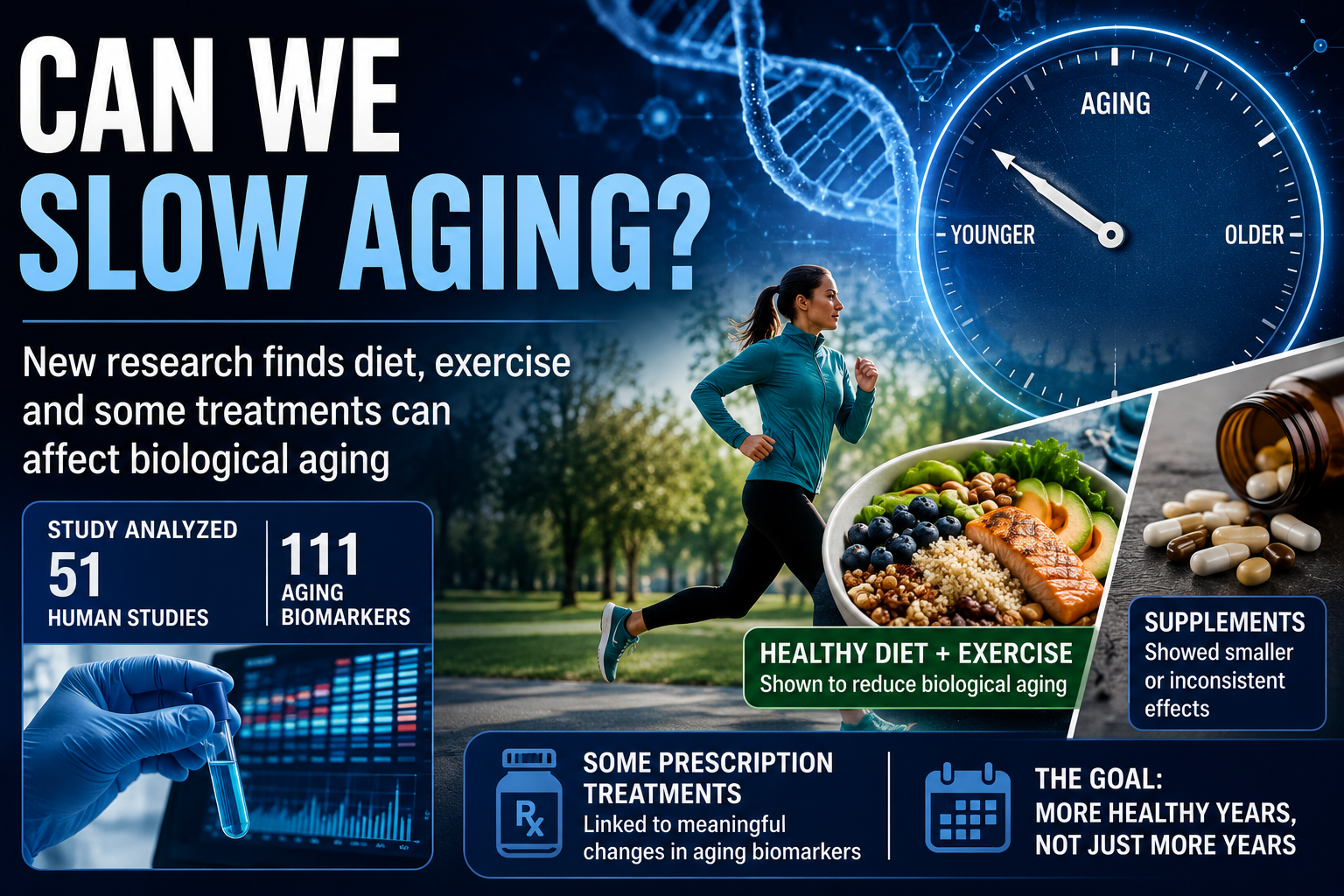
The Yale researchers evaluated 111 DNA-methylation biomarkers across 51 longitudinal human intervention studies.
Their findings produced some encouraging results.
Lifestyle interventions combining a healthy diet with exercise consistently reduced measures of epigenetic age. The diets studied included Mediterranean, low-carbohydrate and low-fat approaches, suggesting there may not be one single diet required to produce measurable changes.
Some prescription medications produced even larger changes in certain aging biomarkers. Treatments examined included the diabetes drug metformin, the GLP-1 medication semaglutide and anti-TNF therapies used to reduce inflammation.
That does not mean people should begin taking prescription medications simply to try to slow aging. These drugs have approved medical uses, potential side effects and risks, and the research does not establish them as anti-aging treatments for otherwise healthy people.
The findings surrounding supplements were less impressive.
Researchers reported that over-the-counter supplements generally produced smaller or less consistent changes in the aging biomarkers they examined.
Scientists are also investigating why reducing calorie intake appears to affect aging.
Separate Yale research released this month examined an immune protein called complement component 3, or C3. Researchers found that people participating in a long-term study of moderate calorie restriction had lower levels of the protein, which is associated with inflammation.
When researchers manipulated the same biological pathway in mice, they also observed reductions in age-related inflammation.
The discovery raises an intriguing possibility: scientists may eventually identify treatments capable of reproducing some benefits associated with moderate calorie restriction without requiring people to dramatically reduce how much they eat.
But there is an important distinction between slowing an aging biomarker and proving that a person will live longer.
Epigenetic clocks remain research tools. Scientists are still working to determine which biomarkers most accurately predict meaningful outcomes such as disease, disability and lifespan.
That is one reason the latest research could prove important.
Instead of waiting decades to determine whether a potential longevity treatment works, researchers hope validated biological-age tests could eventually reveal much sooner whether an intervention is actually affecting the processes associated with aging.
The ultimate goal isn't necessarily immortality.
It is extending healthspan — the portion of a person's life spent healthy and relatively free from age-related disease.
Scientists haven't discovered a way to stop the clock.
But they're getting much better at measuring whether we can make it tick a little slower.
Sources & Further Reading
StoryBreak
Independent digital news and reporting, updated throughout the day.
This article was researched and drafted with AI assistance and reviewed as part of StoryBreak's editorial process before publication. Read our editorial standards.