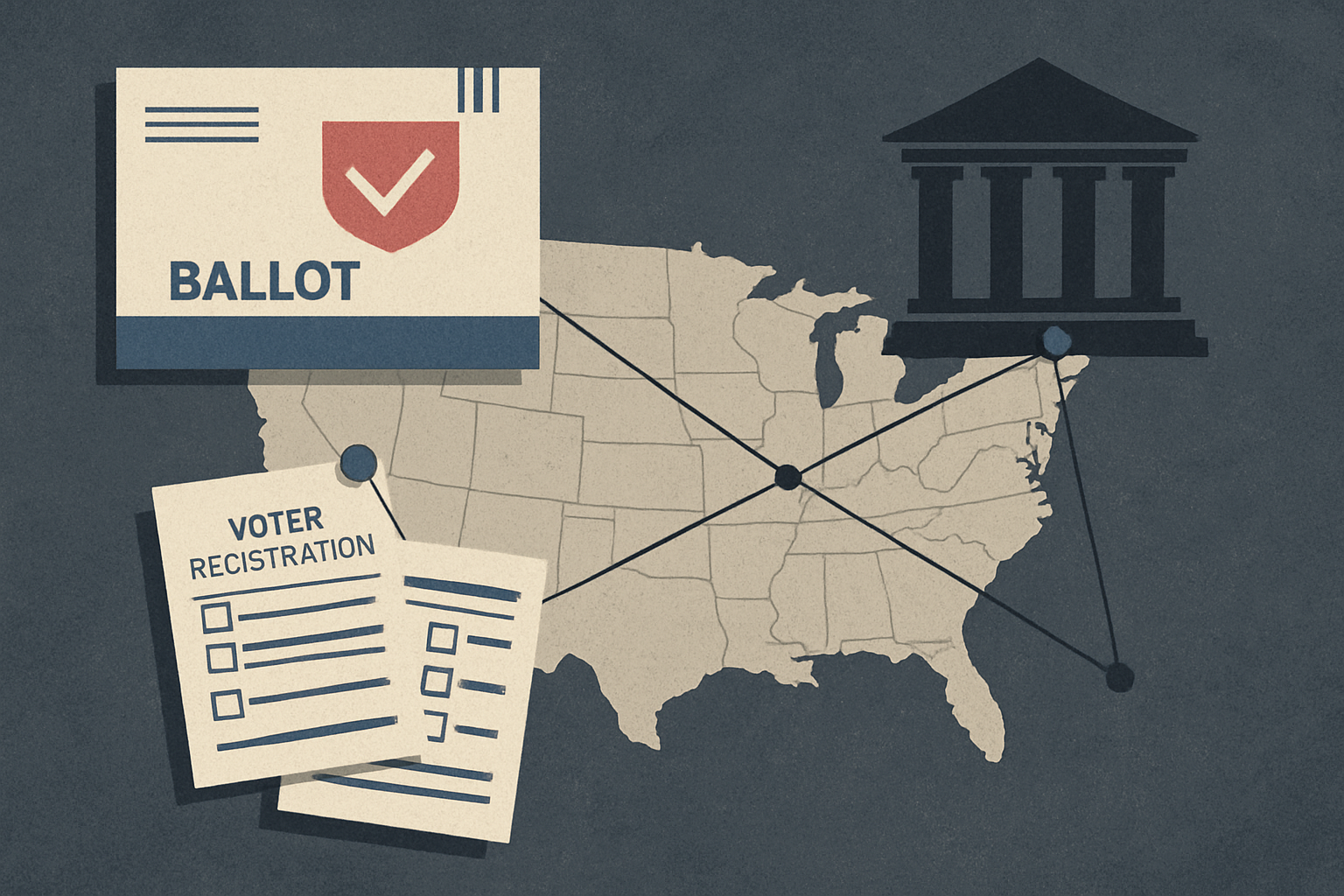
Mail-Voting Rules Face Court Fight as 2026 Ballots Begin Moving
The Trump administration is asking the Supreme Court to revive new restrictions on federal mail ballots even as states begin mailing ballots for the November 3 midterms. Lower-court orders currently block enforcement, leaving election officials to operate under a rapidly shifting legal timetable.
By StoryBreak
Published September 7, 2026 at 9:16 PM
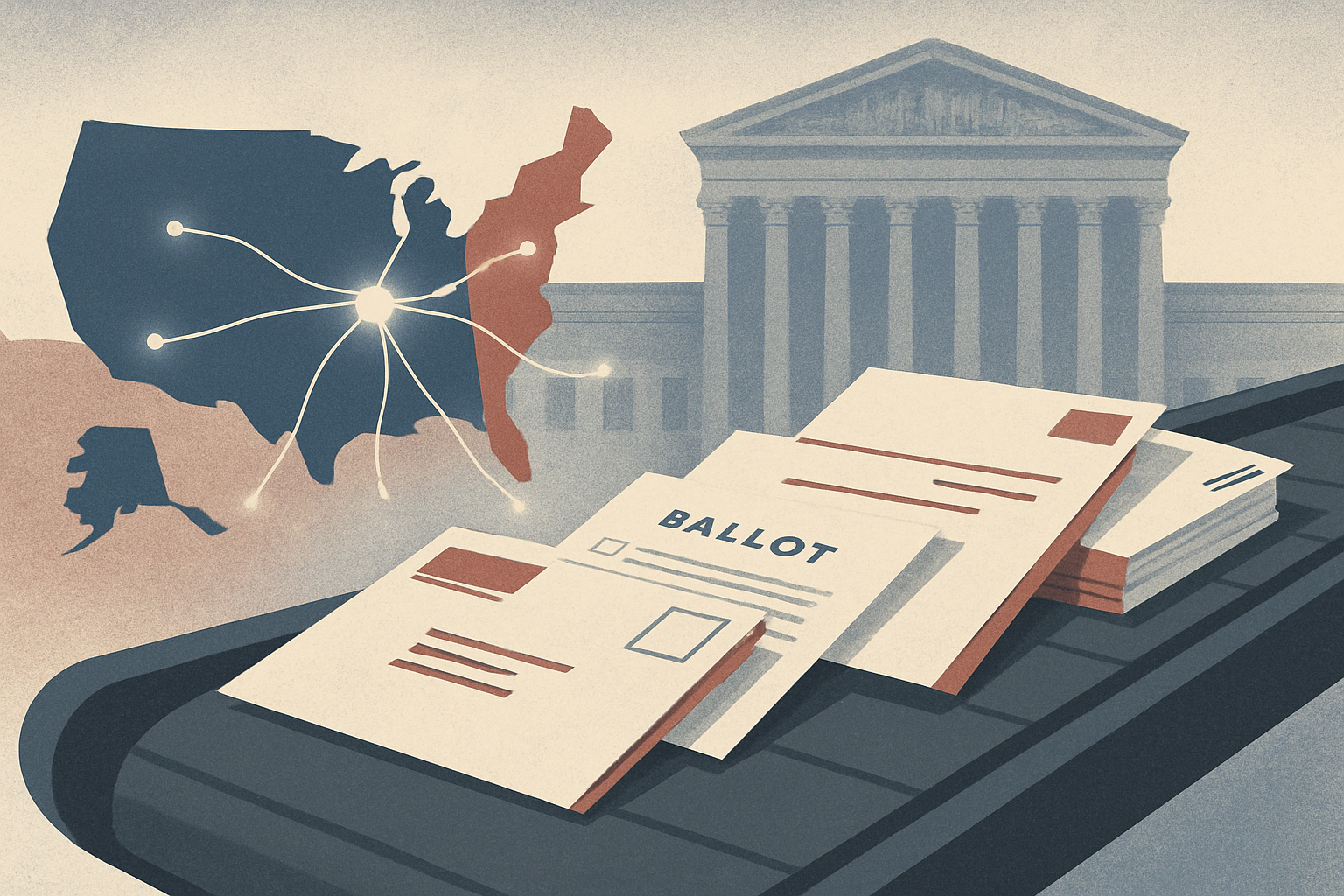
WASHINGTON — The fight over mail voting has entered its most consequential phase yet: ballots for the 2026 midterms are beginning to move while the rules governing their delivery remain tied up in court.
The Trump administration on Sunday renewed its request for Supreme Court intervention, asking the justices to allow new federal restrictions on mail ballots before the November 3 election. The appeal came after a federal judge extended an order blocking the Postal Service from enforcing President Donald Trump’s mail-voting executive order.
The timing is the source of much of the alarm. North Carolina had already begun mailing ballots by September 6. Alabama was expected to begin on September 9, with at least five more states scheduled to start mailing ballots during the week of September 13, according to the administration’s filing described by The Associated Press.
The disputed changes stem from a USPS rule finalized in August. The rule sets new design standards for federal ballot envelopes and creates a system requiring states to provide voter participation information through a federal ballot-mail portal. The Postal Service says the system would improve tracking and accountability for election mail.
But the rule’s own regulatory record outlines the objections. Opponents warned that states could face significant implementation costs, that administrative or data errors could result in ballot rejection, and that the Postal Service might not be ready to operate the new system. Commenters also raised questions about the collection, storage, sharing and cybersecurity of personally identifiable voter information.
Those concerns have produced a split-screen election system. The rule exists on paper, but court orders currently prevent its enforcement. On August 28, Colorado Attorney General Phil Weiser announced that Colorado and 24 other states had secured a temporary restraining order blocking the new USPS requirements. The states argued that the rule would disrupt established vote-by-mail systems and intrude on powers traditionally held by state election officials.
Washington’s secretary of state has separately told voters that the federal executive order cannot be used to withhold ballots from Washington voters before the midterms. The state says its existing rule remains in effect: ballots postmarked by Election Day may arrive afterward and still be counted. It advises voters who use the mail to return ballots more than a week before Election Day and says ballots placed in official drop boxes by 8 p.m. on Election Day are on time.
The practical consequence is that voters should not assume a headline about a “new national mail-voting rule” automatically changes the process in their state. For now, election offices are generally operating under state procedures and existing court orders. But that could change if the Supreme Court grants the administration’s request or issues a ruling that alters the scope of the injunctions.
That uncertainty matters because election administration is not easily redesigned overnight. Ballot envelopes must be printed, voter records must be updated, local workers must be trained and voters must receive consistent instructions. A ruling issued after ballots have entered the mailstream could force officials to explain whether previously mailed ballots remain valid, whether new data must be transmitted, or whether additional steps are required before a ballot can be delivered.
The underlying legal fight is therefore about more than postal formatting. It tests whether the federal government can impose new conditions on state-run elections through executive action and Postal Service regulations — and whether the courts can settle that question before the election machinery is already in motion.
For voters, the safest immediate step is to follow the instructions issued by their state or local election office, return ballots as early as practical, and use an official drop box where available. The next major variable is the Supreme Court, which now faces a request to decide whether the disputed restrictions can take effect while the midterm calendar is already underway.
Sources & Further Reading
- U.S. Government Publishing Office / Federal RegisterPrimary source
- The Associated Press
- Colorado Attorney GeneralPrimary source
- Washington Secretary of StatePrimary source
- National Conference of State Legislatures
StoryBreak
Independent digital news and reporting, updated throughout the day.
This article was researched and drafted with AI assistance and reviewed as part of StoryBreak's editorial process before publication. Read our editorial standards.