Americans Are More Worried About Jobs and Money. The Data Show Why
The U.S. economy is still adding jobs and household income is rising, but surveys show Americans have become much more pessimistic about what comes next. The result is an economy that looks stable in the rearview mirror and less secure through the windshield.
By StoryBreak
Published September 9, 2026 at 2:46 PM
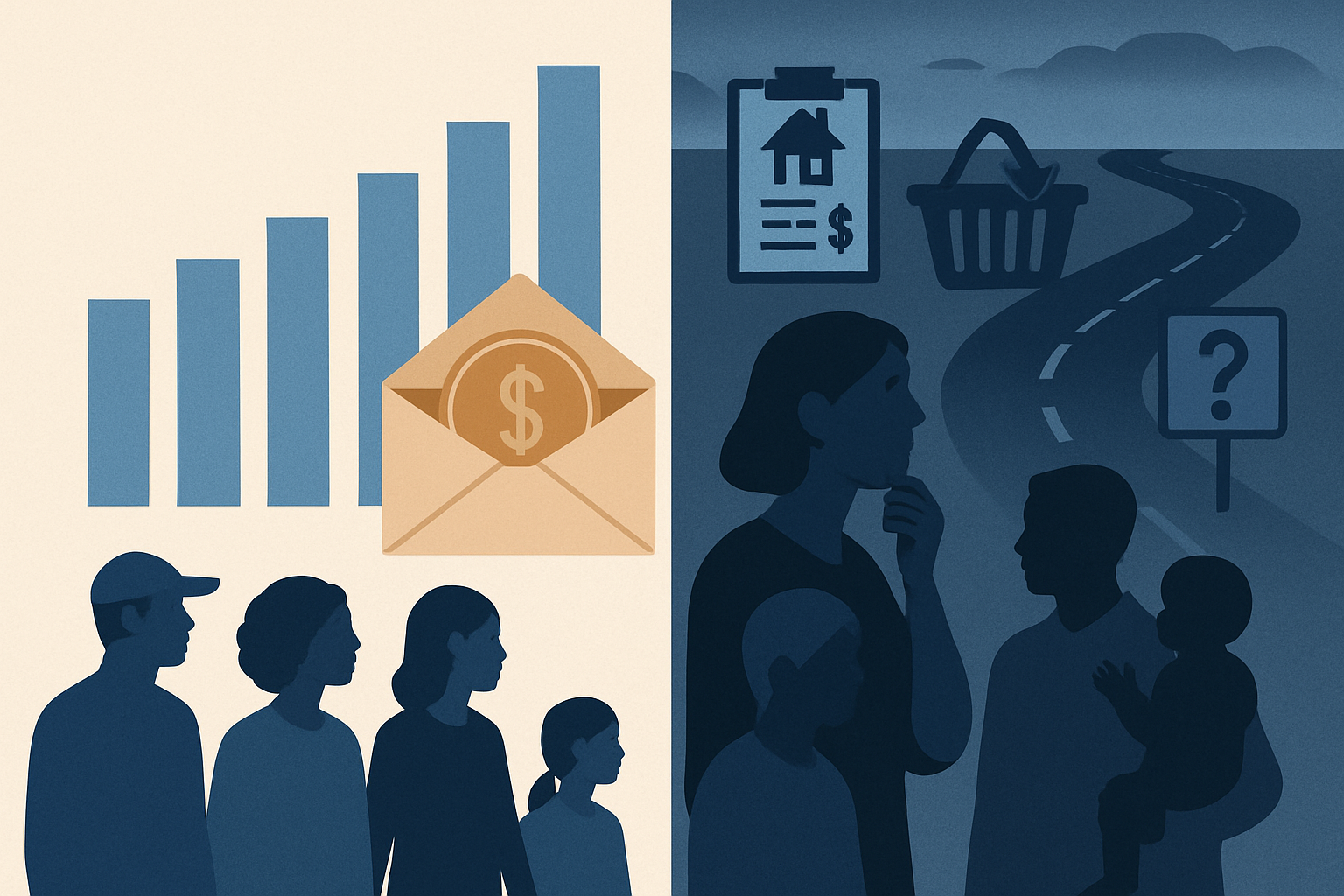
Americans’ economic anxiety is rising even as the headline numbers remain relatively solid.
The latest data do not show a labor market in free fall. Employers added 162,000 jobs in August, according to the Bureau of Labor Statistics, and the unemployment rate held at 4.1%. Average hourly earnings increased 3.1% from a year earlier. The number of unemployed people, about 7 million, changed little.
But the same report contains signs of a labor market that may feel less dependable than the unemployment rate suggests. Labor-force participation edged up to 61.6% in August but remained 0.5 percentage point below its January level. Long-term unemployment stood at 1.9 million, representing 27% of all unemployed people. Employment also fell by 23,000 in the information industry, with losses in computing infrastructure, data processing, web hosting, publishing and broadcasting.
That helps explain the mood in consumer surveys. The Conference Board said its consumer-confidence index slipped to 89.4 in August from 90.2 in July. The more revealing move was inside the index: consumers’ assessment of current conditions improved, while the Expectations Index fell 5.8 points to 68.2. The group says readings below 80 have historically been associated with recession concerns.
In other words, Americans are not necessarily saying that the economy is already bad. They are becoming less confident that it will remain good.
The New York Federal Reserve’s August Survey of Consumer Expectations points in the same direction. The average perceived probability that the national unemployment rate will be higher a year from now rose to 44.4%, the highest reading since April 2020. At the same time, respondents’ perceived chance of finding a job if they lost their current one fell to 45.4%.
That is different from fearing an immediate personal layoff. The perceived probability of losing one’s own job over the next 12 months actually declined to 13.8%, its lowest level since February. The distinction matters: people may feel relatively secure in their current jobs while believing that the broader labor market is becoming harder to navigate.
Household income data offer another piece of the puzzle. The Bureau of Economic Analysis reported that personal income rose 0.4% in July and disposable personal income—the money left after taxes—increased 0.5%. Real disposable personal income, adjusted for inflation, rose 0.4%.
Yet real consumer spending was essentially flat, increasing by less than 0.1% during the month. The personal saving rate was 3.0%.
That combination suggests caution. Households had more after-tax income, but they did not immediately turn it into significantly more inflation-adjusted spending. Some may have been rebuilding savings, paying down obligations or simply holding back because they are unsure what lies ahead.
This is the central tension in the current economy: present conditions are stronger than public sentiment, but sentiment may be telling policymakers and businesses something about the future.
A 4.1% unemployment rate can coexist with a worsening job search. Payrolls can grow while particular industries contract. Income can rise while families feel that prices, debt payments and financial risks are still outpacing their sense of security.
The data therefore do not establish that a recession has begun. They do show that the cushion beneath consumer confidence is becoming thinner. If hiring remains steady and inflation pressures ease, today’s pessimism could prove temporary. If job-finding prospects continue to deteriorate, cautious households could reduce spending before the labor market visibly weakens.
The next important test will be the September employment report, due October 2. Until then, the clearest description of the economy may be this: Americans are still working and earning—but increasingly worried about how difficult it would be to keep doing so.
Sources & Further Reading
- U.S. Bureau of Labor StatisticsPrimary source
- The Conference BoardPrimary source
- Federal Reserve Bank of New YorkPrimary source
- U.S. Bureau of Economic AnalysisPrimary source
- U.S. Bureau of Labor StatisticsPrimary source
StoryBreak
Independent digital news and reporting, updated throughout the day.
This article was researched and drafted with AI assistance and reviewed as part of StoryBreak's editorial process before publication. Read our editorial standards.