
Chinese Rare-Earth Suppliers Quietly Withhold Some U.S.-Bound Shipments
Several Chinese rare-earth suppliers have declined to ship materials to U.S. buyers, according to people familiar with the trade, adding a new layer of uncertainty to an already restricted supply chain weeks before a planned Trump-Xi meeting.
By StoryBreak
Published September 5, 2026 at 2:00 AM
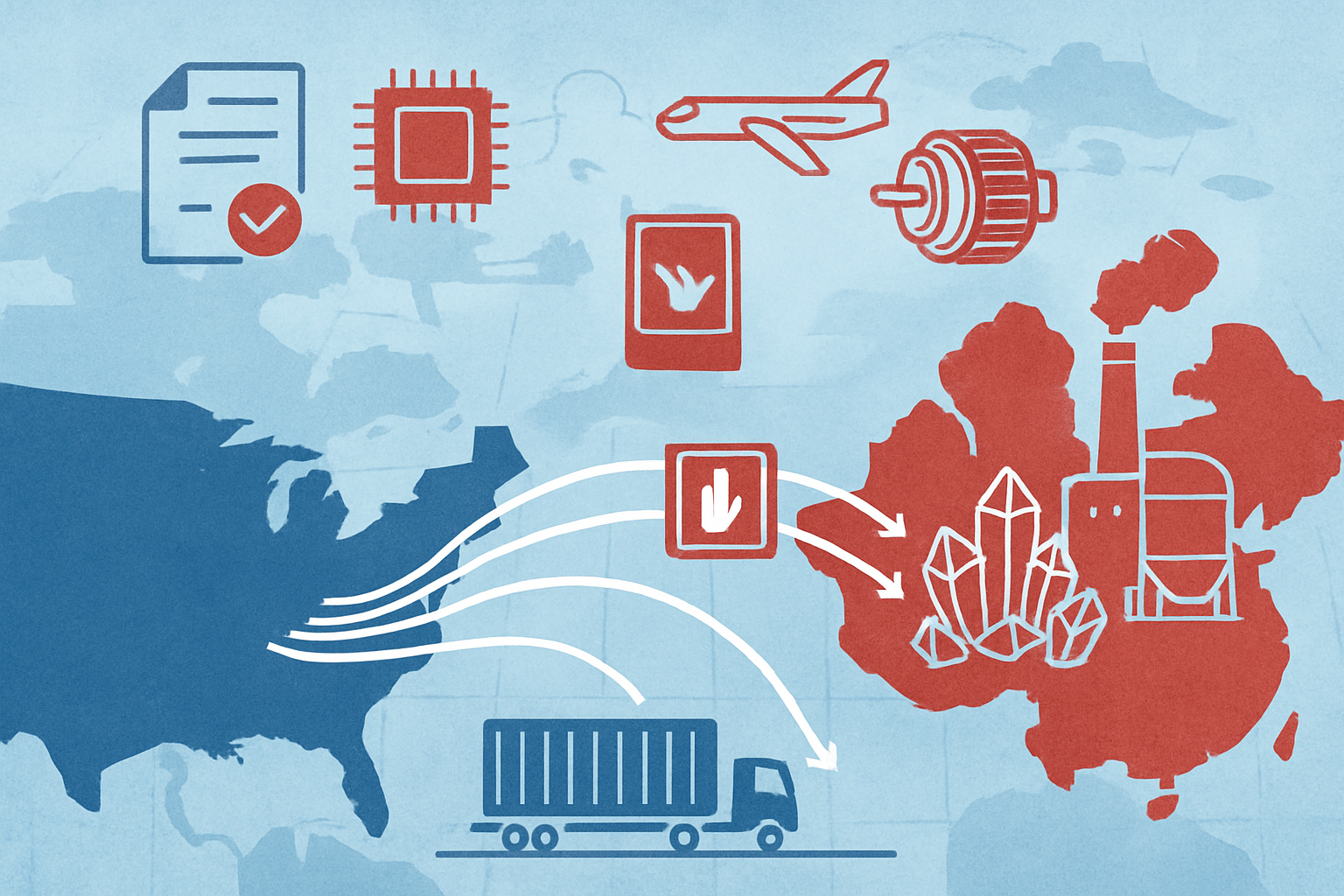
Some Chinese rare-earth suppliers have stopped or declined shipments to U.S. customers, according to people familiar with the trade, raising fresh concerns in Washington about access to materials used in aerospace, medical devices, energy equipment and advanced manufacturing.
The companies appear to be acting cautiously rather than following a publicly announced blanket ban. Three sources told Reuters that suppliers feared punishment from Beijing if their shipments became entangled in U.S. sanctions, end-user reviews or supply-chain audits. Several refusals reportedly began after China sanctioned the Responsible Business Alliance, a U.S.-based supply-chain monitoring group, in August.
The number of affected suppliers and the total volume of material involved could not be independently determined. Chinese officials have not announced a general suspension of rare-earth exports to the United States. China’s foreign ministry has said Beijing remains committed to maintaining global critical-mineral supply chains.
The uncertainty comes after China imposed export controls on several heavy rare earths and related compounds, metals and oxides in April 2025. The rules require exporters to obtain licenses, creating opportunities for shipments to be delayed, scrutinized or rejected without a formal embargo.
Trade data show that U.S. access has remained uneven. Silverado Policy Accelerator, analyzing customs data, found that China shipped 29 metric tons of export-controlled rare-earth compounds and metals to the United States in July 2026. That was an increase from June, but still below the levels recorded before the 2025 controls. The July total was driven mainly by yttrium oxide; shipments of other covered rare-earth products fell to zero that month.
Yttrium is a relatively small-volume material, but it is important in specialized applications, including aerospace and advanced electronics. Reuters reported that U.S. yttrium imports from China have recovered this year but remain roughly half of 2024 levels. Some American companies have reportedly waited more than six months for export licenses.
The same pattern is visible in the magnet trade. Silverado found that China exported 3,521 metric tons of rare-earth magnets to the United States from January through July 2026, about 16% below the comparable period in 2024. China’s overall magnet exports, however, had largely recovered, suggesting that the U.S. market is facing a more persistent supply gap than many other major destinations.
The restrictions are unfolding against a broader escalation in the U.S.-China technology and security relationship. In June, China barred exports of dual-use goods to 10 American military-related companies, including rare-earth producers MP Materials and USA Rare Earth. Beijing described that action as a response to U.S. restrictions on Chinese technology companies.
For American manufacturers, the immediate risk is not necessarily that all Chinese supplies will disappear. Instead, companies face a less predictable system in which licenses, audits, end-user checks and political developments can determine whether orders move. That uncertainty can raise prices and encourage buyers to build inventories even when global production appears adequate.
The issue is now part of U.S. planning ahead of a scheduled September 24 meeting between President Donald Trump and Chinese President Xi Jinping in Washington. Some U.S. companies have recently received multiple licenses after long waits, and analysts expect Beijing could ease selected controls around the summit. But any improvement would not remove the licensing system or restore the supply chain to its earlier predictability.
The broader lesson for U.S. industry is that dependence can persist even when shipments technically resume. China continues to dominate much of the processing and manufacturing capacity for rare-earth materials and magnets, while alternative suppliers in the United States, Japan, Europe and Southeast Asia can only partly offset lower Chinese deliveries in the near term.
Sources & Further Reading
StoryBreak
Independent digital news and reporting, updated throughout the day.
This article was researched and drafted with AI assistance and reviewed as part of StoryBreak's editorial process before publication. Read our editorial standards.