Fed signals interest rates could rise again if inflation doesn’t improve
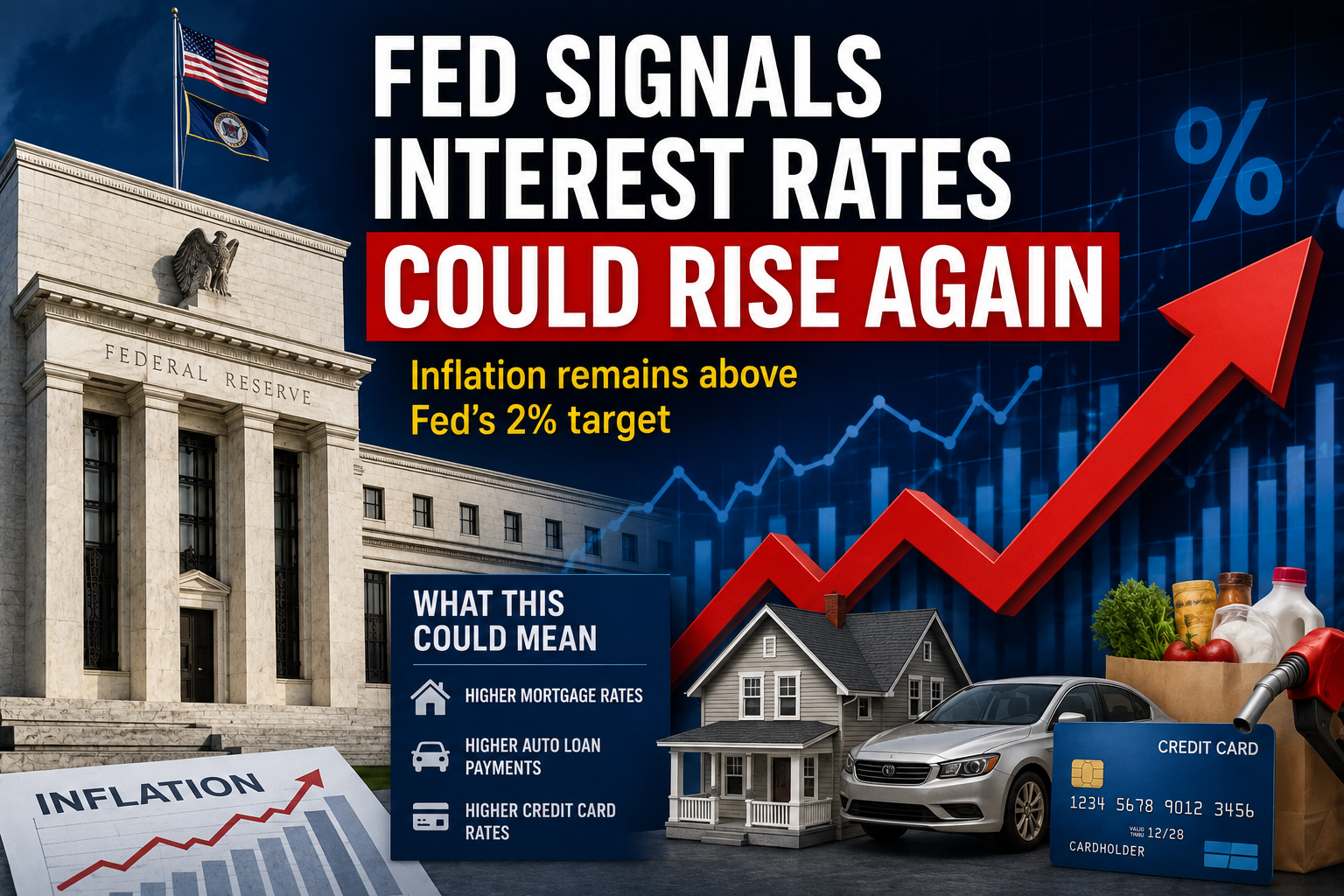
Federal Reserve Chair Kevin Warsh has opened the door to another interest-rate increase as inflation remains stubbornly above the Fed's 2% target, raising questions about what could happen next to borrowing costs for mortgages, car loans and credit cards.
By StoryBreak
Published August 29, 2026 at 11:11 PM
Updated September 7, 2026 at 12:40 AM
Americans hoping borrowing costs would continue moving lower may have to wait.
Federal Reserve Chair Kevin Warsh delivered his clearest warning yet Friday that the central bank could raise interest rates again if inflation doesn't show convincing signs of returning toward the Fed's 2% target.
Speaking at the Federal Reserve's annual economic symposium in Jackson Hole, Wyoming, Warsh said policymakers need to be confident that underlying inflation is moving toward the target clearly and quickly enough.
Otherwise, he said, the Fed has “work to do.”
Warsh stopped short of announcing a rate increase or promising one at the Fed's next meeting.
But investors heard the message.
Expectations for a potential September rate hike rose significantly after the speech, turning the government's upcoming inflation reports into some of the most closely watched economic data of the year.
Why the Fed is worried
The problem is inflation.
Price increases have come down substantially from their post-pandemic highs, but inflation is still running above the Federal Reserve's long-term 2% target.
Warsh argued that the remaining inflation problem is broader than a handful of unusually expensive products.
More than half of the goods and services tracked by the government have risen at least 3% from a year earlier, according to figures Warsh cited.
That's considerably higher than what was typical during the two decades before the pandemic.
Recent government data haven't provided the improvement Fed officials were hoping to see.
Annual inflation remained above the Fed's target in July, extending a period in which inflation has remained above 2% for more than five years.
Warsh also pushed back against the idea that today's inflation will necessarily disappear on its own as temporary shocks fade.
That matters because if inflation isn't temporary, the Fed may decide it needs to actively slow demand in the economy.
Its primary tool for doing that is interest rates.
Where interest rates stand now
At its July 28-29 meeting, the Federal Open Market Committee kept its benchmark federal funds rate at 3.5% to 3.75%.
That decision wasn't unanimous.
The vote was 9-3, with three policymakers preferring to raise the target range by a quarter percentage point.
Warsh supported holding rates steady at that meeting.
Minutes from the meeting show policymakers were weighing persistent inflation against other economic conditions while waiting for additional information.
Friday's comments suggest the next round of data could make that decision considerably harder.
Could rates rise in September?
Yes — but it isn't certain.
The Fed's next policy meeting is scheduled for mid-September, and policymakers will receive another important inflation report shortly before they make their decision.
AP reports that Warsh's remarks have increased pressure on the central bank to act if that report fails to show meaningful improvement.
Investors immediately increased their bets on a rate hike.
On Friday, market pricing put the probability of a September increase at nearly 58%, up from roughly 35% the previous day, according to AP.
Those probabilities can change quickly as new economic data arrive.
What would a rate hike mean for consumers?
The federal funds rate isn't the rate consumers pay on their mortgage or credit card.
But changes in Fed policy can ripple through the financial system.
A higher federal funds rate can contribute to higher borrowing costs for things including:
Credit cards
Auto loans
Home-equity lines of credit
Business loans
Some mortgages
It can also benefit savers by helping keep yields on savings accounts, certificates of deposit and other interest-bearing products higher.
The Fed raises rates for a reason: higher borrowing costs tend to reduce spending and investment, which can cool demand and help bring inflation down.
The downside is that the same process can slow economic growth.
Mortgage rates are more complicated
A September Fed hike wouldn't automatically mean mortgage rates jump.
Thirty-year mortgage rates are influenced heavily by longer-term bond yields rather than simply following the federal funds rate.
Interestingly, longer-term Treasury yields barely moved following Warsh's comments.
AP reported that some analysts interpreted that as a sign investors believe a tougher Fed could successfully reduce inflation over time.
The average U.S. 30-year fixed mortgage rate currently stands around 6.66%, according to Freddie Mac data cited by AP.
That means someone planning to buy a home shouldn't assume a quarter-point Fed increase would translate directly into a quarter-point increase in mortgage rates.
Markets reacted immediately
Wall Street also took notice.
The S&P 500 fell 0.2% Friday, while the Nasdaq Composite declined 0.5%.
The bigger reaction occurred in bonds.
The two-year Treasury yield jumped to about 4.35% from 4.22%, reflecting investors' changing expectations about where short-term interest rates may be headed.
Gold fell more than 3% as the dollar strengthened and investors increased their expectations for tighter monetary policy.
Those movements don't guarantee what the Fed will ultimately do.
They show how significantly expectations changed after Warsh spoke.
The next inflation report could decide what happens
For now, the Fed hasn't raised rates.
Warsh hasn't promised that it will.
And policymakers still have several weeks of economic information to consider.
But the message from Jackson Hole was noticeably different from one suggesting rate cuts are just around the corner.
Warsh made clear that bringing inflation back to 2% remains the central bank's priority — and that policymakers are prepared to consider higher rates if prices don't cooperate.
That makes the next inflation report especially important.
If inflation cools significantly, the Fed could decide to remain patient.
If it doesn't, Americans could see the country's central bank raise interest rates again in September.
Sources & Further Reading
StoryBreak
Independent digital news and reporting, updated throughout the day.
This article was researched and drafted with AI assistance and reviewed as part of StoryBreak's editorial process before publication. Read our editorial standards.