
Florida Confirms Dengue Death as Unusual Local Outbreak Surges
Florida has confirmed a dengue-related death as locally acquired infections climb to 152 statewide, with the outbreak concentrated in Hillsborough County and additional cases reported in Orange County. The surge is unusual because most dengue cases in the continental United States are linked to travel, not transmission by mosquitoes inside U.S. communities.
By StoryBreak
Published September 19, 2026 at 11:59 PM
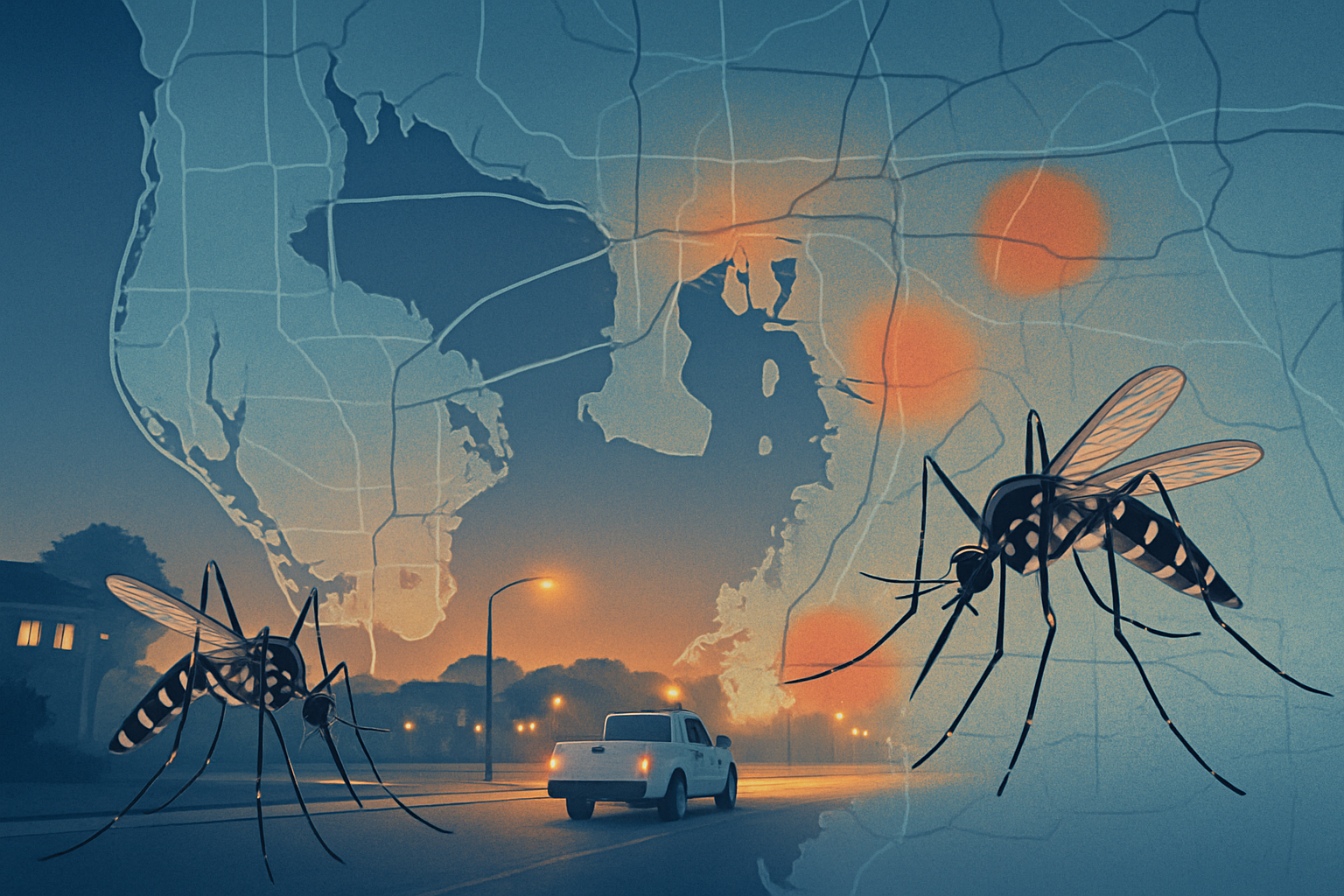
Florida has confirmed a death linked to dengue fever as the state confronts one of its largest recent outbreaks of locally acquired infections.
The Florida Department of Health confirmed the death on Friday, September 18, but did not release additional details about the patient. The death was first reported as involving an elderly Tampa-area woman who died September 4.
The outbreak is centered in Hillsborough County, where more than 130 locally acquired cases have been reported this year. That is far above the handful of local cases the county typically sees. Statewide, Florida has recorded 152 locally acquired dengue cases in 2026, according to state health data cited by The Associated Press. That makes this year the second-highest total in state records, behind nearly 200 cases reported in 2023.
The important distinction is the word “locally.” In the continental United States, dengue is usually diagnosed in people who were infected while traveling abroad. In 2024, 97.2% of dengue cases reported among residents of U.S. states and Washington, D.C., were associated with travel outside the reporting jurisdiction, according to the Centers for Disease Control and Prevention. Only 2.8% were classified as locally acquired.
Florida’s current outbreak represents a different pattern: infected people appear to be transmitting the virus through mosquitoes already present in Florida communities. The cycle can begin when a traveler returns with dengue and is then bitten by a mosquito capable of carrying the virus. That mosquito can subsequently infect other people.
The virus is transmitted by Aedes mosquitoes, which can breed in very small amounts of standing water around homes and businesses. Hillsborough County mosquito-control crews have been spraying, inspecting properties and looking for breeding sites such as discarded tires and other containers.
Recent mosquito sampling in the Tampa-area outbreak had not detected the virus, a finding that may indicate the likelihood of new infections is declining. But that does not mean the public-health risk has disappeared. Dengue surveillance can lag behind real transmission, and people with mild or no symptoms may never be tested.
Dengue commonly causes fever, headache and flu-like illness. In some patients, however, the infection can progress to severe dengue, which may involve serious bleeding, shock, organ complications and death. The CDC advises clinicians to consider dengue in patients with compatible symptoms, particularly when there is a history of travel or exposure in an affected area.
The outbreak is not limited to the Tampa region. The Florida Department of Health in Orange County confirmed a locally acquired case on September 2 and later announced additional local cases in the Apopka area. County officials responded by expanding mosquito surveillance and targeted control efforts.
State officials have urged residents to use insect repellent, wear clothing that limits exposed skin and remove standing water from around homes. Those steps are aimed at reducing both the chance of being bitten and the possibility that an infected person will pass the virus to another mosquito.
For now, the evidence points to an intense but geographically concentrated outbreak rather than widespread dengue transmission across Florida. The next signals will be whether new cases continue appearing in Hillsborough County, whether more counties report local transmission and whether mosquito testing begins finding the virus consistently.
What makes the outbreak significant is not simply the number of cases. It is the sustained local transmission in a state where dengue has historically appeared mainly as isolated introductions or travel-related illness. Florida’s response will help show whether this episode remains a contained seasonal outbreak—or becomes another indication that local dengue transmission is becoming a recurring public-health challenge in the United States.
Sources & Further Reading
- Florida Department of HealthPrimary source
- Florida Department of HealthPrimary source
- Florida Department of Health in Orange CountyPrimary source
- Centers for Disease Control and PreventionPrimary source
- The Associated Press
StoryBreak
Independent digital news and reporting, updated throughout the day.
This article was researched and drafted with AI assistance and reviewed as part of StoryBreak's editorial process before publication. Read our editorial standards.